 Tel:
Tel:  Email:
  WhatsApp:
 Description
Product Introduction
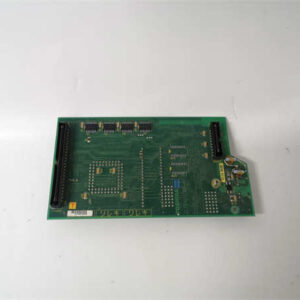
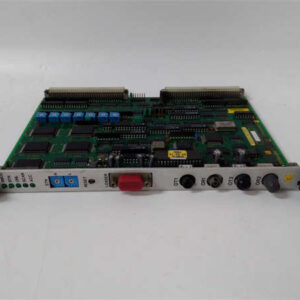
When a legacy EX-series PLC loses its ability to talk to sensors or actuators, the whole machine stops. The Toshiba LBIW01G021 is the mixed I/O card that bridges that gap, handling 16 inputs and 16 outputs in a single slot.This module is a workhorse for older packaging and material handling systems. We supply these as New Original (New Surplus), meaning they are unused factory stock that has been sitting in a climate-controlled warehouse. It is a critical spare for maintenance teams who can’t afford the downtime of a custom retrofit. Honestly, the terminal block connector on these is robust, but the internal logic chips are what usually fail after 15 years of heat cycling.
Key Technical Specifications
| Parameter | Value |
|---|---|
| Model Number | LBIW01G021 |
| Manufacturer | Toshiba |
| Module Type | Base I/O (Mixed) |
| Input Points | 16 Points (24V DC, Negative Common) |
| Output Points | 16 Points (Transistor, Sink Type) |
| Input Voltage | 24V DC (+10% / -15%) |
| Output Voltage | 24V DC (Max 0.5A per point) |
| Response Time | 1.5 ms (Input) / 1.5 ms (Output) |
| External Wiring | MIL connector (40-pin) x 2 |
| Internal Current | Approx. 300 mA (5V DC) |
| Operating Temperature | 0°C to +55°C |
| Storage Temperature | -20°C to +70°C |
Application Scenarios & Pain Points
The moment this card fails, your PLC program runs perfectly, but the machine doesn’t move. You have inputs that won’t register and outputs that won’t fire. The LBIW01G021 is often the “brain stem” of smaller EX-series systems, connecting limit switches, push buttons, and solenoid valves.
- Material Handling: Controls the solenoids for diverters and stoppers. If an output channel dies, packages go down the wrong lane.
- Automotive Assembly: Reads limit switches on jigs and fixtures. A failed input means the robot thinks the part isn’t clamped and won’t weld.
- Food & Beverage: Monitors door interlocks and safety gates. If the module gets noisy, you get nuisance faults stopping the line.
- Water Treatment: Operates small pumps and valves. Can this module handle the inductive kickback from a solenoid? Only if you have flyback diodes installed externally.
Quality Control Process (SOP Transparency)
We don’t just trust the label. Here is how we verify the LBIW01G021:
- Inbound Inspection: We check the date code and look for bent pins on the 40-pin MIL connectors.
- Live Functional Test: We load the module into a Toshiba EX40 rack.
- Input Test: We apply 24V DC to all 16 inputs and verify the LEDs light up and the CPU registers the status change.
- Output Test: We force all 16 outputs ON via software and measure the voltage at the terminal block.
- Load Test: We cycle the outputs at 1Hz for 2 hours to ensure the transistors don’t overheat.
- Electrical Parameters: We measure the insulation resistance between the 5V logic bus and the 24V I/O terminals.
- Visual Check: We inspect the PCB for any signs of “reflow” repair or burnt traces near the driver chips.
Installation Pitfalls Guide (“Lessons Learned” Voice)
I’ve seen these modules smoked more times than I care to count due to simple wiring errors.
- ❗ Reversing the MIL Connectors: There are two 40-pin connectors. One is usually for Inputs, one for Outputs (check your manual). If you plug the output wiring harness into the input port, you are feeding 24V into a logic input pin. It will fry the module instantly.
- Common Wire Confusion: This is a “Negative Common” (NPN) module. If your sensors are PNP (Positive Common), this card will not work without a relay interface. Check your sensor wiring type first.
- Pin 1 Orientation: The MIL connector key is small. If you force it in upside down, you shift the pinout by one. This usually kills the first channel and the 5V logic line.
- External Power: The module needs external 24V DC for the outputs to switch. Don’t assume the backplane provides the power for the solenoids.
- ESD Damage: The input circuits are sensitive. Always ground yourself before touching the connector pins.