 Tel:
Tel:  Email:
  WhatsApp:
 Description
Key Technical Specifications
| Parameter | Specification | Notes |
|---|---|---|
| Input Voltage | 100-240V AC / 110-150V DC | Universal input range typical |
| Output Voltage | 24V DC | Regulated |
| Output Current | 6 Amperes | Continuous duty |
| Power Rating | ~144 Watts | Calculated (P=VI) |
| Mounting Type | DIN Rail (TS-35) | Standard industrial clip |
| Connection | Screw Terminals | Check for tightness on install |
| Efficiency | >85% (Estimated) | Typical for switching class |
| Protection | Overcurrent / Overvoltage | Internal fuse/breaker |
| Operating Temp | -10°C to +60°C | Derate above 50°C |
| Dimensions | approx. 35mm x 100mm x 100mm | Verify against cutout template |
Product Introduction
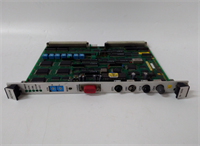
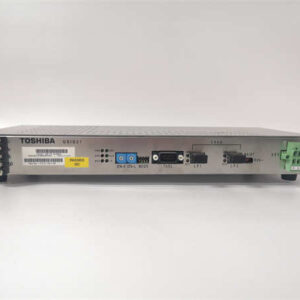
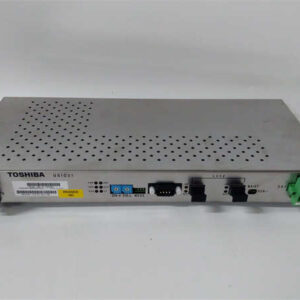
Finding a working power supply for legacy Toshiba equipment feels like finding a needle in a haystack these days. The DPHC06G001 isn’t just a generic brick; it was the heartbeat for many older PLC racks and motor controller cabinets. I’ve seen these units running in textile mills that closed down five years ago, still humming along.Why keep it? Because replacing a proprietary power module with a generic Mean Well unit often requires re-drilling the backplate or fabricating custom wiring harnesses. This module fits the existing footprint. It delivers a solid 6 Amps at 24V DC, which is enough to drive about 15-20 standard relay coils or a small PLC CPU with digital I/O. It’s simple, analog technology—no complex Ethernet handshakes to debug. If the capacitors aren’t dried out, it just works.
Quality SOP & Tech Pitfalls (The Reality Check)
The Lab Report (SOP)
Before we ship this, we don’t just look at it and smile. We put it on the test bench:
- Visual Inspection: We check the terminal blocks for heat discoloration (browning plastic means high resistance/arcing) and inspect capacitors for bulging tops.
- Live Load Test: We hook it up to a resistive load bank pulling 4A (approx. 65% load) for 2 hours to ensure the voltage doesn’t sag below 23.5V DC.
- Ripple Test: Using an oscilloscope, we verify the ripple is under 150mV peak-to-peak. High ripple kills PLC inputs.
- Dielectric Strength: A quick hipot test (ground to line) to ensure there are no internal shorts from dust accumulation.
The Engineer’s Warning (Pitfalls)
Here is where guys get burned: Capacitor Reforming.
If this unit has been sitting on a shelf since 2005, the electrolytic capacitors have likely lost their dielectric oxide layer. If you slam 240V AC into it instantly, you risk blowing the input fuse or venting the caps.
Field Anecdote: I once saw a tech bring up a refurbished rack cold. He hit the main breaker, heard a loud pop, and smelled ozone. The input capacitors shorted immediately because they hadn’t been “formed” with a Variac (variable transformer) first. Take it slow.
Installation & Configuration Guide
Follow this procedure to avoid frying the new-old-stock module.
- Pre-Installation Safety
- ⚠️ Lockout/Tagout (LOTO): Ensure the main 120/240V AC feed is physically disconnected.
- Discharge any bulk storage capacitors in the cabinet using a bleeder resistor. Wait 5 minutes.
- Removal of Old Unit
- Photo Documentation: Take a high-res photo of the wiring. Seriously. Do not rely on memory.
- Label wires with tape (e.g., “L1”, “N”, “+24V”, “0V”).
- Release the DIN rail latch (usually at the bottom) and slide the old unit off.
- Installation of DPHC06G001
- Hook the top of the module onto the DIN rail first.
- Push the bottom until you hear a distinct click. Tug it gently to ensure it’s seated.
- Torque Check: Tighten terminal screws to roughly 0.5-0.6 Nm. Loose connections cause heat; overtightening strips threads.
- Power-Up Sequence
- Set your multimeter to DC Volts across the output terminals.
- Apply power.
- Verify the output stabilizes at 24.0V DC ± 5%. If it reads 0V, check the input fuse. If it reads 30V+, kill power immediately—the regulation loop is fried.
Compatible Replacement Models
| Compatibility Tier | Model / Option | Description & Effort |
|---|---|---|
| ✅ Drop-in Replacement | Toshiba DPHC06G001 (Surplus) | Exact mechanical and electrical fit. No rewiring needed. High availability in surplus market. |
| ⚠️ Functional Substitute | Generic DIN Rail PSU (e.g., Omron S8VK / Mean Well NDR) | Requires checking physical dimensions. You will likely need to re-wire the terminal block connections and possibly drill new mounting holes. |
| ❌ Obsolete Path | Repairing Old Unit | Re-capping the old unit is rarely worth the labor cost unless you have the specific schematics and soldering skills. |
Frequently Asked Questions (FAQ)
Q: Can I use this to charge a 24V battery backup system?
A: No. This is a constant-voltage power supply, not a battery charger. It lacks the specific charging curve (bulk/absorption/float) required for batteries. Connecting a battery directly could overheat the supply or damage the battery.Q: My voltage is fluctuating between 20V and 24V. Is the unit bad?
A: Likely, yes. Or you are exceeding the current limit. If your load draws more than 6A (even for a split second during startup), the current limiting circuit kicks in and drops the voltage to protect the unit. Check your total amperage draw with a clamp meter.Q: Does this support parallel operation for redundancy?
A: Generally, no. Standard power supplies like this do not have “diode OR-ing” or droop sharing circuitry. If you wire two in parallel, the one with the slightly higher voltage will try to power the whole load and eventually fail.Q: What is the expected lifespan of these surplus units?
A: If stored in a cool, dry place, the capacitors can last 10-15 years. However, once powered up, if it survives the first 24 hours of operation, it should be good for another 5-7 years of service.Q: Is the 24V output isolated from the input AC?
A: Yes, it uses a switching transformer topology which provides galvanic isolation. This protects your low-voltage PLC logic from high-voltage spikes on the mains.