 Tel:
 Email:
 WhatsApp:
Description
Key Technical Specifications
| Parameter | Claimed Value | Source Reliability |
|---|---|---|
| Part Number | T9851 | Confirmed (multiple listings) |
| Brand | ICS TRIPLEX | Confirmed |
| Function | Gateway / Comm Interface | One reseller category listing |
| Claimed Channels | 40 monitoring channels | Single reseller, unverified |
| Claimed System Voltage | 20–32 Vdc | Single reseller, unverified |
| Claimed Field Voltage | 18–60 Vdc | Single reseller, unverified |
| Claimed Accuracy | 0.2% typical, 0.5% max | Single reseller, unverified |
| OEM Datasheet | Not located | — |
Product Introduction
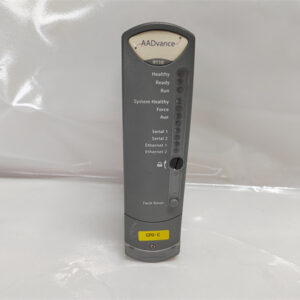
Here’s what I know about T9851 after 25 years around ICS and Triconex hardware: it’s a communication or gateway module from the ICS Trusted family, and it’s the kind of part that makes a plant manager’s phone light up at 2 a.m. The reason is simple — these modules sit between the safety controller and the rest of the plant, and when they fail, the controller doesn’t trip. It just stops talking. Your HMI freezes. Your historian goes flat. And nobody knows why for forty minutes.Engineers buy this part because a legacy ICS or Tricon system is down and the OEM won’t sell new. In that situation, the spec sheet is decoration. What matters is the nameplate photo, the revision suffix, and whether the module boots in your rack. I’ve lost more outage windows to a wrong revision than to a dead module. Get the nameplate photo before you issue the PO.
Quality SOP & Tech Pitfalls
The Lab Report (SOP):
- Counterfeit/visual check — nameplate photographed against the customer’s old unit; PCB inspected for re-soldered components, refilled capacitors, or relabeled casings.
- Live test on test rack — energize, confirm no smoke, no abnormal heat after 30 minutes.
- Insulation resistance + multimeter checks — Fluke 115 and 500 V megger across input/output isolation.
- Communication loop test — where the module type allows, confirm data exchange with a test master before shipping.
- Revision/serial logging — recorded on the packing slip.
- Anti-static sealing — ESD bag, desiccant, original box where available.
The Engineer’s Warning:Two mistakes dominate with ICS/Triconex gateway spares.First, buying on the part number without confirming the module type. The reseller descriptions for this exact number disagree on whether it’s an I/O expander or a communication gateway. If you order a gateway module into a rack expecting an I/O module, the rack won’t configure — and you’ll find out during commissioning, not during procurement.Second, not photographing the old module. Settings on these modules live in DIP switches, jumpers, or a configuration that isn’t printed anywhere. I once watched a technician swap an ICS comm module without photographing the DIP settings. Correct part number. Wrong configuration. The system came up “healthy” and then dropped every third packet for six hours. Photograph the old module — all sides, settings visible — before you remove it.
Installation & Configuration Guide
⚠️ Pre-Installation (10 min)
- Confirm the system is safe. Lockout/tagout the rack power supply, not just the module.
- Wait for capacitor discharge — 5 minutes minimum on legacy ICS hardware.
- Photograph everything: old module nameplate (all sides), connector wiring, DIP switch/jumper positions, and the rack slot number. This one step prevents most startup failures.
Removal (5 min)
4. Label every wire with tape and marker. Don’t rely on color codes in an old panel.
5. Release the DIN rail or rack clips slowly. Old plastic goes brittle.
6. Pull straight out. Don’t rock the card — bent connector pins aren’t recoverable in the field.Installation (10 min)
7. Copy the DIP switch and jumper settings from your photos onto the new module BEFORE inserting it. Skipping this is the single most common cause of post-swap failures.
8. Confirm the full part string matches, suffix characters included.
9. Seat the module firmly until the clips click. No partial insertion.Power-On & Testing (15 min)
10. Restore power. Watch the LED boot sequence and compare against the old module’s behavior.
11. Verify 24 V DC at the module terminals with a Fluke 115.
12. Confirm communication with the host controller. No timeouts, no error LEDs.
13. Log the serial and revision into your maintenance records.
Compatible Replacement Models
| Model | Tier | Notes |
|---|---|---|
| T9851 (same, new surplus) | ✅ Drop-in Replacement | Only realistic option. Confirm suffix characters match your old unit. |
| T9801 / T9881 | ⚠️ Software Compatible | Same family, different configuration. Requires reconfiguration and possibly a re-test. Budget 2–4 hours. |
| Triconex 3503E / 3600 series | ❌ Hardware Mod Required | Modern replacement. Different rack, different wiring. Only worth it on a full system upgrade. |
| Current Schneider Electric comm module | ❌ Hardware Mod Required | No drop-in path. Plan a system upgrade, not a swap. |
Frequently Asked Questions (FAQ)
Q: Is this an I/O module or a communication gateway?
A: Unknown — and that’s the honest answer. Reseller listings for this exact part number claim both. One source lists it under “communication interface and gateway modules”; another describes a 40-channel I/O module. Get the nameplate photo and settle it there.Q: Can I hot-swap this safely?
A: Depends on the system configuration. ICS Trusted systems support hot-swap for some module types, but not all. Check your OEM manual. If in doubt, isolate the rack power.Q: The reseller sent a spec sheet. Can I trust it?
A: No. I’ve seen this part number paired with specs for a completely different module. Trust the nameplate and the OEM manual, not the marketing page.Q: What if the settings don’t match my old module?
A: Stop. Don’t energize. Copy the DIP/jumper settings from your pre-removal photos first. A correct part number with wrong settings will still fail.Q: Do you have it in stock?
A: Multiple surplus channels list it, with quoted prices in the RMB 888 to 15,220 range depending on the seller. Quantity is limited — confirm before scheduling your outage.Q: What’s the warranty?
A: One year from shipment, covering non-human-caused failure. It does not cover damage from wrong-type installation, ESD, or incorrect supply voltage.Q: Who has the final say on specifications?
A: The OEM documentation and your old module’s nameplate. I couldn’t find an ICS datasheet for this number and I won’t guess. If you have the original system manual, that’s your authority.