

 Tel:
Tel:  Email:
  WhatsApp:
 Description
Key Technical Specifications
| Parameter | Specification |
|---|---|
| Processor (CPU) | Intel EP80579, 1.2 GHz (1200 MHz) Quad-Core |
| Memory / Storage | 1 GB RAM, 2 GB Flash |
| Operating System | QNX Neutrino Real-Time OS |
| Input Voltage | 24/28 VDC (Nominal), approx. 12W power draw |
| Cooling Method | Dual Redundant Fans (Specific to H3A revision) |
| Communication | IONet (Proprietary Ethernet), IEEE 1588 Clock Sync |
| Operating Temp | 0°C to 65°C (32°F to 149°F) |
| Safety Rating | SIL 2/3, IP67 (when mounted correctly) |
| Mounting | Panel Mount (Vertical airflow required) |
| Dimensions | 6.4 in (H) x 8.1 in (W) x 1.4 in (D) |
Product Introduction
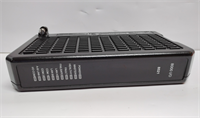
If you’ve ever been called out to a power plant at 2 AM because a turbine controller froze, you know that processor speed and OS stability aren’t just specs—they’re the difference between a quick reboot and a million-dollar outage. The GE IS420UCSBH3A is the workhorse UCSB controller for the Mark VIe platform, designed specifically to handle the brutal, high-speed logic required for gas and steam turbines. Unlike the older Mark V boards, this isn’t just an I/O pack; it’s a standalone computer module running the show.The reason most engineers stick with the H3A revision is the hardware under the hood. It packs a 1.2 GHz Intel EP80579 quad-core processor and runs on QNX Neutrino, a real-time operating system that doesn’t crash when the network gets noisy. While some other UCSB models in this series are fanless, the H3A comes with dual redundant fans. I actually prefer this for older cabinets that run hot—the active cooling keeps that 1.2 GHz chip from throttling during peak load transients. It connects via IONet for microsecond-level synchronization, which is non-negotiable when you’re managing fuel stroke and exhaust temperatures.
Quality SOP & Tech Pitfalls (The Reality Check)
The Lab Report (SOP)
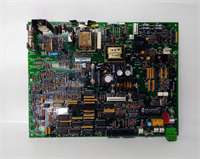
Before we ship this module, it goes through a strict “no-dead-on-arrival” protocol. We start with a visual inspection of the PCB and connectors to ensure there’s no corrosion or bent pins from shipping. Next, we hook it up to a regulated 24 VDC bench supply for a Live Test. We verify that the “Power,” “Run,” and “OK” LEDs light up in the correct boot sequence and that the dual fans spin up without grinding. Finally, we check the Ethernet port link lights and seal it in an anti-static bag with moisture-absorbing desiccant.The Engineer’s Warning (Pitfalls)
Here is where people mess up: The IS420UCSBH3A has active cooling fans, unlike the H1A or S1A models. If you are replacing an older fanless unit with this H3A, you must ensure there is vertical clearance above the module. I once saw a tech shove this into a tightly packed rack with zero airflow; the OT (Over Temperature) LED lit up within 20 minutes, and the controller tripped the turbine on a hot day. Also, double-check your IONet cabling. This module relies on proprietary Ethernet protocols, and plugging it into a standard commercial switch instead of the I/O packs will just give you a blinking amber light and a headache.
Installation & Configuration Guide
Swapping this controller is straightforward if you respect the静电 (ESD) and the wiring. Follow this 30-minute swap guide:
- Pre-Installation & Safety: ⚠️ Warning: Ensure the turbine control system is in a safe maintenance state. If this is a redundant setup (TMR), verify the other controllers are holding the load. Take a photo of the existing module’s LED status before pulling it.
- Removal: Disconnect the 24 VDC power leads and the IONet Ethernet cables. Release the mounting screws or DIN clips. Carefully slide the module out. Do not touch the exposed circuit board edges.
- Installation: CRITICAL STEP: Before installing the new IS420UCSBH3A, compare the jumper settings (if any are accessible on your specific sub-revision) with the old unit. While most H3A models are factory set, a mismatched jumper can cause communication failures. Slide the module into the panel mount and secure it tightly to ensure proper grounding.
- Power-On & Testing: Reconnect the 24/28 VDC power. Watch the front panel LEDs. You should see the Power LED immediately, followed by the boot sequence. Verify that the “OT” (Over Temp) light stays off. Once booted, use the Workstation (HMI) to confirm the controller is “Online” and synchronized with the I/O packs.
Compatible Replacement Models
| Compatibility | Model | Notes |
|---|---|---|
| ✅ Drop-in Replacement | IS420UCSBH3A | Exact match. Same 1.2 GHz CPU and redundant fans. |
| ⚠️ Software Compatible | IS420UCSBH4A | Similar UCSB module, but typically fanless. Verify thermal limits before swapping. |
| ⚠️ Software Compatible | IS420UCSCH1B | Higher clock speed (1.6 GHz), but requires checking chassis power budget and firmware. |
| ❌ Hardware Mod Required | IS420UCSBH1A | Older revision. Different thermal profile and processing power; not recommended for direct swap in high-load apps. |
Frequently Asked Questions (FAQ)
1. Can I hot-swap this module while the turbine is running?
If your system is configured for TMR (Triple Modular Redundancy) or dual-redundancy, yes, you can usually swap one controller while the other takes the load. However, I always recommend putting the specific controller in “Maintenance Mode” via the HMI first to prevent a nuisance trip.2. Why is the “OT” LED flashing on my new unit?
The OT LED stands for Over Temperature. Since the IS420UCSBH3A uses dual redundant fans, check if they are actually spinning. If the fans are running but the light is on, your cabinet ambient temperature might be exceeding the 65°C limit, or the airflow vents are blocked by dust.3. Does this module come with the application code pre-loaded?
No. Like most GE controllers, it ships with the QNX OS and firmware, but not your specific site logic. You will need to download the site-specific configuration from your Mark VIe Workstation (HMI) after installation.4. Is the memory upgradeable if I run out of space?
The 1 GB RAM and 2 GB Flash are soldered onto the board. You cannot upgrade them in the field. If you’re hitting memory limits, you need to optimize your logic or look at a higher-spec controller revision.5. What does the “IONet” port connect to?
Do not plug this into your office network. The IONet ports are for GE’s proprietary high-speed Ethernet that connects strictly to the I/O Packs (like the PVIB or YICS packs) and other controllers in the same turbine cabinet.6. My old module was fanless. Is it okay to use this H3A with fans?
Yes, it is backward compatible. In fact, if your control cabinet runs hot, the H3A’s redundant fans are an upgrade in reliability. Just make sure you have the physical clearance for them.