

 Tel:
 Email:
 WhatsApp:
Description
Key Technical Specifications
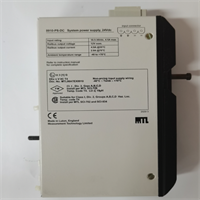
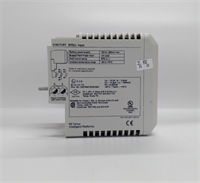
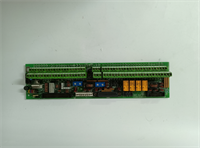
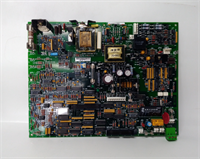
- Part Number: IS200TVIBH2BBB
- Board Type: Vibration terminal board (TVIB)
- Compatible Systems: GE Speedtronic Mark VI and Mark VIe
- Paired Board: Interfaces with VVIB vibration boards; not compatible with other Mark VIe I/O boards
- Channel Count: Multiple analog I/O channels
- Input Range: 0–10 V analog
- Output Range: 0–10 V analog
- Accuracy: High-precision analog measurement
- Resolution: 12-bit
- Sampling Rate: High-speed sampling
- Connectors: Multiple plug connectors plus barrier terminal blocks
- Configuration: Onboard jumper switches; no potentiometers or field calibration required
- Architecture Support: TMR and Simplex configurations
- MTBF: Exceeds published industrial specifications (verify with OEM datasheet)
Product Introduction
I’ve walked into more turbine halls than I can count, and vibration boards are always the ones that make operators sweat. The IS200TVIBH2BBB is GE’s vibration terminal board for the Speedtronic Mark VI and Mark VIe turbine control systems. It sits between the field vibration sensors and the VVIB processing boards, handling signal routing for analog channels at 0–10 V with 12-bit resolution.Engineers don’t choose this board because it’s flashy. They choose it because it’s the only terminal board that talks to the VVIB cards in a Mark VI/VIe rack. The high-speed sampling rate and precise analog accuracy are solid for shaft vibration monitoring on steam and gas turbines. This specific revision is generally reliable, but the jumper settings are unforgiving — get them wrong and you’ll spend a shift chasing ghost alarms.
Quality SOP & Tech Pitfalls
The Lab Report (SOP):
- Visual and counterfeit check — inspect GE branding, solder joints, connector pins, and barrier terminal blocks for corrosion or heat damage.
- Jumper verification — all onboard jumpers photographed and compared against the original board layout.
- Live test on compatible Mark VI/VIe test rack — verify backplane recognition and VVIB board communication.
- Multimeter checks — used for continuity on terminal blocks and connector pins.
- Insulation resistance test on barrier terminals.
- Firmware/revision logging and anti-static sealing with test records.
The Engineer’s Warning (Pitfalls):
I’ve seen a plant lose days because someone swapped a TVIB board without photographing the jumper positions. The board powered up fine — LEDs looked normal — but vibration channels reported faults because the jumper pairs were shifted by one position. Another time, a technician assumed any Mark VIe board would mate with the VVIB. It won’t. The TVIB only interfaces with VVIB boards, period. Don’t guess on this one.
Installation & Configuration Guide
- Pre-Installation: ️ Follow site lockout/tagout procedures. Wait for capacitor discharge. Photograph every jumper position and terminal wiring on the old board. Note the system architecture (TMR or Simplex).
- Removal: Label all cables. Release retaining hardware carefully. Pull the board straight out — don’t rock it. Inspect the backplane connector for bent pins.
- Installation: Copy every jumper setting from the old board to the new one before inserting it. This prevents the majority of startup failures. Seat the board firmly into the rack and secure retaining hardware. Reconnect all labeled cables.
- Power-On & Testing: Apply system power. Watch the LED boot sequence. Verify VVIB board communication in the turbine control interface. Check all vibration channels for valid readings. Confirm no diagnostic alarms.

Compatible Replacement Models
| Compatibility | Model | Notes |
|---|---|---|
| Drop-in Replacement | IS200TVIBH2BBB (same revision) | Exact match — preferred option |
| ️ Software Compatible | IS200TVIBH2BAA, IS200TVIBH2BCC | Same TVIB family; verify jumper map and VVIB compatibility before substitution |
| ️ Verify First | IS200TVIBH2B (base series) | May require jumper reconfiguration; confirm Mark VI vs. Mark VIe architecture |
| Not Compatible | Non-GE vibration boards | Backplane protocol and VVIB interface are proprietary — do not attempt |
Frequently Asked Questions (FAQ)
Can I hot-swap this board?
Mark VI/VIe I/O boards are generally designed for hot insertion, but vibration channels feed into trip logic. Swapping under load without bypassing the affected channels can trigger a false trip. Follow your site’s change management procedure. Always.Will this work in both Mark VI and Mark VIe?
Yes — the TVIB board is supported in both architectures, in TMR and Simplex configurations. The limiting factor is the VVIB board revision it’s paired with.What happens if the jumpers are wrong?
Channels will fault, readings will drift, or the board may not communicate with the VVIB at all. I’ve seen this mistaken for a board failure when it was just a jumper in the wrong pair.Does it need calibration?
No. The board has no potentiometers and requires no field calibration.What info do you need for a quote?
Full part number (IS200TVIBH2BBB), system type (Mark VI or Mark VIe), TMR or Simplex architecture, VVIB board revision, and a photo of the existing board’s jumper settings.