 Tel:
 Email:
 WhatsApp:
Description
Key Technical Specifications
- Part Number: BALEXT-SMP
- Manufacturer: KOKUSAI
- Module Type: High-frequency output / oscillator control module
- Supply Voltage: 24 V DC nominal
- Frequency Output: Adjustable kHz range; exact span depends on revision and configuration
- Control Input: Analog 0–10 V and PWM input supported
- Frequency Stability: Specified stability across industrial temperature range; verify exact tolerance with OEM datasheet
- Communication / Integration: Interfaces with PLC, DCS, and motion controller platforms; protocol support varies by application
- Protection: Over-temperature protection; status output pin for external monitoring
- Mounting: Compact industrial panel-mount form factor
- Certifications: CE, UL 61010, RoHS compliance reported for some variants — confirm per nameplate
- Supply Status: Discontinued spare; version and connector configuration must be checked item by item

Product Introduction
I’ve seen process lines stall because a frequency module drifted after a cabinet got too hot. The KOKUSAI BALEXT-SMP shows up in semiconductor manufacturing equipment, precision welding systems, and induction heating loops where the controller needs a clean, adjustable high-frequency signal.It is not a generic PLC CPU. It is a specialty frequency output module that accepts a 0–10 V or PWM command and delivers a controlled kHz-range output to downstream RF, heating, or process stages. Engineers keep these on the spare list because the process depends on frequency stability, not just “the board powers up.” If your system uses this module, the critical check is whether the replacement matches the original frequency range, control input type, connector layout, and monitoring pin assignment.
Quality SOP & Tech Pitfalls
The Lab Report (SOP):
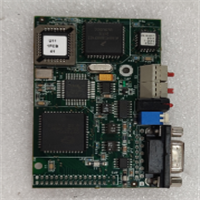
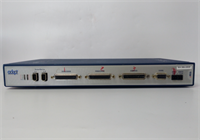
- Visual inspection — check nameplate, connectors, PCB condition, heatsink area, and signs of thermal stress.
- Nameplate verification — confirm model, revision, supply rating, and output configuration.
- Power-up test — apply 24 V DC and verify normal startup behavior.
- Control input check — confirm response to 0–10 V and/or PWM command signals.
- Frequency output verification — measure output stability across the configured range.
- Status output / monitoring pin check — verify fault and ready signals if equipped.
- Thermal and load observation — monitor for drift, shutdown, or abnormal heating.
- Documentation — record revision, test results, and photos before anti-static packaging.
The Engineer’s Warning (Pitfalls):
The biggest mistake is ordering by “BALEXT-SMP” alone. This designation appears across multiple listings with conflicting descriptions — some call it a high-frequency module, others a PLC I/O board, and others a fiber transceiver. That inconsistency alone means you must verify the actual nameplate.Another common failure point is control input mismatch. If the original module expects a 0–10 V command and the replacement expects PWM — or vice versa — the process frequency will not track correctly. I’ve seen replacements power up cleanly but still cause process instability because the control interface looked compatible but was not.
Installation & Configuration Guide
- Pre-Installation: ⚠️ Follow site lockout/tagout. Isolate the process loop. Photograph the original nameplate, wiring, DIP switches, jumpers, and connector pinout. Record the original frequency range and control signal type.
- Removal: Label all cables. Disconnect control and power wiring. Remove mounting hardware. Inspect the backplane or DIN rail interface for corrosion or loose contacts.
- Installation: Copy all jumper, switch, and wiring settings from the original module before installing the replacement. Seat the module firmly. Reconnect power, control input, frequency output, and status monitoring wires exactly as labeled.
- Power-On & Testing: Apply 24 V DC. Verify normal LED or status indication. Apply a known 0–10 V or PWM command. Measure frequency output at low, mid, and high setpoints. Confirm no over-temperature alarms. Validate process stability before returning to full production.
Compatible Replacement Models
| Compatibility | Model / Option | Notes |
|---|---|---|
| ✅ Drop-in Replacement | BALEXT-SMP same revision | Best choice when nameplate, connectors, and control input match |
| ⚠️ Verify First | BALEXT-SMP variant revisions | Confirm frequency range, 0–10 V vs PWM input, status pinout, and mounting |
| ⚠️ System Upgrade | Equivalent KOKUSAI or OEM-specified frequency module | Requires process engineer review and setpoint requalification |
| ❌ Not Compatible | Generic PLC I/O or unrelated communication modules | Function and interface do not match a high-frequency output module |
Frequently Asked Questions (FAQ)
Is BALEXT-SMP a PLC module?
Not exactly. Public listings describe it as a high-frequency output module used in semiconductor and precision heating applications, not a standard PLC CPU. Some reseller pages call it a PLC or I/O board, so the nameplate must be checked.Can I replace it without checking the revision?
No. Revisions may change the frequency range, control input type, connector layout, or monitoring signals.What causes failures in the field?
Thermal drift, control signal mismatch, connector wear, and incorrect frequency setpoints are the usual suspects. The module itself can survive years, but the process will notice small output changes quickly.Does it support 0–10 V and PWM at the same time?
Some variants support both control methods, but only one is typically active per configuration. Verify the installed wiring and internal settings.What information is needed for a quote?
Full nameplate photo, model and revision, supply voltage, control input type, frequency range, connector photos, installed equipment model, and current fault description.