 Tel:
Tel:  Email:
  WhatsApp:
 Description
Key Technical Specifications
| Parameter Name | Specification Value |
|---|---|
| Part Number | IS200EPCTG1A |
| Manufacturer | GE Power Controls |
| Board Type | Potential Transformer (PT) & Current Transformer (CT) Interface |
| System Compatibility | EX2100 / EX2100e Excitation Systems |
| Input Load | < 1 VA |
| Signal Processing | Scaling and conditioning of analog feedback signals |
| Communication | Modbus TCP/IP (via host controller) |
| Operating Temperature | -40°C to +85°C |
| Humidity Tolerance | 5% to 95% RH (Non-condensing) |
| Mounting | DIN Rail / Chassis Mount (Mark VIe Rack) |
| Weight | Approx. 0.3 kg |
| Warranty | 1 Year (Standard) |
Product Introduction
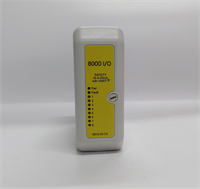
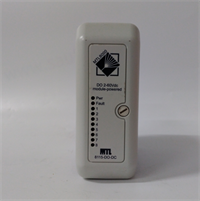
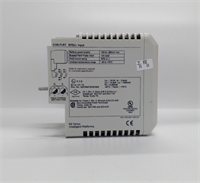
The IS200EPCTG1A is a specialized input/output module designed for the GE Mark VIe turbine control platform, specifically within the EX2100e excitation system. It functions as the “eyes” of the voltage regulator, accurately sensing the generator’s output through Potential Transformers (PTs) and Current Transformers (CTs). This board bridges the high-voltage world of the generator with the low-voltage logic of the control processor.In practical terms, this module ensures the generator maintains the correct power factor and voltage levels. Without accurate feedback from the IS200EPCTG1A, the excitation system cannot properly regulate the magnetic field, leading to potential grid instability or generator overheating. The board features isolation transformers that protect the sensitive control electronics from high-voltage spikes on the primary side, a critical safety feature in harsh power plant environments.
Installation & Configuration Guide
Preparation (10 min)
Verify the model number matches your system requirements; IS200EPCTG1A replaces older revisions but firmware compatibility should be checked against the Mark VIe toolbox version. Ensure you have the correct terminal boards (TBQC or similar) ready, as this module plugs directly into them. Disconnect all power to the EX2100e rack. High voltage can be present on the backplane even if the main breaker is off—verify with a multimeter.
Removal (5–10 min)
Locate the locking levers on the card faceplate. Disengage the top and bottom latches. Pull the card straight out using the handle. Do not wiggle it excessively, as this can damage the backplane connector pins. If the card is stuck, check for a retention screw at the top of the slot. Note: Always document the position of any external wiring connected to the terminal block before disconnecting.
Installation (10 min)
Align the IS200EPCTG1A with the slot guides. Insert the top pivot hook into the chassis retainer first. Push the bottom of the card inward until the connectors seat firmly. Engage the locking levers—they must snap shut completely. If they don’t, the card is not fully seated, which will cause communication errors. Connect the PT/CT wiring to the appropriate terminals (usually J1/J2 or designated high-voltage inputs) according to the wiring diagram.
Power-On & Test (10 min)
Apply auxiliary power (typically 24V DC). Observe the status LEDs. A steady green light usually indicates healthy operation, while a flashing amber light might suggest a configuration mismatch or missing signal. Use the ToolboxST software to monitor the “Generator Voltage” and “Field Current” readouts. If the values read zero despite the generator running, check the fuses on the terminal board or the secondary wiring of the PT/CT.
Troubleshooting Quick Reference
| Symptom | Probable Cause | Corrective Action |
|---|---|---|
| “PT Fail” Alarm Active | Blown fuse on terminal board or wiring break. | Check fuses on the associated terminal board (TBQC). Measure AC voltage at the input terminals. |
| Voltage Reading Fluctuates | Loose connection or ground loop. | Tighten terminal screws. Verify shield grounding is single-point (at the source). |
| Red “Hardware Fail” LED | Internal component failure or EEPROM error. | Reseat the card. If persistent, replace the module. |
| No Communication with Host | Backplane connector issue. | Inspect DIN connector pins for bending. Clean contacts with contact cleaner. |
| Inaccurate Current Reading | CT ratio mismatch in configuration. | Verify the scaling parameters in the ToolboxST software match the physical CT ratio. |
Dimensions, Mounting & Wiring Notes
- Physical Size: Standard GE Mark VIe form factor, approx. 21 cm x 5 cm. Fits standard 19-inch racks.
- Mounting: Vertical insertion into the Mark VIe rack. Requires secure locking levers to withstand vibration.
- Wiring: Inputs are typically high-voltage AC (from PTs) and low-current AC (from CTs). Use 14 AWG to 18 AWG stranded wire. Ensure proper torque on terminals to prevent heating. Shield cables to reduce electromagnetic interference (EMI) noise.

FAQ (5–7 questions)
Q: What does the “Bridge Interface” function actually do?
A: In the EX2100e system, the IS200EPCTG1A acts as the interface between the main control board and the power bridge (the rectifier stack). It conditions the feedback signals so the controller knows exactly how much voltage is being produced, allowing it to adjust the firing angle of the SCRs (thyristors) precisely.Q: Is this compatible with the older Mark V systems?
A: Generally, no. The Mark V system uses different I/O cores (like the TCQA board). The IS200EPCTG1A is designed for the Mark VIe architecture. Attempting to use it in a Mark V rack will likely result in mechanical fitment issues and communication failures.Q: How do I verify if my unit is genuine GE?
A: Check the label quality. Genuine GE labels are laser-etched or high-quality print that resists solvents. Look for the specific font and the “GE” logo clarity. Also, inspect the PCB inside (if visible); genuine boards have clean soldering and distinct component markings (e.g., Dale/Vishay resistors), whereas clones often look messy.Q: Can I swap this with an IS200EPCTG1AAA?
A: Yes, the “AAA” suffix typically denotes a later revision or manufacturing update. They are functionally equivalent, but always cross-reference the manual to ensure no firmware dependencies exist for your specific turbine application.Q: Why is the module getting hot (>60°C)?
A: While some heat is normal due to internal regulation, excessive heat often points to a short circuit on the input side or a failing capacitor on the board itself. Check the input load; if it exceeds 1 VA, something is wrong with the connected PT/CT circuit.