
 Tel:
Tel:  Email:
  WhatsApp:
 Description
Key Technical Specifications
| Parameter | Specification |
|---|---|
| Manufacturer | General Electric (GE Industrial Systems) |
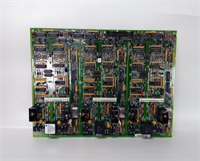
| Product Type | Analog I/O Board (RST – Remote Supervisory Terminal) |
| Board Function Code | TCQA (Analog Signal Scaling & Conditioning) |
| Input Signals | LVDT, Thermocouple, Pulse, Voltage, Vibration |
| Output Signals | Servo Valve, Relay Driver, 4-20mA |
| Connectors | 2PL (Power), 3PL (Data Bus), JE, JF, JG |
| Configuration | Hardware Jumpers (J1, J2, J5, J6, J7, J8) |
| Current Range | Selectable 20 mA or 200 mA (via jumpers) |
| Origin | United States |
Product Introduction
The GE IS200EPBPG1A is a critical Analog I/O board used within the Speedtronic Mark V gas turbine control system. Identified functionally as a TCQA card, it serves as the bridge between the physical sensors on the turbine and the digital control logic. It handles the scaling and conditioning of raw analog signals—such as those from thermocouples, LVDTs (Linear Variable Differential Transformers), and vibration probes—to ensure the controller receives accurate data.This board is designed to reside in the I/O cores (R1, R2, and R3). Its main differentiation lies in its versatility; it manages a wide spectrum of signal types, from high-impedance thermocouple inputs to active 4-20mA loops for fuel flow pressure or compressor stall detection. The unit features specific connectors like the JE for generator/line signals and the 3PL for data bus transmission to the STCA board.
Installation & Configuration Guide
Phase 1: Preparation (Safety First)
WARNING: Electrostatic Discharge (ESD) Sensitive. This board contains sensitive microelectronics. Always wear a grounded ESD wrist strap when handling the IS200EPBPG1A.
- Verify Part Number: Ensure the replacement matches
IS200EPBPG1A. - Check Revision: Compare the revision letter (e.g., G1A vs G1ACD) with the existing hardware.
- Tools Required: ESD strap, small flathead screwdriver (for jumpers), torque screwdriver.
Phase 2: Removal (If replacing)
- Label Cables: Before unplugging, tag the cables connected to JE, JF, JG, and 3PL connectors to prevent re-wiring errors.
- Disconnect: Unplug the ribbon cables and terminal blocks.
- Unmount: Remove the mounting screws securing the board to the rack. Slide it out carefully.
Phase 3: Installation
- Insert Card: Slide the IS200EPBPG1A into the designated slot in the Mark V core.
- Secure: Tighten mounting screws.
- Reconnect: Plug the cables back into their specific sockets (JE to JE, etc.). Ensure the 3PL data bus connector is fully seated—this is critical for communication.
Phase 4: Configuration & Power-On
- Jumper Check (Critical):
- J1/J2: Select mA output circuit.
- J5/J6: Configure current range (20 mA vs 200 mA).
- J7: RS232 port test setting.
- Note: Verify these settings against the original board before powering up.
- Power Up: Restore control power to the Mark V panel.
- Verification: Monitor the operator interface for valid sensor readings (e.g., check that LVDT position matches physical reality).
Troubleshooting Quick Reference
| Symptom | Probable Cause | Corrective Action |
|---|---|---|
| No Communication Fault | Loose 3PL Data Bus connection | Reseat the 3PL ribbon cable; check for bent pins. |
| Erratic 4-20mA Reading | Incorrect Jumper Setting | Verify J5/J6 jumpers are set to the correct range (20mA vs 200mA). |
| Zero LVDT Feedback | Broken wire or bad JF connector | Check continuity of the LVDT wiring at the terminal block (TBQC). |
| Compressor Stall Alarm | Signal noise or board failure | Inspect the input signal at the JB connector; verify shielding is grounded. |
Dimensions, Mounting & Wiring Notes
- Form Factor: Standard Mark V Eurocard format.
- Mounting: Vertical mounting in R1/R2/R3 Core racks.
- Wiring Connections:
- JA/JB/JF/JG: Connect to respective terminal boards (TBQA, TBQC, etc.).
- JE: Handles pulse, generator, and line signals.
- 2PL: Power input from TCPS board.
FAQ
What does “TCQA” mean in relation to this board?
TCQA stands for “Analog I/O Board.” It is the functional name for the IS200EPBPG1A within the Mark V system architecture. It tells you the board’s job is to condition analog signals like voltage and current.Can I use this board for a Mark VI system?
Generally, no. While GE parts often look similar, the Mark V and Mark VI architectures use different backplanes and data buses. The IS200EPBPG1A is specifically designed for the Mark V “R” cores.Why are there so many jumpers on the board?
The Mark V system is highly configurable. Jumpers like J5 and J6 allow the same physical board to handle different current loop requirements (20mA vs 200mA) without needing a different part number. Always photograph jumper settings before removing an old board.My board has suffix “ACD” (IS200EPBPG1ACD). Is it compatible?
Usually, yes. The suffix letters typically indicate minor revisions or manufacturing changes. However, you should always cross-reference the “Functional Description” or “Manual” to ensure the I/O capabilities remain identical.What is the JE connector used for?
The JE connector is a multi-purpose interface on this board. It typically handles pulse inputs, generator signals, line signals, and servo valve driver outputs. It acts as a high-density I/O hub.