 Tel:
Tel:  Email:
  WhatsApp:
 Description
Key Technical Specifications
| Parameter | Specification |
|---|---|
| Part Number | IC086SLN080-A |
| Device Type | Unmanaged Industrial Ethernet Switch |
| Ports | 8 x 10/100 Mbps RJ45 (Auto-MDIX) |
| Power Input | 24 VDC (Redundant input terminals) |
| Operating Temp | -40°C to +75°C (Industrial Grade) |
| Housing | Metal enclosure, IP30 rated |
| Mounting | DIN-Rail or Wall Mount |
| Protocol Support | TCP/IP, Modbus TCP, EtherNet/IP (Transparent transport) |
| Max Current | Approx. 0.2A @ 24VDC (varies by load) |
| Certifications | UL 508, CE, ATEX (Zone 2 usually) |
Product Introduction
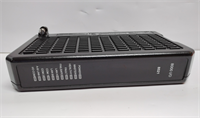
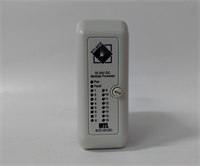
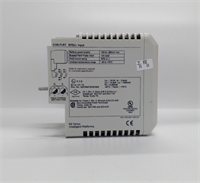
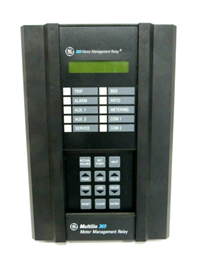
You don’t buy this device because you want “smart” features; you buy it because your controller is ten meters away from the sensor rack, and running individual cables back to the main panel is a nightmare. The IC086SLN080-A is GE’s answer to the “last mile” problem in automation. It sits between your PLC processor and your drop cabinets, taking one uplink and breaking it out into eight distinct connections for your I/O blocks.Frankly, I prefer these unmanaged units over managed switches for simple I/O drops. Why? Because there is no software to crash, no VLANs to misconfigure, and no Spanning Tree Protocol loops to bring down your network. You wire it up, power it on, and it works. It has a heavy-duty metal casing that dissipates heat well—essential when it’s mounted inside a cabinet baking in the sun. If you are maintaining a GE Fanuc or Emerson PACSystem installation, this is the glue that holds your topology together.
Application Scenarios & Field Case
Typical Use Cases:
- Remote I/O Expansion: Connecting multiple Proficy Field Control blocks to a single Ethernet cable run.
- Harsh Environments: Installing in unheated outdoor skid enclosures where commercial switches would fail due to condensation or cold.
- Legacy Retrofits: Replacing failed hubs or older coaxial networks with twisted-pair Ethernet infrastructure without changing the control logic.
Field Failure Story:
I was called to a water treatment plant where a critical lift station kept going offline. The PLC reported “Network Fault,” but the cabling checked out fine. We opened the cabinet and found a generic, off-the-shelf plastic desktop switch duct-taped to the back panel. It had died from the humidity and temperature swings. We swapped it with a spare IC086SLN080-A, mounted it properly on the DIN rail, and grounded the chassis. That was three years ago. It hasn’t missed a beat since. Lesson learned: Don’t put office gear in an industrial cabinet.
SOP Quality & Testing Transparency
We don’t just pull it off the shelf and throw it in a box. Here is how we verify these units before they leave our facility:
- Visual Inspection: We check the RJ45 ports for bent pins (common in rough handling) and ensure the terminal block screws aren’t stripped.
- Power-Up Test: We apply a stable 24V DC source and verify the PWR LED illuminates instantly.
- Link Integrity: We connect a laptop to all 8 ports simultaneously to ensure the Link/Act LEDs trigger correctly. No dead ports allowed.
- Throughput Check: A quick ping test under load to ensure the backplane isn’t choking on traffic.
- Packaging: The unit is bagged in anti-static wrap and padded to survive the shipping bounce.
Installation & Configuration Guide
This is a “dumb” switch, which makes installation easy, but there are still rules to follow.
- Pre-Installation:
- ⚠️ Power Down: Ensure the 24V supply is OFF.
- Check the mounting rail. The unit generates some heat; ensure there is airflow around the metal casing.
- Wiring:
- Connect the 24V DC power wires to the redundant terminal block. Polarity matters for the external circuit, but the unit has reverse polarity protection (usually).
- ⚠️ Grounding: Connect the earth ground screw. In noisy plants (VFDs nearby), skipping this will cause packet loss.
- Cabling:
- Plug your uplink from the PLC into any port (Auto-MDIX handles the crossover).
- Daisy-chain your I/O blocks to the remaining ports.
- Verification:
- Power up. Watch the LEDs. Solid Green means link; Blinking Amber/Green means activity. If a light is solid amber, you likely have a bad cable or a duplex mismatch (rare on unmanaged).
Compatible Replacement Models
Since this is a standard unmanaged switch, you have options if you can’t find the exact GE part number.表格
| Compatibility | Model Number | Notes |
|---|---|---|
| ✅ Drop-in Replacement | IC086SLN080 | Same unit, different revision. Verify voltage rating. |
| ⚠️ Functional Alternative | GE ENET-SW-08P | Newer generation PoE switch. Fits same footprint but costs more. |
| ⚠️ Third-Party Swap | Moxa EDS-208 | Requires rewiring the terminal block, but fits DIN rail and handles the temp range. |
| ❌ Avoid | Commercial Switches | Do not use Netgear/Linksys consumer gear. They will fail in <6 months. |
Frequently Asked Questions (FAQ)
Q: Can I manage this switch via IP address?
A: No. This is an unmanaged Layer 2 switch. It has no IP address, no web server, and no configuration menu. It is essentially a smart repeater.Q: Does this support fiber optics?
A: No, the IC086SLN080-A is copper only (RJ45). If you need fiber uplinks, look for the SFP variants in the GE portfolio (like the IC086SFP series).Q: Is it hot-swappable?
A: The switch itself can be powered up and down freely. However, plugging/unplugging the data cables while the system is live can cause momentary network glitches if your PLC network isn’t robust.Q: My “PWR” light is flashing. What does that mean?
A: On many GE modules, a flashing power light indicates a hardware fault or insufficient input voltage. Check your 24V supply; if it’s sagging below 20V, the switch won’t latch.Q: What firmware version does it have?
A: Unmanaged switches don’t run user-accessible firmware. The “firmware” is burned into the ASIC. You cannot upgrade it.