Key Technical Specifications
| Parameter | Specification |
|---|---|
| Product Type | Analog input module |
| Model | 3351 |
| System Platform | Tricon TMR safety system |
| Manufacturer | TRICONEX, now part of Schneider Electric |
| Input Signal | 4–20 mA DC |
| Channel Configuration | Commoned analog input |
| Redundancy | Triplicated I/O channels under TMR voting |
| Diagnostics | Per-channel fault detection and module health monitoring |
| Installation | Hot-swappable in Tricon I/O slots |
| Engineering Tool | TriStation / TriStation 1131 |
| Typical Applications | ESD, F&G, HIPPS, compressor and turbine protection |
| Status | Legacy / obsolete spare |
Product Introduction
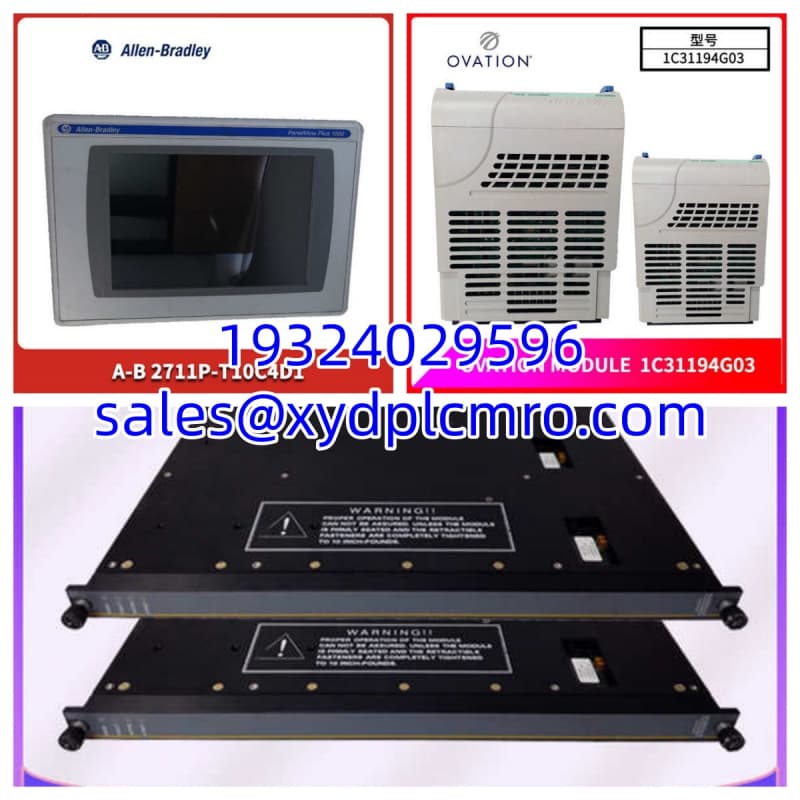
The TRICONEX 3351 is a Tricon analog input module used in safety instrumented systems where 4–20 mA process measurements must be trusted under fault conditions. It does not act as a standalone PLC. It sits inside the Tricon I/O rack, receives current-loop signals from field transmitters, and passes validated measurements into the TMR voting architecture.In practice, this module shows up in ESD, fire and gas, HIPPS, compressor protection, and turbine auxiliary systems. Its value is not just analog conversion; it is the ability to keep a safety loop alive when one channel fails. The 3351 is typically installed as part of a triplicated set across the A, B, and C legs of the Tricon system, so a single module fault does not force a spurious trip. That is why engineers keep these in the spare cabinet: they are low-profile, but they sit directly inside safety-critical measurement paths.
Quality SOP & Tech Pitfalls
The Lab Report (SOP)
- Visual inspection: verify full model 3351, TRICONEX label, PCB revision, connector condition, and absence of burn marks.
- Connector check: inspect backplane pins, terminal block contacts, and shielding integrity.
- Bench test: apply a calibrated 4–20 mA source and verify channel response if test fixtures are available.
- Insulation check: verify isolation between input groups and chassis per safe bench practice.
- Firmware/revision record: document module revision, serial number, and installed baseplate type.
- Packaging: seal in anti-static packaging after inspection.
The Engineer’s Warning (Pitfalls)
- Do not confuse TRICONEX 3351 with AI3351S2, PI3351, or communication modules. The “3351” number appears across multiple Tricon I/O families, and wrong substitution breaks the I/O map.
- Commoned versus non-commoned wiring matters. A 3351 commoned input module cannot always replace a non-commoned variant without reviewing the termination assembly and field wiring.
- TMR replacement must follow Tricon procedures. Replacing one leg of a triplicated set is usually acceptable, but replacing multiple legs simultaneously can degrade voting integrity.
- Baseplate and cable assembly compatibility must be confirmed. The module may fit mechanically, but wrong termination hardware can create ground loops, measurement drift, or false diagnostics.
Installation & Configuration Guide
1. Pre-Installation ️
- Obtain work clearance and follow SIS maintenance procedures.
- Photograph existing module labels, wiring, baseplate connections, and slot positions.
- Confirm the replacement module matches the original 3351 revision and channel type.
- Verify the TriStation configuration matches the installed I/O map.
2. Removal
- Identify the faulty leg using Tricon diagnostics before removal.
- Label all field wiring and baseplate connections.
- Remove the module from the Tricon I/O slot without disturbing adjacent channels.
- Inspect the baseplate for corrosion, loose terminals, or damaged pins.
3. Installation
- Insert the replacement 3351 into the correct I/O slot.
- Reconnect field wiring exactly per the original layout.
- Confirm the baseplate and shield connections match the OEM drawing.
- Do not change wiring or termination unless the engineering change is approved.
4. Power-On & Testing
- Restore power and check module status LEDs.
- Verify channel diagnostics in TriStation.
- Compare live readings against a known field value or calibrated source.
- Confirm no new faults appear in the Tricon diagnostic log.
- Document the replacement, including revision, slot location, and test results.
Compatible Replacement Models
| Compatibility | Model | Notes |
|---|---|---|
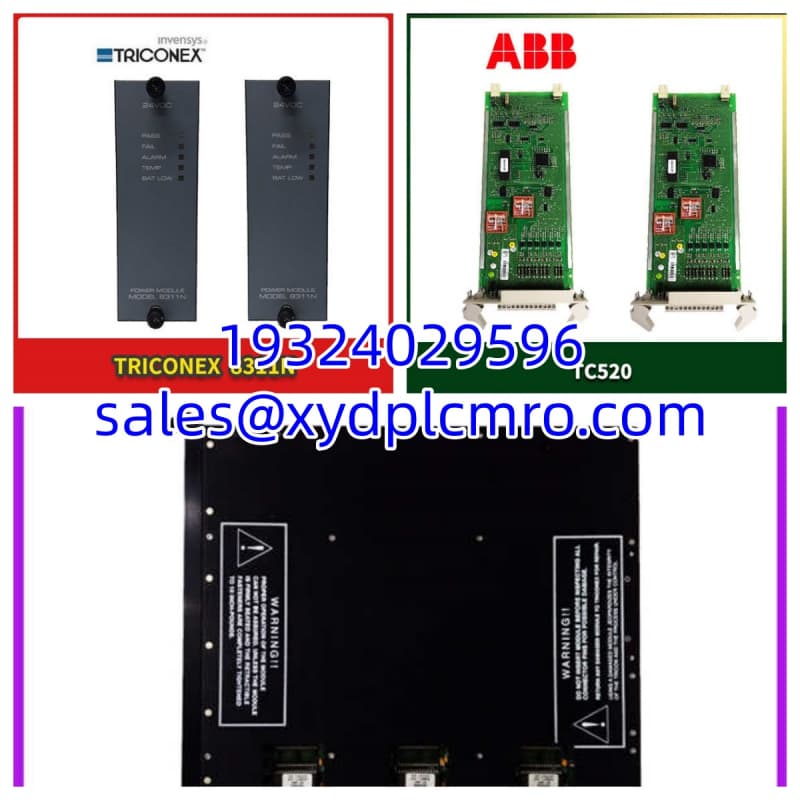
| Drop-in Replacement | TRICONEX 3351 | Same analog input module; verify revision, baseplate, and channel configuration. |
| ️ Engineering Review Required | AI3351S2 or other 3351 variants | May share the 3351 family designation but can differ in channel count, input type, or termination. |
| Not a Direct Replacement | Communication modules, DO modules, or PI modules | Different function and I/O mapping; cannot replace a 3351 analog input module. |
Frequently Asked Questions (FAQ)
Q: Is the TRICONEX 3351 a PLC or controller?
No. It is an analog input module for the Tricon TMR safety system.Q: What signal does it accept?
It is typically specified for 4–20 mA DC analog inputs in a commoned configuration.Q: Can it be hot-swapped?
Yes. Tricon I/O modules are designed for hot replacement, but the work must follow SIS maintenance procedures.Q: Can I replace it with any “3351” module?
No. The 3351 designation appears across multiple Tricon I/O variants. Confirm the exact type, revision, and baseplate before substitution.Q: Is this module still in production?
It is generally treated as a legacy/obsolete spare. Availability depends on surplus stock and regional supply.Q: What causes bad readings after replacement?
Most often incorrect wiring, wrong baseplate, ground loops, calibration mismatch, or a TriStation configuration that does not match the installed hardware.