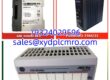
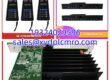
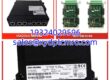
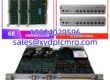
Product Introduction
In complex industrial drive systems, the precise acquisition of field signals and rapid response are often the deciding factors for operational stability. The GE DS200SIOCG1AEA is a signal input control card designed to solve this exact pain point, serving as a critical component within GE’s drive control architecture.To be frank, the design choice here is actually clever. It integrates three microprocessors and shared RAM, with a clear division of labor: one manages drive control and the user interface, another handles high-speed I/O and digital timers, and the third is dedicated to the math-intensive computations for motor control. This architecture allows it to handle multitasking with ease, resulting in a solid mean time between failures (MTBF) that significantly reduces the risk of unplanned downtime on the production line.
Key Technical Specifications
| Parameter | Value |
|---|---|
| Product Model | DS200SIOCG1AEA |
| Manufacturer | GE (General Electric) |
| Product Type | Drive Control Card / Signal I/O Module |
| Core Processor | Integrated 3x Microprocessors |
| Memory Architecture | Shared RAM (supports concurrent multi-processor access) |
| Signal Processing | Digital I/O, Analog I/O, High-Speed I/O |
| Expansion Interface | Supports connection to auxiliary expansion boards |
| Mounting Style | Modular plug-in installation |
| Applicable System | GE Industrial Drive & Control Systems |
Application Scenarios & Pain Points
The real value of this module becomes apparent the moment something goes wrong on the line. Without a reliable I/O card like the DS200SIOCG1AEA, a single faulty sensor reading can cascade into a full system trip, costing thousands of dollars per hour in lost production. It acts as the critical bridge, ensuring that feedback from motors and actuators is processed accurately and instantly.
- Petrochemical Plants: Used in turbine control systems where precise speed and load management are non-negotiable for safety. A failure here doesn’t just stop a machine; it can trigger a hazardous shutdown.
- Power Generation: Essential for managing the excitation systems in large generators. If you’re seeing erratic voltage regulation, the issue often traces back to the signal processing on cards like this one.
- Heavy Manufacturing: In steel mills or automotive presses, the high-speed I/O capability is vital. It handles the rapid on/off signaling required for robotic welding or stamping, where a millisecond of latency results in a scrapped part.
- Legacy System Maintenance: For facilities still running older GE Mark V systems, finding a replacement for a failing control card is often the only way to avoid a costly, full-scale control system retrofit.
Installation Pitfalls & Lessons Learned
I’ve seen this happen too many times: a technician swaps a card, powers up, and nothing works. Or worse, it works for an hour and then smokes. Don’t let that be you.
- Firmware Version Mismatch: Just because the part number matches doesn’t mean the firmware does. A newer firmware version on a replacement card can sometimes cause communication timeouts with older system software. Always record the firmware version from the old card before you pull it.
- DIP Switch & Jumper Settings: This is the number one rookie mistake. The factory defaults almost never match your specific application. Take a photo. Then take another one. Copy the settings from the old card to the new one exactly. Missing a single jumper can render the whole board useless.
- Wiring Incompatibility: Don’t assume the pinouts are identical across revisions. Cross-check the wiring diagram for your specific revision. I once saw a whole rack get powered down because someone forced a connector that had a slightly different keying.
- Power Supply Headroom: Newer revision cards can sometimes draw slightly more current. Before you install it, do a quick calculation of your rack’s total power consumption. Ensure you have at least a 20% headroom on your power supply, or you’ll be troubleshooting a brownout condition.
- ESD Damage: It sounds basic, but skip the wrist strap once, and you can fry a $2,000 module before it’s even installed. Static damage is silent. Ground yourself.