
 Tel:
Tel:  Email:
  WhatsApp:
 Description
Key Technical Specifications
- Output Frequency: 60 kHz
- Dimensions: 132 mm x 245 mm
- Operating System: PLC System Integration
- System Environment: Standard Industrial Temperature
- Material: Metal/Plastic Composite Housing
- Color: White
- System Function: Automatic Control
- Product Feature: Servo Drive Amplifier

Product Introduction
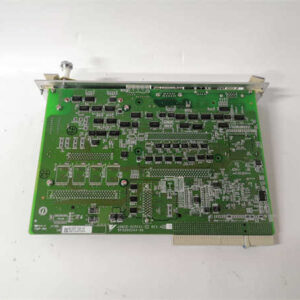
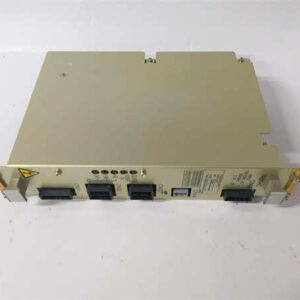
You don’t just find these sitting on a shelf at your local hardware store. The Yaskawa CACR-02-KIBA is a legacy servo controller that has been keeping heavy machinery alive in steel mills and paper plants for decades. I’ve pulled these out of cabinets caked in ten years of conductive dust, and they just keep ticking. It’s an older generation board, but in the field, old and reliable beats new and unproven every single time.Engineers still hunt for this specific board because replacing the entire servo system means rewriting thousands of lines of ladder logic. This controller handles the heavy lifting with a 60kHz output frequency, giving legacy motors the precise pulse trains they need to maintain torque at high speeds. Just be warned: this specific revision is notoriously picky about power quality, so make sure your facility’s 3-phase supply isn’t sagging before you blame the board.
Quality SOP & Tech Pitfalls (The Reality Check)
The Lab Report (SOP)
Before this board leaves our bench, it goes through a brutal gauntlet. First, we do a visual and counterfeit check under magnification to ensure no one re-tinned the traces. Next, it goes on a live test rack where we simulate a 60kHz load and monitor for thermal runaway. We verify insulation resistance with a Fluke 1507 insulation tester to ensure no internal shorts. Finally, we log the firmware version and seal it in anti-static packaging. You get a test report with your shipment, not just a smile and a handshake.The Engineer’s Warning (Pitfalls)
Do not ignore the DIP switches. I once watched a maintenance tech spend six hours troubleshooting a “dead” CACR-02-KIBA, only to realize he swapped it from a previous machine without copying the hardware configuration jumpers. The board wasn’t dead; it was just configured for a different motor encoder resolution. Always take a high-resolution photo of the jumper settings before pulling the old board. Also, treat this board like a bomb. The internal MOSFETs are highly susceptible to ESD. If you aren’t wearing a grounded wrist strap, you will fry it before you even get it seated in the chassis.
Installation & Configuration Guide
- Pre-Installation: ⚠️ SAFETY FIRST. Lock out and tag out the main 3-phase power. Wait a full 10 minutes for the internal DC bus capacitors to discharge. Verify 0V with a multimeter. Take clear photos of all wiring and DIP switch positions.
- Removal: Label every wire with a sharpie or tape. Do not rely on memory. Gently release the DIN rail clips or unscrew the mounting brackets. Pull the board straight out to avoid bending the backplane pins.
- Installation: Copy the DIP/Jumper settings exactly. This prevents 90% of startup failures. Align the new CACR-02-KIBA carefully and press it firmly into the backplane. Reconnect wires exactly as photographed.
- Power-On & Testing: Restore control power first. Watch the LED boot sequence. If it flashes a fault code, check your jumper settings again. Once stable, restore main power and run a low-speed jog test before going to full operational parameters.
Compatible Replacement Models
- ✅ Drop-in Replacement: CACR-02-KIBA-A / CACR-02-KIBA-B. Same hardware footprint. Verify the suffix letter matches your original to ensure firmware compatibility.
- ⚠️ Software Compatible: CACR-02-MM2A. Same chassis and backplane, but requires parameter tweaking via the Yaskawa digital operator. Expect to spend 2-3 hours re-tuning the servo gains.
- ❌ Hardware Mod Required: SGDV Series. Completely different architecture. Requires new cabling, new backplane, and a full PLC program rewrite. Do not attempt this unless you are doing a full machine retrofit.
Frequently Asked Questions (FAQ)
- Can I hot-swap this controller safely?
Absolutely not. This is a high-power servo amplifier. Hot-swapping will instantly arc the backplane pins and destroy both the board and the chassis. Always kill the power and wait for the capacitors to bleed off. - Is this a brand-new original part?
Yaskawa stopped manufacturing this specific board years ago. What we sell is “New Surplus” (factory sealed, never used) or professionally refurbished. We guarantee it works, but don’t expect shrink-wrap. - Will this work with my newer Sigma-5 motors?
No. The CACR-02 series is designed for older analog or early digital Yaskawa motors. If you are upgrading to Sigma-5 or Sigma-7, you need a new SGDV drive. - What if it fails after a month?
We provide a 1-year warranty. If it dies under normal operating conditions, we replace it. But if we find burn marks from a shorted motor cable, that’s on you. Always megger test your motor cables before installing a new drive. - How do I know if my current board is actually dead?
Check the DC bus voltage first. If you have 300V+ on the bus but no LEDs, the board is likely toast. If the LEDs are on but the motor won’t move, you might just have a bad enable signal or a blown output transistor. Check the alarm codes on the digital operator before condemning the board.