 Tel:
Tel:  Email:
  WhatsApp:
 Description
Product Introduction
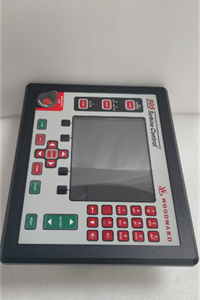
You need a controller that speaks the language of your turbine without the complexity of a full PLC. The Woodward CPC-II 9907-1199 is exactly that—a dedicated digital governor built for straightforward speed and load management. It cuts through the noise with a simple proportional control strategy.Honestly, its strength lies in its rugged simplicity. Running on 24 VDC with a standard 4-20 mA input, it integrates into existing control loops without demanding a system overhaul. This isn’t a fancy multi-algorithm box; it’s a reliable workhorse for applications where a pure proportional response keeps the machine running steady.
Key Technical Specifications
- Product Model: 9907-1199
- Product Brand: Woodward
- Product Series: CPC-II
- Power Supply: 24 VDC
- Input Signal: 4-20 mA
- Control Mode: Proportional Control (P-Only)
- Output Type: Analog Output
- Application: Steam Turbine Control, Gas Turbine Control
- Product Status: New Original
Application Scenarios & Pain Points
That sinking feeling when the old governor starts drifting during a summer heatwave is real. You don’t always need a $10,000 upgrade; sometimes you just need the right replacement part that behaves exactly like the original. The CPC-II 9907-1199 fits that bill perfectly.
- Power Generation: In small to medium-sized power plants, maintaining grid frequency is non-negotiable. This module provides the stable proportional output needed to keep the generator spinning at the correct RPM without hunting.
- Oil & Gas: Out in the field, reliability is king. Running on 24 VDC, it plays well with existing turbine control racks and handles the vibration better than most general-purpose controllers.
- Industrial Steam Systems: When your process relies on consistent steam pressure, a drifting speed controller can shut you down. The P-only logic here is actually clever—it reacts instantly to load changes without the overshoot risk of integral action.
- Retrofit Projects: Replacing an old mechanical governor? This digital unit bolts right in and speaks the standard 4-20 mA language your existing transducers and valves understand.
- Emergency Response: If your turbine trips offline at 2 a.m., having a “New Surplus” unit like this one in stock means you’re back online in hours, not weeks waiting for a custom build.
Quality Control Process (SOP Transparency)
Here is how we inspect every unit before it ships. We treat every box like it’s going to our own plant.1. Inbound Inspection
- Source Traceability: We verify the packing list origin. If it comes from a decommissioned power plant, we log that.
- Anti-counterfeit Verification: We check the serial number block and the physical build quality. Woodward parts have a specific heft to them.
- Visual Inspection: No scratches, no corrosion on the terminal blocks, and no yellowing on the plastic housing. We reject anything that looks like it sat in a damp warehouse.
2. Live Functional Test
- Test Environment: We slot it into a test rack with a compatible Woodward actuator simulator.
- Power-on Self-check: We watch the LED indicators. A solid power light and no fault flashing are mandatory.
- Signal Sweep: We inject a 4-20 mA signal and watch the output response. It must be linear and smooth, no stuttering.
- Burn-in Test: We leave it powered and signaling for over 24 hours. If the output drifts as it warms up, we pull it.
3. Electrical Parameters
- Insulation Resistance: We use a 500 V megger to check for shorts. Reading must be >10 MΩ.
- Ground Continuity: We verify the chassis ground is solid to prevent noise interference.
4. Firmware & Settings
- Firmware Verification: We read the firmware version. While this is a P-only module, the base firmware must be stable.
- DIP Switch Check: We photograph the switch settings. On this model, the configuration is often hard-set via switches—get those wrong and it won’t talk to your turbine.
5. Final QC & Packaging
- QC Sign-off: The lead technician signs the test log.
- Packaging: Sealed in an anti-static bag, wrapped in bubble mailer, and boxed. We include the test report.
Installation Pitfalls Guide (“Lessons Learned”)
I’ve seen this specific model cause a headache or two when engineers rush the swap. Don’t underestimate the basics.
- Firmware Version Mismatch
- The Risk: While rare on this P-only model, if you’re mixing it with newer Woodward comms cards, a version skew can cause a timeout fault.
- The Fix: Check the firmware sticker against your rack’s requirements before powering up.
- DIP Switch / Jumper Misconfiguration
- The Risk: This unit relies heavily on physical DIP switches for setup (unlike software-configured newer models). The factory default might not match your site’s tuning.
- The Fix: Take a photo of the old module’s switches. I mean it—take two. One for your phone, one for your email draft.
- Terminal / Wiring Incompatibility
- The Risk: Pin definitions can change subtly between revisions. Assuming the wiring is the same can lead to a blown fuse or a confused actuator.
- The Fix: Cross-check the wiring diagram on the module’s label against your cable bundle. Don’t trust color codes alone.
- Power Supply Undersizing
- The Risk: If you’re powering multiple devices from one supply, adding this module might push it over the edge, causing brownouts.
- The Fix: Calculate the total rack load and ensure your 24 VDC supply has at least 20% headroom.
- ESD Damage
- The Risk: That $2,000 turbine controller can die instantly if you zap the circuit board while installing it.
- The Fix: Wear the damn wrist strap. Especially in dry climates like太原 (Taiyuan), winter static is a killer.