

 Tel:
Tel:  Email:
  WhatsApp:
 Description
Key Technical Specifications
- Product Type: PCB Circuit Board / Control Module
- Application: Industrial Automation & Manufacturing
- Control Logic: High-precision sequential control
- Operating Environment: Industrial grade (verify with OEM manual)
- Mounting Style: Internal chassis slot / DIN rail
- Power Input: Typically 24 V DC (verify on board silkscreen)
- I/O Capability: Integrated digital/analog processing
- Firmware: Factory pre-loaded (version varies by batch)
- Compliance: Industrial safety standards

Product Introduction
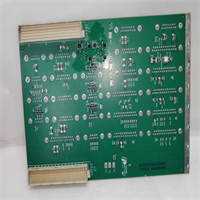
TMEIC ARND-3120B is a specialized PCB circuit board designed for high-precision industrial control systems. It serves as a critical processing module within TMEIC’s automation architecture, managing complex sequential logic and data routing.This control module ensures stable operation in demanding manufacturing environments. Field experience shows that replacing a degraded board with a tested ARND-3120B restores system reliability, reducing unexpected downtime by preventing cascading logic failures.
Installation & Configuration Guide
Preparation (10 min)
Lock out and tag out the main power. Gather an ESD wrist strap and a digital camera. Take a high-resolution photo of the board’s DIP switches, jumpers, and slot alignment before removal.Removal (5–10 min)
Disconnect all ribbon cables and wire harnesses. Release the card guides or ejector levers. Slide the board straight out to avoid bending the backplane pins.Installation (10 min)
Wear your ESD strap. Align the ARND-3120B with the chassis guides. Apply even pressure until the board seats fully. Reconnect harnesses exactly as photographed.Power-On & Test (10 min)
Restore control power first. Observe the board’s status LEDs for normal initialization. Check for abnormal heat or burning smells. Run a manual diagnostic test via the HMI to verify I/O responses.
Troubleshooting Quick Reference
- Board fails to power up: Check backplane voltage at the connector. Inspect for blown onboard fuses.
- Communication loss: Reseat the board. Verify ribbon cable integrity.
- Erratic control output: Check for loose DIP switches. Verify firmware version matches system requirements.
- Overheating: Ensure chassis cooling fans are operational. Verify ambient temperature limits.
- No LED indicators: Measure 24 V DC at the board input terminals. Check backplane power supply.

Dimensions, Mounting & Wiring Notes
- Mounting: Standard backplane slot or DIN rail (verify specific sub-model)
- Terminals: Board-level connectors and ribbon cable interfaces
- Wiring Note: Always verify pinout against the OEM wiring diagram. Do not force connectors.
- Dimensions: Exact H×W×D varies by revision. Consult the original TMEIC hardware manual for mechanical clearance.
FAQ
Can I use an ARND-3120-C23-XIO as a direct replacement?
Yes, the ARND-3120-C23-XIO is a recognized variant of the ARND-3120 family. Always verify the firmware version and jumper settings match your existing system before installation.I noticed a slight burn mark on the old board. Is this normal?
No. Burn marks indicate a past overvoltage or short circuit event. Always inspect the backplane and connected I/O modules for damage before installing a replacement board.Are these boards still manufactured by TMEIC?
No. The ARND-3120 series is discontinued. We supply New Surplus and factory-tested refurbished units. Lead times depend on current surplus inventory.Why does my new board trip the system immediately?
Startup transients or mismatched jumper settings can cause false trips. Verify all DIP switches match the old board’s configuration. Check the OEM manual for startup delay parameters.Do you test these before shipping?
Yes. Every unit undergoes a 24-hour load test on a dedicated test rack. A signed test report is included in the box.What is the return policy for refurbished units?
12-month warranty against manufacturing defects. We do not cover damage from incorrect installation, ESD mishandling, or backplane faults.Can I install this board without an ESD strap?
You shouldn’t. Electrostatic discharge is a leading cause of premature PCB failure. Always use proper ESD grounding when handling bare circuit boards.