 Tel:
Tel:  Email:
  WhatsApp:
 Description
Key Technical Specifications
| Parameter | Specification | Notes |
|---|---|---|
| Manufacturer | Socapel / Socasin | French Industrial Electronics |
| Input Voltage | 3-Phase AC (Typically 208-480V) | Check specific rating plate |
| Output Current | 25 Amps (Continuous) | Peak current is higher (approx. 50A) |
| Control Signal | Analog ±10V | Torque/Speed reference |
| Feedback | Resolver / Tachometer | Depends on internal configuration |
| Frequency | 50/60 Hz | Standard industrial grid |
| Mounting | Panel/DIN Rail | Heavy-duty metal chassis |
| Protection | Electronic Fuse / Thermal | Resettable via power cycle |
| Dimensions | Standard Euro-card width | Varies by rack mount option |
Product Introduction
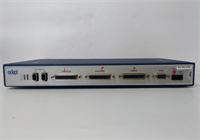
If you are dealing with a SOCAPEL SOCASIN ST1/25-310, you are likely working on a machine that was built to last forever—probably a textile loom, a specialized extruder, or a heavy-duty winding machine from the late 90s or early 2000s. These drives don’t have screens, menus, or Ethernet ports. They are big, heavy chunks of metal filled with capacitors and copper.The ST1/25-310 is an analog beast. In a world of digital fieldbuses, this drive relies on simple ±10V signals to tell the motor how fast to spin or how much torque to apply. The “25” in the model number tells you it’s rated for 25 amps continuous. That’s plenty of muscle for mid-sized motors, but because it’s analog, it requires careful tuning. You won’t be clicking a mouse to tune this; you’ll be turning tiny potentiometers with a screwdriver while listening to the motor whine. It’s old school, but when it works, it’s rock solid.
Quality SOP & Tech Pitfalls (The Reality Check)
The Lab Report (SOP)
Since we can’t run software diagnostics on these ancient units, our testing is purely electrical and dynamic:
- Visual Inspection: We look for “cooked” components—specifically bulging electrolytic capacitors or burnt resistors near the power terminals.
- Potentiometer Cleaning: We spray and rotate all tuning pots (Gain, Offset, Current Limit). Oxidation here causes erratic movement.
- Live Test: We hook it up to a dummy load motor. We verify that a 0V input results in zero output (no drift) and that a +10V signal spins the motor at full speed in the correct direction.
- Thermal Check: We run it at 10A for 30 minutes to ensure the heatsink is dissipating heat properly.
The Engineer’s Warning (Pitfalls)
The biggest trap with the ST1/25-310 is the “Black Box” syndrome. Because there is no display, if the machine jerks or oscillates, you won’t get an error code. It just does it. I’ve seen technicians replace the motor, the cables, and the PLC before realizing the “Current Limit” pot on the drive was set too high. Also, check your jumpers. These boards were often factory-configured for specific feedback types (Resolver vs. Encoder). If you swap a unit and the motor runs away or hums loudly, check the internal jumper block immediately.
Installation & Configuration Guide
This isn’t plug-and-play like modern drives. You need to set it up manually.
- Pre-Installation Safety
- ⚠️ High Voltage: This unit uses lethal mains voltage. Disconnect power and wait 10 minutes for the DC bus capacitors to discharge.
- Check Fuses: Before wiring, inspect the fuses on the power input terminals.
- Wiring & Configuration
- Analog Reference: Connect your controller’s ±10V output to the reference inputs. Ensure the ground loop is clean to avoid noise.
- Tuning: Locate the trim pots labeled “GAIN” and “OFFSET.” Start with Gain at 50%.
- Feedback: Verify the feedback wiring (tachometer or resolver) matches the pinout on the backplane.
- Power-On & Testing
- Apply low voltage first if possible (using a Variac) to check for shorts.
- Power up. If the motor “hums” but doesn’t move, your phase rotation might be wrong, or the feedback polarity is reversed.
- Adjust the “Offset” pot until the motor sits perfectly still when the command is zero.
Compatible Replacement Models
- ✅ Direct Replacement: ST1/25-310. You must match the “25” (Amperage) and the “310” (Voltage class) exactly.
- ⚠️ Functional Replacement: ST1/25-300 Series. Similar architecture, but may require rewiring of the connector harness.
- ❌ Incompatible: Digital Servo Drives (e.g., Lenze, Siemens). You cannot simply drop a digital drive into this slot without rewriting the machine’s entire control logic.
Frequently Asked Questions (FAQ)
Q: My machine is vibrating or making a grinding noise. Is the drive bad?
A: Not necessarily. On the ST1/25-310, this is usually a tuning issue. Try adjusting the “Stability” or “Gain” potentiometer counter-clockwise to lower the gain. If that doesn’t stop the noise, check the motor bearings.Q: Can I replace this with a modern drive?
A: Yes, but it’s a project. You would need a modern analog-input drive (like a Baldor or Parker analog version). You’d have to replicate the pinout and re-tune the system from scratch. It’s often cheaper to find a used Socapel unit.Q: What does the “310” mean in the model number?
A: It designates the voltage and series generation. In the Socapel coding, this usually implies a 3-phase input compatible with standard European/Industrial voltages (often around 400VAC class, but verify the label).Q: The drive has no lights. How do I know it’s on?
A: These older units often lack status LEDs. You know it’s on because the fan spins (if equipped) and the motor holds position. If the motor is free-spinning when it should be locked, check the enable circuit.Q: Where can I find the manual for this?
A: Good luck. Socapel documentation is scarce online. Your best bet is looking for the “Socasín ST1 User Manual” generally, as the wiring principles are similar across the 10-310 series.