
 Tel:
Tel:  Email:
  WhatsApp:
 Description
Key Technical Specifications
| Parameter | Value |
|---|---|
| Product Model | FC-SCNT01 |
| Part Number | 51454926-176 |
| System Series | S300 Safety Controller |
| Safety Rating | SIL 3 (IEC 61508) |
| Channel Configuration | 16 Channels (8 Inputs, 8 Outputs) |
| Rated Voltage | 24 VDC |
| Output Current | 400 mA |
| Operating Temperature | -40°C to +70°C |
| Structure | Dual-channel redundant |
| Compliance | ATEX, IECEx |
Product Introduction
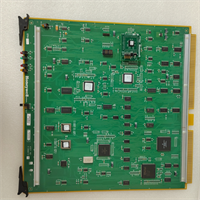
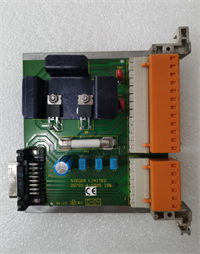
The Honeywell FC-SCNT01 (51454926-176) serves as the central processing unit for the S300 Safety System. It manages critical safety instrumented functions (SIF) in industrial environments like oil and gas or chemical processing. This module acts as the “brain,” processing inputs from sensors and triggering outputs to safety devices.Its primary value lies in its dual-channel architecture, which ensures redundancy and fault tolerance. Field experience shows that this redundancy significantly reduces the risk of spurious trips compared to single-channel units. The module handles 16 channels of I/O and maintains a safety integrity level (SIL) of 3, providing a quantifiable metric for risk reduction in hazardous areas.
Installation & Configuration Guide
Preparation (10 min)
- Verify Components: Ensure you have the FC-SCNT01 module, the mounting rack, and the specific termination board (check manual for compatibility).
- ESD Safety: Put on a grounded wrist strap. Static discharge can fry the internal logic instantly.
- Power Check: Confirm the 24 VDC supply is OFF and locked out.
Removal (5–10 min)
- Disconnect: Unplug the field wiring harness from the module terminals. Do not pull on the wires.
- Release: Depress the locking tab or unscrew the mounting screws (depending on rack type).
- Extract: Slide the module out gently. If it sticks, check for hidden screws; do not force it.
Installation (10 min)
- Insert: Align the module with the rack slot. Slide it in until the backplane connector seats firmly.
- Secure: Fasten the mounting screws or engage the locking mechanism.
- Wiring: Reconnect the field wiring. Crucial: Verify polarity on the 24VDC input.
Power-On & Test (10 min)
- Power Up: Apply 24 VDC power.
- Status Check: Watch the LED indicators. The “Run” LED should be solid green.
- Comm Test: Verify the module establishes a handshake with the main safety manager (look for the comms LED to blink or turn green).
Troubleshooting Quick Reference
| Symptom | Probable Cause | Quick Fix |
|---|---|---|
| No LEDs lit | Power loss or blown fuse | Check 24VDC input voltage at terminals. Verify wiring polarity. |
| Red “Fault” LED | Internal diagnostic failure | Cycle power. If persistent, the module logic may be corrupted. |
| Comms LED blinking red | Network mismatch | Check baud rate settings or cable integrity to the main controller. |
| Outputs not firing | Logic inhibition | Verify the main controller is sending the “permit” signal. |
| Module overheats | Ambient temp > 70°C | Check cabinet cooling. High ambient heat causes thermal shutdown. |
Dimensions, Mounting & Wiring Notes
- Mounting: Standard S300 series rack mount.
- Connections: Removable terminal blocks for field wiring.
- Wiring Note: Use shielded cables for input signals to prevent electromagnetic interference (EMI) from affecting the safety logic.
FAQ
Q1: Is the 51454926-176 compatible with the older S9000 series?
A: No. This module is designed specifically for the S300 architecture. The backplane pinout and communication protocols differ from the S9000 series.Q2: What does the “SIL 3” rating actually mean for my application?
A: It means the device has a probability of failure on demand (PFD) between 10−3 and 10−4 . In simple terms, it is certified to handle high-risk safety functions where failure could result in severe injury or environmental damage.Q3: I see a “New Surplus” label. Is this unit tested?
A: Yes. “New Surplus” means it is unused but may not be factory sealed. We perform a visual inspection and verify the part number matches the physical label.Q4: Can I hot-swap this module while the system is running?
A: Generally, no. While the S300 system supports redundancy, removing a controller module usually requires putting the system in a maintenance mode or ensuring the redundant partner is fully active to prevent a safety trip.Q5: Why is the output current limited to 400mA?
A: This is a logic-level controller. It is designed to drive relays or signal converters, not heavy loads like large solenoid valves directly. You will need an intermediate relay for high-current loads.