 Tel:
Tel:  Email:
  WhatsApp:
 Description
Key Technical Specifications
- Product Family: XNX Universal Transmitter Accessories
- Module Type: XNX POD (Programmable Output Device)
- Communication Interface: Infrared (IR) Configuration
- Output Option: Relay Output
- Application: Hazardous area gas detection integration
- Compatibility: Designed for HONEYWELL XNX transmitter platforms
- Related Series: 1226-900x (Interchangeable POD modules)
- Condition: New Original (Factory Sealed or Verified Surplus)
Product Introduction
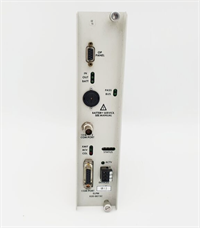
The HONEYWELL 1226-9009 is a specialized POD (Programmable Output Device) module designed for the XNX Universal Transmitter platform. It provides an Infrared (IR) interface for non-intrusive configuration, allowing maintenance personnel to calibrate and set up gas detection systems without opening the enclosure in hazardous environments.This specific module integrates a relay output option, adding critical hardwired signaling capabilities to the transmitter’s digital protocols. By combining IR configuration with relay outputs, the 1226-9009 simplifies wiring architectures and ensures safer, faster field maintenance—reducing the time required for routine calibration checks by keeping the housing sealed.
Installation & Configuration Guide
Phase 1: Preparation (10 min)
- Safety First: Ensure the XNX transmitter is de-energized before handling the POD module.
- Verify Part Number: Check the label to confirm you have the 1226-9009 (IR + Relay). Mixing this up with a standard analog POD will result in missing relay functionality.
- ESD Precautions: Wear a grounded wrist strap. The IR sensor and relay contacts are sensitive to static discharge.
Phase 2: Removal of Existing POD (5–10 min)
- Locate the existing POD module on the XNX transmitter.
- Unscrew the retaining screws (usually two) securing the POD to the main housing.
- Gently pull the POD straight out. Note: Do not twist or pry, as this can damage the internal connector pins.
Phase 3: Installation (10 min)
- Align the 1226-9009 connector with the XNX motherboard socket.
- Push firmly until seated.
- Secure the module with the retaining screws. Ensure the IR window is facing outward and is not obstructed by dirt or paint.
Phase 4: Power-On & Test (10 min)
- Restore power to the XNX transmitter.
- Self-Test: Watch the display. The unit should recognize the new POD automatically.
- IR Check: Use a HONEYWELL IR configurator (handheld or software) to verify communication through the glass window.
- Relay Test: Trigger a test alarm to verify the relay clicks and closes the circuit as expected.
Troubleshooting Quick Reference
| Symptom | Probable Cause | Quick Fix |
|---|---|---|
| IR Communication Fails | Dirty IR window or misalignment | Clean the glass window with a soft cloth; ensure the IR tool is held steady within 2 inches. |
| Relay Not Triggering | Configuration mismatch | Use the IR tool to check if the relay is mapped to the correct alarm level (e.g., Low/High Alarm). |
| “POD Error” on Display | Loose connection or wrong model | Power cycle the unit. If the error persists, remove and reseat the 1226-9009 module. |
| False Relay Trips | Electrical noise / Grounding | Check the shield grounding on the XNX main power supply. Ensure the relay wiring is separated from high-voltage lines. |
Dimensions, Mounting & Wiring Notes
- Mounting: The POD module is internally mounted directly onto the XNX Universal Transmitter motherboard. It does not have external DIN rail or panel mount dimensions of its own (it adopts the transmitter’s footprint).
- Wiring: Relay terminals are accessed via the XNX transmitter’s main wiring compartment.
- Caution: When wiring the relay, strictly follow the XNX manual’s torque specifications (typically around 0.5 Nm) to avoid stripping the terminal blocks.
- Physical Check: Ensure the O-ring around the POD interface is intact to maintain the explosion-proof/ingress protection rating of the main enclosure.
FAQ
Q: What is the main difference between the 1226-9009 and other 1226-900x models?
A: The 1226-9009 specifically combines an Infrared (IR) interface with a Relay output. Other models in the series might offer analog outputs (4-20mA) or different relay configurations. Always verify the last digit of the part number before installation.Q: Can I configure this module without opening the explosion-proof housing?
A: Yes. That is the primary purpose of the “IR” in this model. You can use a HONEYWELL infrared configurator wand or software through the transmitter’s glass viewport to change settings, calibrate, or test relays safely.Q: Is the 1226-9009 compatible with older XNX transmitters?
A: Generally, the XNX POD architecture is consistent, but firmware versions matter. I recommend checking the firmware revision of your main XNX controller. If it’s extremely old, a firmware update might be required to recognize the relay features of this specific POD.Q: I need this for a hazardous area. Does it maintain the ATEX/IECEx rating?
A: Yes, provided it is installed correctly into a certified XNX transmitter housing. The POD itself is an internal component; the overall safety certification depends on the integrity of the main XNX enclosure and proper installation (no damaged O-rings, correct screw torque).Q: Do you offer a warranty on this part?
A: Yes. We provide a standard warranty covering manufacturing defects and DOA (Dead on Arrival) issues. Since this is often a “New Surplus” or specialized industrial part, please check the specific warranty duration on your invoice (typically 12 months).Q: Can I swap this POD while the system is powered on?
A: It is not recommended. While some modern systems support hot-swapping, doing so with relay outputs can cause unintended spikes or false alarms in your control system (PLC/DCS). Always de-energize the transmitter before swapping POD modules.