 Tel:
Tel:  Email:
  WhatsApp:
 Description
⚙️ Key Technical Specifications
| Parameter | Specification | Notes |
|---|---|---|
| Architecture | TMR (Triple Modular Redundant) | 3 independent CPU channels |
| Processor | Intel 386EX / ARM Cortex-A9 | High-speed processing |
| Safety Rating | SIL 3 (IEC 61508) | Up to SIL 4 in some apps |
| Memory | 1 MB Flash / 1 MB SRAM | Base config (varies by rev) |
| Communication | Ethernet, RS232, RS485 | Modbus TCP, OPC UA support |
| Protocol Support | Modbus TCP, Profibus DP | EtherCAT compatible |
| Supply Voltage | 24 V DC (Nominal) | Range: 10–30 V DC |
| Power Dissipation | ~15 W (Typical) | Requires adequate cooling |
| Operating Temp | -40°C to +85°C | Industrial grade range |
| Dimensions | 200mm x 150mm x 30mm | Standard 19″ rack mount unit |
| Protection | IP65 (Module level) | Dust and water jet resistant |
👷 Product Introduction
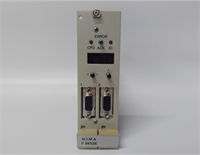
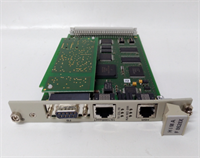
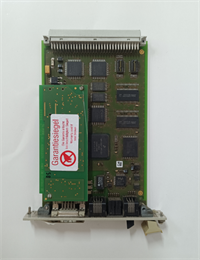
When you are dealing with Emergency Shutdown (ESD) or Burner Management Systems (BMS), “standard” PLCs just don’t cut it. You need hardware that votes on every single decision. The HIMA F8628X (984862865) is exactly that kind of hardware. It’s not just a communication card; it’s a certified Safety Integrity Level (SIL) 3 controller wrapped in a communication module housing.I’ve deployed these in refineries where a false trip costs $50,000 an hour, and a failure to trip kills people. The F8628X uses Triple Modular Redundancy (TMR). Basically, three processors do the math at the same time. If one processor goes rogue or crashes, the other two outvote it and keep the process safe without shutting down. That is peace of mind. It also acts as the gateway, talking Modbus TCP or OPC to your DCS. It’s bulky, it runs hot, and it is arguably the most reliable piece of silicon you can bolt into a safety cabinet.
🔍 Quality SOP & Tech Pitfalls (The Reality Check)
The Lab Report (SOP)
We treat safety modules differently than standard I/O. One mistake here creates a liability nightmare.
- Visual & Counterfeit Check: We inspect the PCB date codes. HIMA boards have very specific silkscreen markings; fakes often get the font wrong.
- TMR Synchronization Test: We run a proprietary script to ensure all three internal CPU channels are synchronizing correctly. If Channel C lags behind A and B by even a microsecond, the module fails.
- Comms Stress Test: We flood the Ethernet port with Modbus TCP requests while running logic to verify it doesn’t choke under load.
- Firmware Verification: We check the internal EPROM version against the HIMA compatibility matrix for H41/H51 systems.
The Engineer’s Warning (Pitfalls)
Do not mix up the firmware revisions.
The F8628X is picky. It needs to match the rest of your HIMA rack (like the F8650X or F8627X). If you drop a newer revision F8628X into an old H41g chassis without updating the backplane firmware, the system will throw a “Configuration Mismatch” error and refuse to go into Run mode.
Field Disaster Story: Had a client try to swap this card during a turnaround. They didn’t realize the module requires a specific “warm-up” sequence for the TMR logic to sync. They power-cycled the whole rack instantly. Result? The voting logic got confused, thought two CPUs were bad, and tripped the compressor. Always follow the OEM manual for insertion sequences.
🛠️ Installation & Configuration Guide
This isn’t a plug-and-play USB stick. Follow the steps or prepare for a long night of debugging.
- Pre-Installation (Safety First)
- ⚠️ SYSTEM BACKUP: Before touching hardware, download the current logic and configuration from the safety system. If the new card wipes the config, you need the backup to restore it.
- ESD Protection: Wear your wrist strap. This card contains sensitive microprocessors. Static shock = instant trash.
- Removal
- Disconnect the Ethernet and Serial cables. Note their positions (Port 1 vs Port 2).
- Unscrew the locking mechanism on the card faceplate.
- Slide the module out of the 19-inch rack.
- Installation
- Check Jumpers: Verify any hardware jumpers on the F8628X match the removed unit (rare, but possible on older units).
- Slide the new module into the slot. Ensure the pins mate perfectly with the backplane.
- Tighten the screws. Vibration is the enemy of backplane connections.
- Reconnect comms cables. Use shielded Cat5e/6 for Ethernet.
- Power-On & Testing
- Power up. Watch the LED sequence.
RUNshould be Green.ERRshould be Off.- Connect via ELOP II (HIMA engineering software) and verify the “Channel Sync” status. All 3 channels must read “OK”.
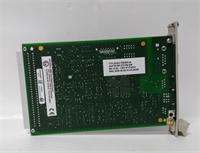
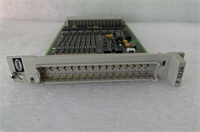
F8628X HIMA
🔄 Compatible Replacement Models
| Model | Compatibility | Notes |
|---|---|---|
| F8628X (984862865) | ✅ Drop-in Replacement | Standard TMR Comm/CPU module. |
| F8627X (984862765) | ⚠️ Functional Match | Non-TMR version (Single/Dual CPU). Lower safety rating. |
| F8650X | ❌ Hardware Mod Required | Different form factor/chassis. Requires full rack upgrade. |
| F8652X | ❌ Hardware Mod Required | Newer generation CPU. Not pin-compatible. |
💬 Frequently Asked Questions (FAQ)
Q: Can I use this to program my HIMA CPU?
A: Yes. The F8628X allows you to connect via Ethernet to run ELOP programming software. It acts as the bridge between your laptop and the safety CPU.Q: What does the “984862865” number mean?
A: That is the specific ordering code/part number. It ensures you get the right firmware pre-loaded and the correct connector type. Always order by this number if possible.Q: Is this module hot-swappable?
A: In a redundant TMR system, yes, usually. But proceed with extreme caution. If you pull the wrong card or the backplane glitches, you might lose redundancy. Only do this if the system is in a stable state and you have a second engineer watching the diagnostics.Q: Why is the module so heavy?
A: It’s built like a tank. The metal casing provides shielding against electromagnetic interference (EMI) and helps dissipate heat from the processors. It also has robust connectors designed to survive decades of vibration.Q: Does it support Modbus RTU?
A: It supports Modbus TCP over Ethernet natively. For RTU (Serial), you typically use the RS485 port, but you need to configure the protocol stack in the safety logic. It’s capable, but not “plug-and-play” like a generic gateway.