 Tel:
Tel:  Email:
  WhatsApp:
 Description
Key Technical Specifications
| Parameter | Specification |
|---|---|
| Product Model | B9361 |
| Part Number | 997009361 |
| Device Type | Safety Controller Module |
| Architecture | Triple Modular Redundancy (TMR) |
| Safety Rating | IEC 61508 SIL 3 (up to SIL 4) |
| Processor | Triple independent CPUs (up to 1.2 GHz) |
| Memory | 1 MB Flash-EPROM / 1 MB SRAM (Standard) |
| Applications | ESD, BMS, Fire & Gas (F&G) Systems |
| Communication | Supports multiple industrial safety protocols |
| Protection | Over-voltage, Over-current, Thermal shutdown |
Product Introduction
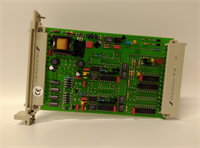
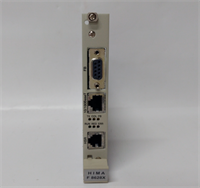
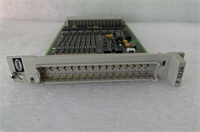
Let’s be honest: in industries like oil & gas or chemical processing, a standard PLC just doesn’t cut it when lives are on the line. That’s exactly where the HIMA B9361 (997009361) earns its keep. This isn’t just another brick in the rack; it’s a high-performance safety controller built specifically for Safety Instrumented Systems (SIS). I’ve seen these deployed in critical Emergency Shutdown (ESD) and Burner Management Systems (BMS) where a single false command could cause a catastrophic failure.The real engineering beauty here is the Triple Modular Redundancy (TMR) architecture. Instead of relying on one processor hoping it doesn’t glitch, the B9361 runs three independent CPU channels simultaneously. They constantly cross-check each other’s math and logic. If one channel drifts or fails, the other two vote it out, and the system keeps running without missing a beat. With processors hitting speeds of 1.2 GHz and meeting SIL 3 (sometimes SIL 4) standards, it handles complex safety algorithms with a reliability that gives maintenance managers actual peace of mind.
Quality SOP & Tech Pitfalls (The Reality Check)
The Lab Report (SOP)
Before any HIMA controller leaves our facility, it goes through a strict gauntlet to ensure it’s not a paperweight:
- Visual & Anti-Counterfeit Check: We inspect the factory seals and verify the part number (997009361) matches the label perfectly. HIMA’s build quality is distinct; we look for any signs of re-labeling.
- Physical Inspection: Checking the DIN rail clips and connector pins for any bending or physical stress from previous handling.
- Insulation Resistance: Using a multimeter to ensure there are no internal shorts between the power rails and the chassis ground.
- Anti-Static Sealing: The unit is packed in industrial-grade anti-static bags with heavy-duty foam to survive rough logistics.
The Engineer’s Warning (Pitfalls)
Here is where people mess up: Do not ignore the TMR synchronization during startup. I once saw a commissioning team swap out a B9361 and force the system online without letting the three CPUs fully sync their memory maps. The result? A “voting mismatch” alarm that tripped the entire plant’s safety loop unnecessarily. Also, pay close attention to the firmware version. If the new B9361 is running a newer firmware revision than the other redundant controllers in the rack, it will refuse to sync, leaving your system in a degraded, non-redundant state.
Installation & Configuration Guide
Phase 1: Pre-Installation
- ⚠️ Safety First: Ensure the safety system is in a safe state (bypassed or during a planned shutdown). Never hot-swap a central safety controller unless the OEM manual explicitly states the backplane supports it (usually it doesn’t for the main CPU).
- Document Everything: Take a clear photo of the existing module’s LEDs and any visible DIP switches or serial labels.
Phase 2: Removal
- Label all communication and I/O cables connected to the old unit.
- Carefully release the locking mechanism and slide the old module out.
Phase 3: Installation
- Verify Part Number: Double-check that the new unit is indeed the B9361 (997009361).
- Seat the Module: Slide the new controller firmly into the rack slot until the locking mechanism clicks. Ensure it is perfectly aligned to avoid bending backplane pins.
Phase 4: Power-On & Testing
- Restore power and watch the LED sequence. You are looking for the “Run” and “OK” LEDs to stabilize.
- Check Redundancy Status: Go into the engineering workstation. Verify that all three CPU channels (Channel A, B, and C) are active and in “Sync” or “Vote” mode.
- Download/Verify Logic: Ensure the safety application program matches the controller’s memory.
Compatible Replacement Models
| Compatibility | Model / Series | Notes |
|---|---|---|
| ✅ Drop-in Replacement | HIMA B9361 (997009361) | Exact match. Same hardware, same firmware baseline. |
| ⚠️ Software Compatible | HIMatrix F3 Series CPUs | May require logic recompilation or firmware flashing to match the existing rack. |
| ❌ Not Compatible | Standard PLC CPUs | HIMA safety controllers use proprietary safety buses; standard PLCs cannot replace them. |
Frequently Asked Questions (FAQ)
Q: Can I hot-swap the B9361 while the plant is running?
A: generally, no. Unlike some I/O modules, the central safety controller is the brain. Pulling it out usually triggers a system-wide fault or trip. You need a planned shutdown or a very specific bypass procedure approved by your safety engineer.Q: My old B9361 failed. Will this new one work straight out of the box?
A: Not necessarily. It needs the exact same firmware version and the safety application program loaded onto it. It won’t magically know your plant’s logic just by plugging it in.Q: What does the “997009361” number mean?
A: That is the specific ordering part number. HIMA sometimes uses internal model names (like B9361) and ordering numbers (997009361). They refer to the same physical hardware, but always cross-reference both to be safe.Q: Is this module suitable for a nuclear power plant application?
A: The B9361 is SIL 3 / SIL 4 rated, which is the gold standard for high-risk industries including nuclear, oil & gas, and petrochemicals. However, always verify with your specific site’s safety requirement specifications (SRS).Q: How do I know if the TMR is actually working?
A: You check the diagnostic software. You should see three healthy CPU status indicators. If one drops out, the system is still running (2oo3 voting), but you’ve lost redundancy and need to investigate immediately.