 Tel:
 Email:
 WhatsApp:
Description
Key Technical Specifications
| Parameter | Specification |
|---|---|
| Product family | GE WESDAC D20 distributed automation platform |
| Processor | 32-bit industrial processor; dual-core variants reported on later revisions |
| Memory | Boot EPROM, SRAM, NVRAM, and Flash; exact capacity varies by revision |
| I/O capability | Analog input/output and digital input/output channels; channel count depends on installed modules |
| Communication | Ethernet, RS-485/serial; Modbus and PROFIBUS DP reported depending on configuration |
| Redundancy | Processor, communication, and power redundancy supported in multi-node systems |
| FPGA option | Select board revisions include FPGA for custom digital signal processing |
| Bus/interface | VME-based and PXI-referenced variants reported; confirm exact hardware platform |
| Configuration | Proprietary GE WESDAC/D20 engineering tools |
| Typical applications | Substation automation, feeder control, SCADA, process control, power distribution monitoring |
| Environment | Industrial temperature range; exact limits vary by revision and datasheet |
| Mounting | Rack/chassis-mounted controller and module platform |
Product Introduction
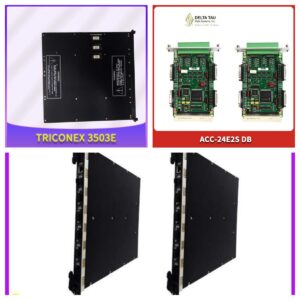
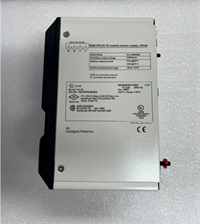
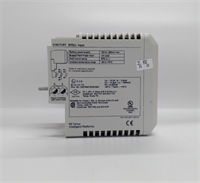
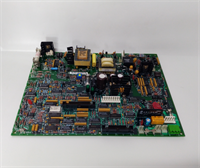
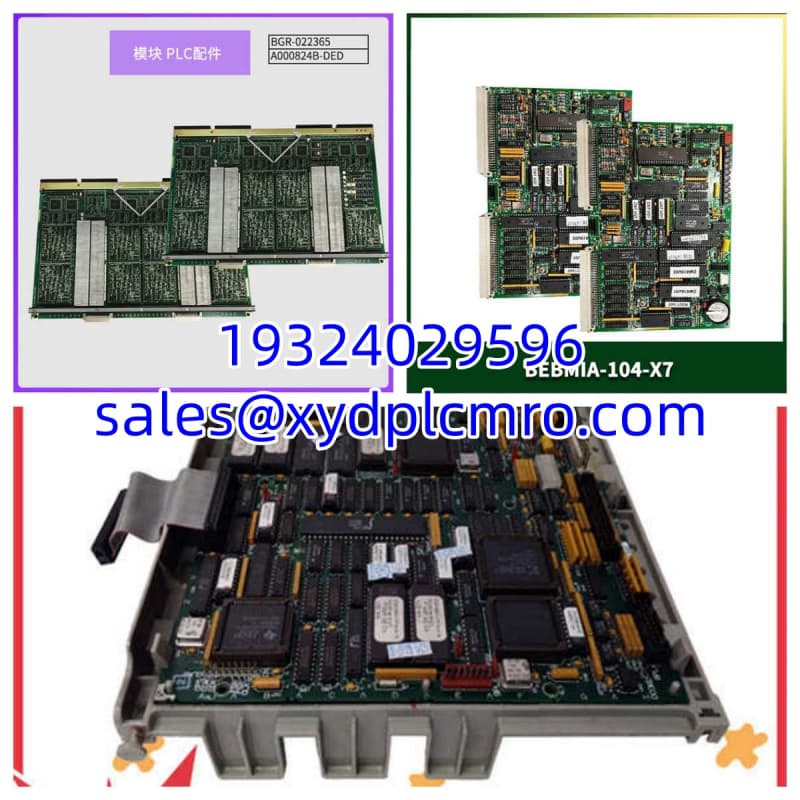
WESDAC D20ME is one of those GE distribution automation controllers that still shows up in older substations, switchgear rooms, and feeder automation panels. It was not marketed as a generic PLC in the factory automation sense; it was built for power distribution control, remote terminal unit functions, and substation SCADA integration.From an engineering standpoint, D20ME sits between a traditional RTU and a modern IED. It handles analog measurement, digital status acquisition, control output, serial/Ethernet communication, and in some revisions even FPGA-assisted signal processing. The platform was designed for multi-node redundancy, so you may encounter it in configurations where one node acts as the primary controller and others serve as standby or remote I/O.The biggest risk with D20ME today is revision confusion. “D20ME” can refer to a processor board, an analog expansion module, a VME-based controller card, or a complete distributed control unit. Some listings also mix GE WESDAC D20 with unrelated PXI or third-party instrumentation modules. If you are replacing an existing unit, the board part number, revision suffix, installed I/O options, and firmware level matter more than the generic D20ME label.
Quality SOP & Tech Pitfalls
The Lab Report (SOP)
- Visual inspection: confirm GE/GE Energy branding, board revision, serial number, connector condition, and battery status.
- Revision verification: match the physical board number against the original system documentation.
- Power-up test: apply rated DC supply and check POWER, ACCESS, MEMORY, ETHERN, and alarm indicators.
- Communication test: verify Ethernet and serial port response, node addressing, and protocol availability.
- I/O validation: check analog and digital channel presence, scaling, and output contact operation.
- Redundancy check: if used in a multi-node system, confirm primary/standby synchronization and failover behavior.
- Final packing: anti-static bag, desiccant, photo record of nameplate, revision, and test results.
The Engineer’s Warning (Pitfalls)
- Revision mismatch. D20ME boards exist in multiple hardware generations. A replacement with the wrong revision may not boot, may lack required I/O, or may be incompatible with the existing chassis.
- Lost configuration. WESDAC D20 systems rely on project-specific settings, node addresses, I/O maps, and communication parameters. If nobody exported the configuration, replacement becomes an engineering project, not a simple swap.
- Battery-backed memory failure. Older D20ME boards use onboard batteries to retain NVRAM. Long storage or field aging can cause configuration loss or RTC failure.
- Wrong platform assumption. Do not treat every “D20ME” listing as identical. Some references describe processor modules, others describe analog expansion modules, and some mix in unrelated PXI instrumentation hardware.
Installation & Configuration Guide
- Pre-Installation: ⚠️ De-energize the controller chassis and associated I/O circuits. Photograph all wiring labels, node addresses, communication settings, and I/O assignments.
- Removal: Document the existing board position, jumper settings, communication ports, and redundancy role. Remove the module without forcing connectors.
- Installation: Verify board revision and firmware compatibility before insertion. Seat the module firmly. Restore communication, I/O, and power wiring according to the original drawings.
- Power-On & Testing: Apply rated auxiliary power. Confirm boot sequence, LED status, and communication link. Load or verify the existing configuration. Perform point-to-point I/O testing and redundancy failover testing before returning the system to service.
Compatible Replacement Models
- ✅ Drop-in Replacement: GE WESDAC D20ME board with identical revision, firmware, and I/O option set.
- ⚠️ Platform-Compatible Replacement: Other WESDAC D20 family processors or I/O modules. May require configuration migration, firmware verification, and communication re-mapping.
- ❌ Full Platform Migration: Modern GE Multilin, IEC 61850 substation controllers, or third-party RTU/PLC platforms. These can replace D20ME functionally but require new engineering, wiring, communication mapping, and commissioning.
Frequently Asked Questions (FAQ)
Q: Is WESDAC D20ME a PLC?
Not exactly. It is a distributed control processor and automation platform for power distribution and substation applications. It can perform PLC-like logic, but its heritage is closer to an RTU/IED controller.Q: Can I replace D20ME with any GE controller?
No. WESDAC D20 is a legacy platform. Modern GE Multilin or substation controllers are not direct replacements without engineering redesign.Q: Does D20ME support redundancy?
Yes. Multi-node and redundant configurations have been supported, including processor, communication, and power redundancy.Q: What communication protocols does it support?
Ethernet and serial communication are typical. Modbus and PROFIBUS DP have been reported depending on configuration, but exact protocol support must be confirmed on the installed unit.Q: Is it still in production?
It is generally considered a legacy/discontinued platform. Most available units are surplus or inventory stock.Q: What should I check before buying?
Board revision, part number suffix, firmware version, installed I/O options, battery condition, and whether the original configuration is available.