 Tel:
Tel:  Email:
  WhatsApp:
 Description
Key Technical Specifications
| Parameter | Specification |
|---|---|
| Input Channels | Up to 24 discrete contact inputs |
| Nominal Supply Voltage | 24 VDC (Max 28.6 VDC) |
| Max Contact Input Voltage | 32 VDC |
| Contact Wetting Output | 31 VDC, 110 mA dc (Channels 1-21) |
| Operating Temperature | -30°C to +65°C |
| Communication Interface | Dual 10/100 Ethernet Ports (IONet) |
| Hazardous Area Rating | Class 1, Div 2, Groups A,B,C,D; ATEX Zone 2 |
| Compatible Terminal Boards | IS200STCIH1A, IS200TBCIH2C, IS200TBCIH4C, etc. |
| Soft-Start Circuit | Yes, limits inrush current during power-up |
| Status Indicators | 7 Front LEDs (Power, ENet1, ENet2, Channel Status) |
Product Introduction
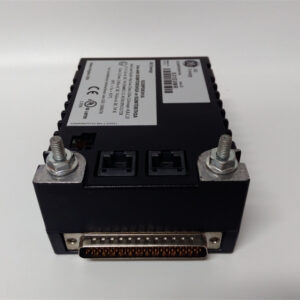
Turbine control cabinets are brutal environments. Between the heat, the vibration, and the electrical noise from massive contactors, standard I/O cards tend to fry or start reading ghost signals. The GE IS220PDIAH1BE was built specifically to survive inside Mark VIe gas turbine panels without flinching. It handles up to 24 discrete inputs, taking the raw, noisy field signals and passing clean data to the controller over a redundant Ethernet link.Engineers stick with this specific I/O pack because it actually respects electrical realities. It features a built-in soft-start circuit that prevents massive current spikes when you power up the rack, saving your power supply from premature death. It also supports contact wetting outputs up to 31 VDC at 110 mA, which is a lifesaver for keeping oxidized relay contacts clean and preventing false trips. Just be warned: this board is notoriously sensitive to grounding loops, so make sure your shield drains are properly terminated before you blame the hardware.
Quality SOP & Tech Pitfalls (The Reality Check)
The Lab Report (SOP):
I don’t trust “tested” labels blindly. Every IS220PDIAH1BE we ship goes through a strict protocol. First, a visual and counterfeit check under magnification to ensure no re-marked chips. Second, a live test on a Mark VIe test rack where we force all 24 inputs and verify the Ethernet link LEDs. Third, we check insulation resistance and verify the soft-start circuit with a Fluke 115 multimeter. Finally, we log the firmware revision and seal it in anti-static packaging.The Engineer’s Warning (Pitfalls):
The biggest mistake I see? Swapping this board without copying the terminal board ID or checking the firmware version. The PDIA pack reads the terminal board ID during boot to load the correct application code. If you plug it into a mismatched terminal board (like mixing up an STCIH1A and a TBCIH2C), it will fault out immediately. I once watched a night-shift tech spend four hours troubleshooting a turbine trip because he assumed all PDIA boards were identical. Always photograph the old board’s DIP switches and terminal board part numbers before pulling the plug.
Installation & Configuration Guide
- Pre-Installation: ⚠️ SAFETY FIRST. Shut down the control rack and wait 5 minutes for capacitors to discharge. Take high-resolution photos of the existing wiring, Ethernet cables, and any jumper settings.
- Removal: Label every wire with a sharpie. Release the DIN clips carefully. Do not force the board; if it sticks, check for hidden mounting screws or side-rails.
- Installation: CRITICAL: Verify the terminal board part number matches the old one exactly. Slide the new IS220PDIAH1BE onto the DIN rail and press firmly to seat the DC-62 backplane connector. Secure the mechanical mounting bracket using the threaded stud next to the Ethernet port.
- Power-On & Testing: Reconnect power. Watch the front LEDs. You should see the Power LED illuminate, followed by the ENet1/ENet2 link lights. Use ToolboxST software to verify the module is recognized on the IONet and that all 24 input channels read correctly before returning the turbine to service.
Compatible Replacement Models
| Model | Compatibility Tier | Notes |
|---|---|---|
| IS220PDIAH1A | ✅ Drop-in Replacement | Base model. Verify suffix ‘E’ isn’t required for specific hazardous area certs or firmware revisions. |
| IS220PDIAH1B | ✅ Drop-in Replacement | Direct functional equivalent. Check terminal board compatibility matrix in GEH-6725 manual. |
| IS220PDIOH1A | ⚠️ Software Compatible | This is a combined Input/Output (PDIO) pack. Hardware fits, but requires logic recompile and configuration changes. |
| IS200PDIAH1A | ❌ Hardware Mod Required | Older Mark VI (non-e) variant. Different backplane connector and communication protocol. Do not use in VIe racks. |
Frequently Asked Questions (FAQ)
Can I hot-swap this I/O pack while the turbine is running?
No. While the Mark VIe system supports redundant I/O, physically pulling and pushing this board risks shorting the backplane or causing a momentary network storm. Always schedule a maintenance window to swap it safely.Why does my new board show a solid red fault LED on boot?
It’s usually a terminal board mismatch. The PDIA pack queries the attached terminal board for its ID. If it doesn’t match the loaded firmware, it faults. Double-check that you have the exact IS200STCIH or IS200TBCIH board specified for this pack.What is the maximum voltage I can apply to the discrete inputs?
Do not exceed 32 VDC. The internal opto-isolators are rated for 32V max. If your field wiring runs near high-voltage VFDs and experiences transient spikes above this, you need external transient suppression or a different input card.Is this board compatible with standard Mark VI (non-e) racks?
Generally, no. The IS220PDIAH1BE is designed for the Mark VIe distributed I/O architecture using IONet. Older Mark VI systems used different backplanes and serial links. Always verify your controller generation before ordering.How do I know if the Ethernet link is actually redundant?
Look at the front panel. You have ENet1 and ENet2 LEDs. Both should be green if dual-connected. If you are using ToolboxST, check the network topology map. A single green LED means you’ve lost your redundant path, and a single cable failure will take down that I/O pack.Does the ‘E’ suffix in IS220PDIAH1BE mean anything specific?
The suffix often denotes specific manufacturing revisions, conformal coating options for harsh environments, or specific hazardous location certifications (like ATEX vs. UL). If your original board has an ‘E’ and the replacement doesn’t, verify with the OEM datasheet that the environmental rating meets your site’s safety requirements.