


 Tel:
 Email:
 WhatsApp:
Description
Key Technical Specifications
| Parameter | Specification |
|---|---|
| Manufacturer | GE / GE Vernova / GE Grid Solutions |
| Model | IS200PMCIH1ABA |
| Product Type | Analog Input / Analog I/O PCB |
| Control Platform | GE Speedtronic Mark VIe |
| Primary Application | Gas/steam turbine analog signal conditioning and acquisition |
| Signal Types | Analog voltage/current inputs; turbine process and generator signals (verify exact channels against OEM docs) |
| Conversion | High-precision ADC |
| Channel Isolation | Yes (typical for this class of Mark VIe analog card) |
| Mounting | Mark VIe card rack / backplane |
| Environment | Industrial turbine control environment; exact temperature/humidity limits must be confirmed with OEM datasheet |
| Compliance | CE / industrial EMC requirements typical of Mark VIe boards |
| Documentation | Verify firmware, PCB revision, and channel map against GE Mark VIe manuals |
Product Introduction
Turbine trips rarely start with a dramatic explosion. They start with one noisy analog channel, a drifted calibration, or a replacement card that looks right but doesn’t behave right. The GE IS200PMCIH1ABA sits in that exact danger zone. It is a Mark VIe analog input/analog I/O board used in Speedtronic turbine control systems to scale, isolate, and digitize process signals before the processor makes fuel, temperature, vibration, or generator protection decisions.Engineers keep this board in the spares cabinet because turbine analog I/O is not something you want to debug during a forced outage. The Mark VIe platform is built for heavy-duty turbine service, and the IS200PMCIH1ABA handles the unglamorous work that keeps trips defensible: clean signal conversion, channel isolation, and stable backplane communication. Just don’t assume every “IS200” board is interchangeable. The suffix matters, and the Mark VIe ecosystem is strict about card type, firmware, and slot assignment.
Quality SOP & Tech Pitfalls
The Lab Report (SOP)
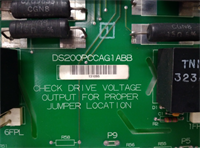
- Visual and counterfeit check: PCB revision, nameplate, connector condition, conformal coating, solder joints.
- Backplane seating test: verify mechanical fit in a Mark VIe rack without forcing connectors.
- Power and insulation checks: measure supply rails, check for shorts, and verify isolation with a multimeter or insulation tester.
- Signal verification: apply known analog inputs and confirm ADC response per OEM test procedure.
- Firmware/revision logging: record PCB revision, serial number, and any firmware or configuration data.
- ESD packing: anti-static bag, rigid board support, moisture barrier, and tamper seal.
I would not install this card without checking the PCB revision first. Mark VIe boards can look identical from three feet away and still refuse to cooperate.The Engineer’s Warning (Pitfalls)
- The Mark V/Mark VIe naming trap is real. Some sellers list IS200PMCIH1AB and IS200PMCIH1ABA as the same item. They are not automatically interchangeable. The “A” suffix can change firmware, channel mapping, or calibration. Always match the exact part number on the failed board.
- Jumpers and calibration constants are the silent failure point. If the old card had hardware jumpers or stored calibration data, photograph everything before removal. I’ve seen a turbine crew swap an analog card, get normal LEDs, and then chase phantom process trips for hours because the replacement board was scaled differently.
Installation & Configuration Guide
1. Pre-Installation ⚠️
- Follow plant safety rules and obtain the required work permit.
- Place the turbine control system in the correct maintenance or test mode.
- Photograph the failed card, slot location, jumpers, connectors, and alarm history.
2. Removal
- Label all cables and connectors.
- Remove mounting hardware and withdraw the card straight out of the Mark VIe rack.
- Inspect the backplane connector for bent pins before installing the replacement.
3. Installation
- Copy all jumper settings, switch positions, and calibration references from the old card. This prevents most startup problems.
- Seat the IS200PMCIH1ABA firmly and evenly. Do not force it.
- Reconnect cables exactly as labeled. Verify connector keying and locking hardware.
4. Power-On & Testing
- Restore power according to OEM procedure.
- Check card LEDs, processor diagnostics, and I/O status screens.
- Verify analog channel readings against known values.
- Confirm no new faults, bad-quality tags, or unexpected trip signals appear.

Compatible Replacement Models
- ✅ Drop-in Replacement: IS200PMCIH1ABA with identical PCB revision and firmware. This is the safest option for a direct swap.
- ⚠️ Software Compatible: IS200PMCIH1AB or other IS200PMCIH1x variants. These may share a similar function but can differ in firmware, jumpers, or channel configuration. Expect 1–4 hours for verification, calibration checks, and OEM documentation review.
- ❌ Hardware Mod Required: Non-IS200 analog cards, Mark V-only boards, or cards requiring different backplanes, racks, or terminal boards. Do not attempt unless executing a full control system upgrade.
Frequently Asked Questions (FAQ)
Can I hot-swap this card safely?
Only if your Mark VIe system and plant procedure explicitly allow it. Turbine control I/O is not a place for guesswork. If the card supports hot swap, you still need to confirm that removing it will not trigger a process trip.Is IS200PMCIH1ABA the same as IS200PMCIH1AB?
Not necessarily. The suffix difference can matter for firmware, calibration, or channel configuration. Always match the exact part number on the original nameplate.Does this board work in Mark V systems?
No. The IS200PMCIH1ABA is a Mark VIe-series board. Mark V systems use different hardware architectures. Do not force cross-platform substitutions.What causes bad readings after replacement?
Usually wrong jumpers, missing calibration data, incorrect terminal board wiring, or a mismatched PCB revision. The card may power up normally and still feed bad values.How do I verify it is genuine?
Check the GE nameplate, PCB revision, serial number, connector quality, and conformal coating. Request a test report if the supplier has performed analog channel verification.Do you provide calibration certificates?
Only if the supplier performs documented testing. For turbine applications, ask for channel-by-channel verification, not just a power-on test.What should I photograph before removal?
Slot number, connector labels, jumper positions, PCB revision, firmware tags, alarm history, and any handwritten notes on the rack door. Those photos usually save more time than the card replacement itself.