
 Tel:
Tel:  Email:
  WhatsApp:
 Description
Key Technical Specifications
- Manufacturer: General Electric (GE)
- System Series: Speedtronic Mark V
- Primary Application: TC2000 Turbine / Gas Turbine Control Systems
- Power Supply: +15V DC
- Processing Power: Triple microprocessor architecture with shared RAM
- Safety Functions: NOx detection and emergency overspeed protection
- Operating Temperature: -20°C to +60°C
- Storage: Expanded EE parameter storage area with specialized firmware
- Physical Weight: Approximately 2.5 kg
- Mounting Style: Field installation, C-core panel slot
Product Introduction
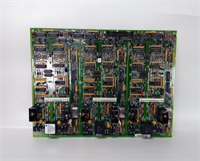
When a gas turbine trips on an overspeed fault at 3 AM, the entire plant holds its breath until the control logic is verified. The GE DS200SDCCG4AGD is the Mark V drive control card sitting right in the C-core, tasked with making split-second decisions on NOx emissions and emergency overspeed protection. It is not a peripheral module; it is the primary controller managing the most dangerous operational parameters of the TC2000 turbine application.Engineers rely on this specific revision because it runs three microprocessors simultaneously, sharing RAM to process speed, torque, and safety limits without a single point of failure. The expanded EE parameter storage area and distinct firmware separate it from older G1A SDCC boards, giving it the memory headroom needed for complex turbine logic. I’ve seen these boards survive decades of thermal cycling, but they are notoriously unforgiving if you ignore their power supply tolerances or fail to match the firmware revision exactly.
Quality SOP & Tech Pitfalls (The Reality Check)
The Lab Report (SOP)
Every DS200SDCCG4AGD that leaves our bench goes through a brutal verification process. We start with a visual and counterfeit inspection under magnification, checking for reflowed pins or mismatched date codes. Next, it goes on a live Mark V test rack where we force NOx and overspeed fault conditions to verify the protection logic trips correctly. We then use a Fluke 115 to check insulation resistance and verify the +15V DC rail stability. Finally, we log the exact firmware version, pack it in anti-static shielding, and seal it with a serialized test report.The Engineer’s Warning (Pitfalls)
Do not assume a DS200SDCCG4AGD is a drop-in replacement just because the silkscreen matches. The expanded EE parameter storage and different firmware mean a mismatched board will cause immediate communication timeouts or, worse, fail to trip during an actual overspeed event. I once watched a technician swap this card without checking the firmware suffix, resulting in a turbine that refused to crank because the new board expected different feedback scaling. Always photograph the old board’s jumpers and exact alphanumeric suffix before pulling it. ESD is another silent killer here; these triple-processor boards are highly sensitive to static, so ground yourself properly before touching the C-core backplane.
Installation & Configuration Guide
- Pre-Installation: ⚠️ SAFETY FIRST. Lock out and tag out the turbine control power. Wait a minimum of 5 minutes for the +15V DC capacitors to fully discharge. Take high-resolution photos of the old board’s DIP switches, jumpers, and wiring harness orientation.
- Removal: Label every ribbon cable and wire harness with masking tape before disconnecting. Release the DIN rail clips or panel retaining screws carefully. Slide the board straight out to avoid bending the backplane pins.
- Installation: CRITICAL STEP: Copy all DIP switch and jumper settings from the old board to the new DS200SDCCG4AGD before seating it. This prevents 90% of startup communication failures. Align the board perfectly with the C-core guide rails and press firmly until the connectors seat fully.
- Power-On & Testing: Restore +15V DC power and monitor the LED boot sequence. Verify the processor heartbeat LEDs are blinking in sync. Download the turbine configuration software and verify that the NOx and overspeed protection parameters match your site-specific logic before attempting a crank or fire.
Compatible Replacement Models
| Compatibility Tier | Model / Action | Notes |
|---|---|---|
| ✅ Drop-in Replacement | DS200SDCCG4AGD (Exact Match) | 100% hardware/firmware match. Verify EE storage and firmware revision on the label. |
| ⚠️ Software Compatible | DS200SDCCG1AEC / DS200SDCCGIAGD | Same Mark V family, but requires firmware flash, parameter migration, and logic recompile. Budget 4-6 hours of engineering time. |
| ❌ Hardware Mod Required | Mark VIe / DS200SDCCG5A | Different backplane architecture and communication protocols. Explicitly advise against unless executing a full system upgrade. |
Frequently Asked Questions (FAQ)
Can I hot-swap this card while the turbine is running?
Absolutely not. The Mark V C-core is not designed for hot-swapping drive control cards. Pulling this board under power will likely fry the backplane traces and take out adjacent I/O modules. Always schedule a full system shutdown.How do I know if my current board is failing versus a sensor issue?
If you are getting intermittent NOx or overspeed faults, check the analog input wiring and sensors first. If the board fails its internal self-test during boot, or if the processor LEDs are solid red/off, the card is likely dead. Pull the diagnostic logs via the Mark V workstation to confirm.Will this board work in my Mark VI or Mark VIe panel?
No. The DS200SDCCG4AGD is strictly a Mark V C-core component. Mark VI and VIe systems use entirely different backplanes, communication buses, and form factors. Do not attempt to force-fit it.What happens if I lose power to the +15V rail momentarily?
The triple microprocessors will reboot, but you will lose unsaved transient data. More importantly, a brownout on the +15V rail can corrupt the expanded EE parameter storage. If you experience frequent power dips, install a UPS on the control power supply.Is this board still manufactured by GE?
No, the Mark V platform is obsolete. Any DS200SDCCG4AGD available today is either New Surplus (old stock) or professionally refurbished. Verify the warranty terms and test documentation before purchasing, as OEM support is no longer available.How long does a replacement take to install?
A seasoned Mark V technician can physically swap the board in about 30 minutes. However, parameter verification, logic checks, and pre-start safety testing usually take another 2 to 4 hours. Never rush the commissioning phase on a safety-critical overspeed card.