
 Tel:
 Email:
 WhatsApp:
Description
Key Technical Specifications
| Parameter | Specification |
|---|---|
| Part Number | 8811-IO-DC / 8811-IO-DC-01 |
| Product Type | 8-channel safety discrete I/O module |
| Safety Rating | SIL 2 per IEC 61508 |
| Channel Count | 8 configurable safety I/O points |
| Output Rating | 2 A DC per channel; 6 A DC per module |
| Field Power | 19.2–30 V DC, up to 8 A max |
| System Power | 12 V DC railbus, 100 mA max |
| Current Draw | 70 mA system power; 50 mA field power |
| Response Time | 1–8 ms configurable |
| Input Type | Dry-contact switch input; on-off approx. 0.9 mA |
| Ambient Temperature | -40°C to +70°C |
| Mounting | PAC8000 carrier, DIN rail or flat panel |
| Hot Swap | Supported in Class I Div 2 / Zone 2 with proper isolation |
| Diagnostics | Internal self-diagnostics with controlled shutdown |
Product Introduction
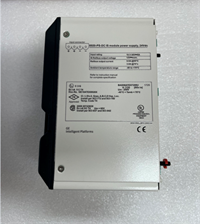
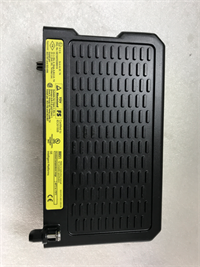
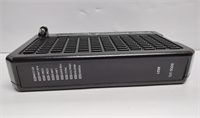
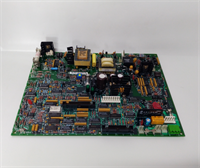
If you have ever chased a nuisance trip on a safety circuit only to find a misconfigured I/O point, you know why this module matters. The GE 8811-IO-DC is a PAC8000 SafetyNet discrete I/O module used in FB-8800 SLS and related safety architectures. It handles dry-contact inputs and 2 A DC outputs across eight configurable channels, which makes it useful for ESD interlocks, burner management auxiliaries, turbine trips, fire/gas interfaces, and general safety shutdown logic.Engineers keep this part in rotation because it gives you SIL 2 capability without forcing a full controller swap. The 1–8 ms configurable response time is fast enough for most discrete safety functions, and the 2 A per channel output rating lets it drive relays, solenoids, and small indicating circuits directly. One thing I watch closely: the -01 suffix can indicate a revision or packaging variant. Do not assume it is identical to a plain 8811-IO-DC until you check the label, firmware, and carrier compatibility.
Quality SOP & Tech Pitfalls
The Lab Report (SOP)
- Visual and counterfeit check — housing, label, part number, revision, pin condition.
- Carrier seating test — module installs cleanly on a PAC8000 carrier without forced engagement.
- Live test on a test rack — verify railbus communication, channel diagnostics, and LED behavior.
- Electrical checks — measure field power acceptance at 24 V DC; confirm output switching under load.
- Firmware/revision logging — record any visible firmware or hardware revision before sealing.
- Final packing — anti-static bag, moisture barrier if required, and photo documentation.
The Engineer’s Warning (Pitfalls)This module is not a generic digital I/O brick. It lives inside a safety system. If the channel configuration, firmware revision, or carrier address does not match the existing node, you can get persistent faults, channel lockouts, or a controlled shutdown. I have seen a plant lose half a day because someone swapped the module without photographing the carrier slot, field terminal wiring, and existing safety configuration. The module itself was fine. The configuration mismatch was not.Also, do not ignore the field power rating. The module supports up to 2 A per channel and 6 A per module in some references, while the carrier field bus can be rated higher. That gap matters if you are driving multiple solenoids from one module. Check the per-module limit before you call it a direct swap.
Installation & Configuration Guide
1. Pre-Installation ️
- Confirm the safety system is in a safe state. Follow site LOTO procedures.
- Isolate the relevant field bus power before working in hazardous areas.
- Photograph the existing module, carrier slot, field terminal block, wiring labels, and any configuration records.
- Verify the replacement part number matches: 8811-IO-DC or 8811-IO-DC-01.
2. Removal
- Label every field wire before disconnecting.
- Remove the field terminal block if required by your carrier design.
- Release the module from the carrier carefully; do not pry the housing.
- Inspect the carrier pins for bent contacts or corrosion.
3. Installation
- Copy the original channel configuration before powering up. This prevents most startup failures.
- Seat the module firmly into the correct carrier slot.
- Reinstall the field terminal block and verify wire positions against your photos.
- Confirm the carrier address and node configuration match the original.
4. Power-On & Testing
- Restore field bus power per site procedure.
- Check module LEDs and diagnostic status.
- Verify each input channel reads correctly.
- Test outputs under controlled conditions before returning the safety function to service.
- Download or verify the safety program only if your procedure requires it.
Compatible Replacement Models
- 8811-IO-DC-01 — Direct replacement when the revision matches the installed node. Same 8-channel safety discrete I/O function in the PAC8000/SafetyNet family. Price and availability vary by supplier.
- 8811-IO-DC (base revision) — Typically hardware-compatible within the same PAC8000 carrier. Confirm firmware and channel configuration before use.
- ️ Other PAC8000 SafetyNet I/O modules — May be compatible at the carrier level but often require logic recompilation, channel remapping, or safety program verification. Expect engineering review time rather than a simple swap.
Frequently Asked Questions (FAQ)
Can I hot-swap the 8811-IO-DC in the field?
Yes, but only per the OEM procedure. PAC8000 safety I/O modules support hot replacement in Class I Div 2 or Zone 2 areas when the associated field bus power is properly isolated. Do not treat this as a casual swap.Is 8811-IO-DC-01 the same as 8811-IO-DC?
Often yes, but not guaranteed. The -01 suffix can indicate a revision, firmware baseline, or packaging difference. Verify the label and configuration before installing it in a live safety node.What voltage does this module need?
It uses 24 V DC field power, typically 19.2–30 V DC, plus system power from the PAC8000 railbus. Check your carrier power supply and field wiring before energizing.Can I use it for non-safety I/O?
Physically it may function, but it is designed and certified as a safety discrete I/O module. If you move it into a non-safety role, you still need to respect the existing safety program, diagnostics, and channel configuration.How many amps can each output handle?
Each output channel is rated up to 2 A DC, with some references listing 6 A DC maximum per module. Do not exceed the lower of the module or field wiring limits.Does it come with a warranty?
That depends on the supplier. For new original or factory-sealed stock, a 1-year warranty is common. For surplus or removed stock, expect shorter terms. Always confirm before purchase.What causes this module to fault after replacement?
Most failures come from configuration errors: wrong carrier slot, mismatched channel setup, incorrect field power, or damaged field wiring. The module itself is usually solid. The paperwork around it is where things go wrong.