 Tel:
Tel:  Email:
  WhatsApp:
 Description
⚙️ Key Technical Specifications
| Parameter | Specification | Notes |
|---|---|---|
| Input Channels | 24 Discrete Inputs | Voltage monitoring type |
| Input Voltage | 15 to 60 V DC | Nominal 24V logic |
| Output Channels | 8 Discrete Outputs | Group Isolated |
| Output Type | Relay / Logic (Configurable) | Persistent or Instantaneous |
| Isolation | Group Isolation | Prevents ground loops |
| Filter Time | Configurable | None, 4, 8, 16, or 32 ms |
| Power Supply | 24 V DC (+5%, -10%) | Redundant capable |
| Power Dissipation | 6 W (Max) | Keep airflow clear |
| Operating Temp | -20°C to +60°C | Derate above 50°C |
| Humidity | 5% to 95% (Non-condensing) | G3 Rated enclosure req. |
| Certifications | UL, ATEX (Ex nA IIC T4 Gc) | Class I Div 2 compatible |
👷 Product Introduction
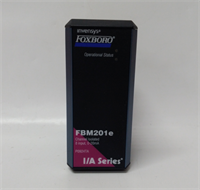
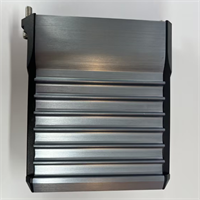
Let’s be honest: in the field, you don’t care about “synergy” or “digital transformation.” You care about whether a card will survive a hot July afternoon in a dusty compressor shelter without throwing a comms error. The Foxboro FBM219 (P0916RH) is one of those workhorses I’ve seen installed in plants that haven’t been upgraded since the Clinton administration—and they are still running. It’s not fancy, but it handles the dirty work of reading 24 discrete status points (like valve positions or motor feedback) and firing off 8 control outputs.The real value here isn’t just the I/O count; it’s the voltage monitoring capability and the G3 environmental rating. Most standard PLC cards fry when exposed to sulfur or high humidity, but this module is built to sit in a NEMA-rated cabinet and take the abuse. With a scan time that keeps up with fast logic and input filtering you can actually adjust to kill noise, it solves real problems. Just make sure your backplane termination assembly (TA) matches your voltage requirements, or this expensive brick won’t talk to your field devices.
🔍 Quality SOP & Tech Pitfalls (The Reality Check)
The Lab Report (SOP)
Before we ship these out, we run them through the wringer so you don’t have to troubleshoot a dead pixel on a Tuesday night.
- Visual Inspection: We check for burnt traces or, more commonly, bent pins from someone trying to jam it into the wrong slot.
- Live Rack Test: We load it onto a functional backplane. We verify the
OKLED turns green and stays there. If it blinks red, it goes back to the bench. - I/O Verification: We toggle all 24 inputs and measure the register change. Then we force the 8 outputs and use a Fluke multimeter to confirm continuity.
- Firmware Check: We verify the revision level against the sticker to ensure compatibility with your existing controller.
The Engineer’s Warning (Pitfalls)
Don’t ignore the Terminal Assembly (TA).
I’ve lost count of how many times a guy has swapped an FBM219 but reused an old, corroded terminal block. The FBM219 relies on specific TAs for isolation and voltage dropping. If you mix up the TA or have loose wiring on the input side, you’ll get “ghost voltages” that make the logic think a valve is open when it’s closed.
Field Disaster Story: Had a client in Texas call me because their pump kept tripping. They replaced the FBM219 three times. Turns out, the vibration in the cabinet had loosened the grounding screw on the chassis. The module was fine; the noise floor was just high enough to flip bits. Always torque your grounds.
🛠️ Installation & Configuration Guide
This isn’t brain surgery, but if you rush it, you will blow a fuse.
- Pre-Installation (Safety First)
- ⚠️ LOCK OUT / TAG OUT: Kill the power to the rack. Yes, even if you think it’s “hot swappable.” If you arc a wire against the背板, you kill the whole node.
- Take a photo of the DIP switches on the old module (if replacing). Default settings might not match your logic address.
- Removal
- Remove the field wiring connectors (the white plastic blocks). Do not pull wires out of the connector unless necessary.
- Release the locking lever (usually at the bottom) and slide the module out. It might stick if the rails are dirty—don’t force it.
- Installation
- Check the Jumpers/DIPs: Set the new FBM219 to match the old one exactly before sliding it in.
- Slide the module onto the rails. Ensure the DIN clip clicks at the bottom.
- Reconnect the field wiring. Tip: Check the polarity on your 24V DC supply. Reverse polarity creates magic smoke.
- Power-On & Testing
- Restore power. Watch the LEDs.
PWRshould be solid Green.COMshould blink (talking to the processor).- If
FAULTis Red, check your configuration download. The module might be waiting for a logic program to tell it what to do.
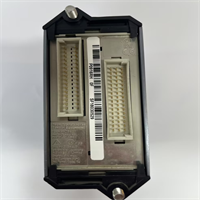
FBM219 RH916RH FOXBORO
🔄 Compatible Replacement Models
| Model | Compatibility | Notes |
|---|---|---|
| FBM219 (P0916RH) | ✅ Drop-in Replacement | Exact match. Verify suffix. |
| FBM219 (P0916RW) | ⚠️ Firmware Match | Newer revision. May require firmware update on the carrier. |
| FBM217 | ❌ Hardware Mod Required | Different pinout. Do not attempt to swap without rewiring. |
💬 Frequently Asked Questions (FAQ)
Q: Can I hot-swap this module while the system is running?
A: Technically, yes, the I/A Series supports hot-swapping. But practically? I wouldn’t risk it unless I had redundant controllers. If you slip and short the backplane, you take down the whole node. Shut it down if you can.Q: My “OK” light is flashing red. What did I do wrong?
A: Usually means the module isn’t configured yet, or the internal self-test failed. Check if the logic download is active. If it’s brand new out of the box, it might just need a firmware flash from the workstation.Q: Does this handle 120V AC inputs?
A: The module itself is low voltage DC logic. However, the associated Terminal Assembly (TA) determines the field voltage. You can use this with a TA rated for 120V AC, but the FBM219 board itself processes the isolated signal. Check your TA part number.Q: Why are there so many input channels (24) but fewer outputs (8)?
A: Monitoring is cheap; driving is expensive. It takes more power and heat dissipation to switch relays or outputs than it does to read a dry contact. That’s why the density is higher on the input side.Q: Is the P0916RH the same as the RH916RH?
A: Yes. P0916RH is the ordering part number; RH916RH is often the revision or manufacturing code stamped on the board. They are functionally identical for replacement purposes.