 Tel:
Tel:  Email:
  WhatsApp:
 Description
Key Technical Specifications
| Parameter | Specification |
|---|---|
| System Compatibility | Emerson Ovation / Westinghouse DCS |
| Input Voltage | 24 VDC (Nominal) |
| Communication Interface | RS-485 / Modbus (Verify protocol) |
| Operating Temperature | -20°C to 70°C |
| Storage Temperature | -40°C to 85°C |
| Enclosure Rating | IP20 (Panel Mount Only) |
| Signal Type | Digital / Analog I/O Support |
| Origin | USA / Global Mfg |
Product Introduction
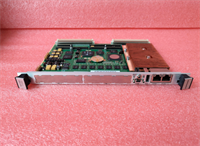
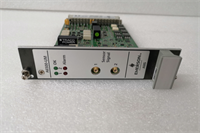
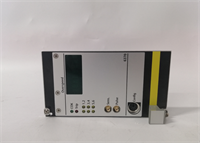
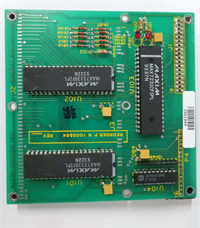
The Emerson 1C31203G01 is a critical controller module designed for the Ovation distributed control system, originally developed by Westinghouse. It functions as a bridge between the central control system and field devices, managing data acquisition and logic execution in power generation and water treatment facilities. This module is engineered to withstand harsh industrial environments, offering reliable performance in high-vibration and temperature-variable settings.In practical applications, the 1C31203G01 distinguishes itself through its ruggedized design and flexibility. It supports multiple communication protocols, allowing it to integrate with legacy systems while maintaining modern data exchange standards. Field experience suggests the unit operates effectively within a wide thermal window, reducing the risk of thermal shutdown in non-climate-controlled cabinets.
Installation & Configuration Guide
Phase 1: Preparation (10 min)
- Ensure the control cabinet power is locked out and tagged out (LOTO).
- Verify the backplane slot compatibility (usually slots 1-16 depending on the chassis).
- Inspect the module pins for any signs of bending or corrosion before insertion.
Phase 2: Removal of Old Unit (5–10 min)
- Disconnect the field wiring harness from the terminal block.
- Loosen the captive screws on the faceplate.
- Slide the module out of the rack carefully to avoid damaging the backplane connector.
Phase 3: Installation (10 min)
- Align the 1C31203G01 with the guide rails of the chassis.
- Insert the module firmly until the backplane connector seats fully.
- Tighten the faceplate screws to ensure proper grounding and EMI shielding.
Phase 4: Power-On & Test (10 min)
- Restore power to the system.
- Check the status LEDs on the faceplate. A steady green “Run” light indicates normal operation.
- Verify communication status via the Ovation operator interface.
Troubleshooting Quick Reference
| Symptom | Probable Cause | Corrective Action |
|---|---|---|
| No LEDs Illuminated | Power supply failure or blown fuse. | Check 24V DC input at terminals. Verify internal fuse integrity. |
| Communication Error | RS-485 wiring reversal or baud rate mismatch. | Verify A/B line polarity. Check Dip switch settings for protocol match. |
| Intermittent Faults | Loose terminal connections or vibration. | Retorque terminal block screws. Check mounting rail stability. |
| Overheat Warning | Cabinet ventilation failure. | Check cabinet fans. Ensure ambient temp is below 70°C. |
Dimensions, Mounting & Wiring Notes
- Mounting: Standard DIN rail or Rack Mount (Ovation Chassis).
- Wiring: Shielded twisted pair cables are recommended for communication lines to reduce noise.
- Torque: Terminal screws should be torqued to 0.5–0.6 Nm.
- Clearance: Maintain at least 50mm of clearance above and below the module for airflow.
FAQ
Q: Is the 1C31203G01 compatible with the original Westinghouse DCS?
A: Yes. Emerson acquired the Westinghouse process control business, so this module is fully backward compatible with legacy Westinghouse DCS architectures, specifically the Ovation system.Q: What does “Remote Node Controller” mean in this context?
A: It means this card acts as a local processor that gathers data from sensors and actuators and sends it to the main CPU. It offloads processing work from the main controller, improving system speed.Q: Can I use this for analog signals?
A: The module supports various I/O types, but you must verify the specific configuration. It is often used for digital logic control but can interface with analog blocks depending on the system setup.Q: The listing says “New Surplus,” what does that mean?
A: It means the unit is brand new and never installed, but it has been in storage for some time. It comes in original packaging but might not have a current manufacturing date.Q: How do I prevent communication failure during setup?
A: The most common issue is incorrect RS-485 wiring. Ensure the “A” and “B” lines are not swapped. Also, ensure the terminating resistors are enabled if this is the last node on the bus.Q: Do you offer a warranty on this?
A: Yes, we provide a 1-year warranty on all surplus controller modules. If the unit fails under normal use, we will replace it or refund your purchase.