
 Tel:
 Email:
 WhatsApp:
Description
Key Technical Specifications
| Parameter | Detail |
|---|---|
| Product Model | ACC-24E2-2CH |
| Product Type | Encoder interface / position capture card |
| Compatible Systems | Delta Tau PMAC, Turbo PMAC, UMAC, MACRO Station |
| Number of Channels | 2 encoder channels |
| Encoder Types Supported | Quadrature A/B, Index Z, CW/CCW, up/down counting |
| Maximum Encoder Frequency | Up to 10 MHz per channel |
| Counter Width | 32-bit per channel |
| Input Signal Compatibility | 5V TTL / 5V differential RS-422 or single-ended |
| Triggering Functions | Position latch on rising/falling edge; position compare |
| Mounting | Plug-in ACC card for PMAC/UMAC 3U rack or carrier |
| Operating Temperature | 0°C to +70°C |
| Warranty | 12 months (non-human defect) |
Product Introduction
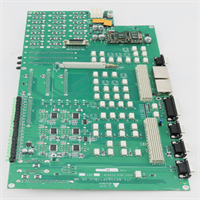
The ACC-24E2-2CH is not a servo drive. It is not a CPU. It is the encoder feedback card that sits inside a Delta Tau PMAC or UMAC system and turns raw A/B/Z encoder pulses into validated position data for the servo loop.Each channel supports quadrature decoding at X1, X2, and X4, with 32-bit counters and a 10 MHz maximum input rate. That matters when you are running high-resolution glass scales, laser interferometers, or direct-drive motors where missed counts show up as following errors, not warnings. The position latch and position compare functions are the parts that actually earn their keep during precision motion: latch captures position on an external event, and compare triggers outputs at a programmed position.This card belongs to the ACC-24E2 family, which also includes ACC-24E2A (analog servo interface) and ACC-24E2S (stepper/encoder interface). They share the same naming prefix but are not interchangeable. The “-2CH” suffix means two encoder channels. If your system needs analog servo outputs, pulse-and-direction, or four channels, you are looking at a different ACC variant.
Quality SOP & Tech Pitfalls
The Lab Report (SOP)
- Visual inspection: Check for cracked connectors, burned traces, corroded encoder terminals, and damaged ribbon cables.
- Model/suffix verification: Confirm ACC-24E2-2CH, not ACC-24E2A, ACC-24E2S, or a 4-channel variant.
- Power-on test: Seat the card in a compatible PMAC/UMAC rack and verify the controller recognizes the accessory slot.
- Encoder signal test: Apply a known quadrature encoder signal and verify count direction, index capture, and counter reset behavior.
- Position latch test: Trigger latch on rising and falling edges; confirm captured position matches reference.
- Position compare test: Set a compare point and verify the output fires at the correct position.
- Noise immunity check: Verify differential RS-422 operation if the application runs near VFDs or servo amplifiers.
- Anti-static sealing: ESD bag, foam support, moisture barrier, and photo documentation.
The Engineer’s Warning (Pitfalls)The ACC-24E2 family naming is the most common trap. ACC-24E2, ACC-24E2A, ACC-24E2S, and ACC-24E2-2CH are not drop-in equivalents. ACC-24E2A handles analog servo outputs; ACC-24E2S handles stepper and encoder channels; ACC-24E2-2CH is specifically a 2-channel encoder interface. Swapping the wrong variant gives you a card that fits mechanically but does nothing useful electrically.The second issue is connector configuration. Some ACC-24E2 variants use terminal blocks, DB connectors, or ribbon cables depending on the option code. If the replacement connector does not match your existing wiring harness, you will need a mezzanine board or rewiring. Photograph the original card connectors before removal.The third issue is channel count. “-2CH” means two encoder channels. If the original card was a 4-channel variant, replacing it with a 2-channel card will leave half the axes without feedback. Verify the PMAC/UMAC I/O map and M-variable assignment before commissioning.
Installation & Configuration Guide
1. Pre-Installation ⚠️
- Place all affected axes in a safe state and disable servo enable.
- Photograph the original card nameplate, connector layout, and wiring labels.
- Confirm the replacement is ACC-24E2-2CH and matches the required connector option.
- Verify the PMAC/UMAC firmware supports this ACC card in the installed slot.
2. Removal
- Power down the rack unless the OEM procedure explicitly allows hot-swap for this ACC position.
- Label all encoder cables and ribbon connectors.
- Release the card from the rack or backplane carefully.
- Place the removed card in an ESD bag.
3. Installation
- Inspect connector pins for bent contacts or oxidation.
- Seat the ACC-24E2-2CH firmly in the correct accessory slot.
- Reconnect encoder wiring per the original labels.
- Verify shield grounding and differential pair routing if using RS-422 encoder signals.
- Confirm the mezzanine or terminal block option matches the existing harness.
4. Power-On & Testing
- Restore power and verify the PMAC/UMAC detects the accessory card.
- Check encoder count direction on each channel.
- Verify index pulse capture if Z-channel is used.
- Test position latch and position compare functions.
- Confirm M-variable or I/O mapping matches the existing program.
- Re-enable servo loops only after feedback is verified.

Compatible Replacement Models
| Compatibility Tier | Model | Notes |
|---|---|---|
| ✅ Drop-in Replacement | ACC-24E2-2CH (same connector option) | Exact match. Verify connector type and channel count. |
| ⚠️ Family Check Required | ACC-24E2, ACC-24E2S, ACC-24E2A | Same naming family, but different function. Not automatically interchangeable. |
| ⚠️ Channel Count Check | 4-channel ACC-24E2 variants | May fit the same slot but provide different channel mapping. |
| ❌ Not a Direct Replacement | ACC-24E2A analog servo cards | Different function (analog servo output vs. encoder input). |
Frequently Asked Questions (FAQ)
Q: Is ACC-24E2-2CH a servo drive?
No. It is an encoder interface and position capture card for PMAC/UMAC motion controllers. It reads encoder feedback; it does not drive motors.Q: Can I replace an ACC-24E2A with ACC-24E2-2CH?
No. ACC-24E2A is an analog servo interface card, while ACC-24E2-2CH is an encoder input card. They serve different roles in the motion control loop.Q: What encoder signals does it support?
Quadrature A/B, index Z, CW/CCW direction, and up/down counting. It supports 5V TTL and 5V differential RS-422 encoder signals.Q: What is the maximum encoder speed?
Up to 10 MHz per channel, with 32-bit counters per channel.Q: Can it be hot-swapped?
Do not assume hot-swap capability. PMAC/UMAC ACC cards should only be replaced following the OEM maintenance procedure. Removing a feedback card while servos are enabled can cause a following error fault.Q: What does the position latch function do?
It captures the current encoder position on a trigger event, such as a rising or falling edge on an external signal. This is useful for precision registration, probing, or synchronized measurement.Q: What is the warranty?
12 months against non-human defects. That covers manufacturing faults and premature failures, but not wiring errors, incorrect variant selection, or encoder signal issues.