 Tel:
Tel:  Email:
  WhatsApp:
 Description
Key Technical Specifications
| Parameter | Detailed Specification |
|---|---|
| Vibration Inputs | 4 Channels (2/3-wire Accelerometers, Velomitors, Proximity) |
| Temperature Inputs | 4 Channels (RTD or Thermocouple Types E, J, K, T) |
| Relay Outputs | 6 Configurable Relays with voting logic |
| Analog Outputs | 4 Configurable 4-20 mA Recorder Outputs |
| Communication | Modbus TCP/IP over Ethernet |
| Power Supply | 18 to 36 Vdc (External 110/220 Vac supply unit required) |
| Alarm Levels | 2 Levels per channel: Alert and Danger |
| A/D Converter | 24-bit, 25 kHz bandwidth |
| Mounting | DIN Rail or Wall Mount (Compact form factor) |
| Environmental | IP65 rated with optional enclosure; ATEX Zone 2 approved |

Product Introduction
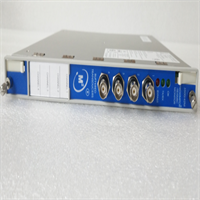
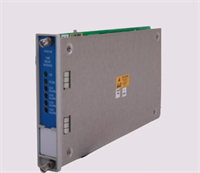
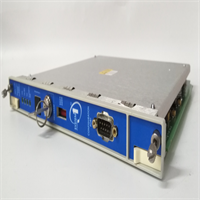
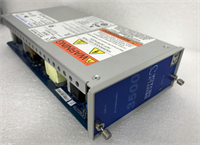
Let’s be real: spending a fortune on a full 3500 rack system to monitor a simple cooling water pump or an induced draft fan is a massive waste of budget. That is exactly where this 1900/65A shines. It is a rugged, standalone monitor designed specifically for “general purpose” or non-critical machinery that still needs eyes on it. I have installed dozens of these in crowded pump skids where there simply isn’t room for a massive chassis.What makes the 1900/65A-01-01-01-01-00 a workhorse is its flexibility. You get 8 total channels (4 vibration, 4 temperature) packed into a tiny footprint. It uses the exact same reliable circuit design as the bigger 3500 series, so you aren’t sacrificing accuracy. It handles everything from eddy current probes to standard thermocouples, and the built-in Modbus TCP/IP means I can pipe the data straight into the plant DCS or System 1 software without needing a clunky gateway.
Quality SOP & Tech Pitfalls (The Reality Check)
The Lab Report (SOP)
Before this unit ships, it goes through a strict checkout:
- Visual Inspection: We check the casing for cracks and ensure the DIN rail clips are intact. We verify the part number matches the label exactly.
- Live Test: We power it up using a calibrated 24V DC supply and verify the LEDs boot up correctly.
- I/O Check: We simulate a 4-20mA loop to ensure the outputs track correctly and trigger the relay logic.
- Packing: It gets sealed in an anti-static bag and double-boxed with heavy foam. These things are tough, but the connectors are delicate.
The Engineer’s Warning (Pitfalls)
- Don’t ignore the power supply: This monitor runs on 18-36V DC. It does not plug directly into 110V AC. If you don’t have the external power supply unit, this box is just a paperweight. I once saw a tech spend two hours troubleshooting a “dead” unit only to realize he was trying to feed it the wrong voltage.
- Modbus mapping: The Modbus registers are not always intuitive. If you are pulling data into a PLC, make sure you grab the specific register map for the 1900/65A. Assuming it talks exactly like a 3500 rack will lead to garbage data.
Installation & Configuration Guide
Here is how to get this swapped in without tripping the plant:
- Pre-Installation: ⚠️ Safety First. Lock out/Tag out the power. If you are replacing an old unit, take a picture of the existing wiring and the DIP switch settings (if applicable) before you touch a single screw.
- Removal: Label every single wire. Disconnect the sensor inputs first, then the relay outputs, and finally the power. Release the DIN rail clip at the bottom and pull the unit out.
- Installation: Snap the new 1900/65A onto the DIN rail. Double-check your wiring labels. Connect the DC power last. Ensure the grounding stud is connected to a clean earth ground—bad grounding causes noisy vibration readings every time.
- Power-On & Testing: Apply 24V DC. Watch the OK LED. Connect your laptop via the configuration software to verify the alarm setpoints match your machine’s requirements. Trigger a test alarm to ensure the relay actually opens.
Compatible Replacement Models
| Compatibility Tier | Model | Notes |
|---|---|---|
| ✅ Drop-in Replacement | 1900/65A-01-01-01-01-00 | Exact match. Same firmware capabilities and I/O count. |
| ⚠️ Software Compatible | 1900/65A (Various suffixes) | Hardware is identical, but you may need to reconfigure channel types (e.g., changing a Temp input to Vibration) via software. |
| ❌ Hardware Mod Required | Bently Nevada 3500 Series | Totally different form factor. Requires a rack, power supply module, and massive rewiring. Only do this if you are upgrading the whole skid. |

Frequently Asked Questions (FAQ)
Can I use this to monitor a standard AC motor?
Absolutely. This is its bread and butter. You can hook up accelerometers to the drive and non-drive end bearings, and use RTDs for the winding temperature. It’s perfect for motors that are too important to fail but not critical enough for a full turbine monitoring system.Does this unit come with the display screen?
It depends on the specific suffix, but usually, the display is a separate module that clips onto the front or mounts remotely. The base unit works fine without it, but having the local display makes troubleshooting at the machine much easier.Is the 1900/65A hot-swappable?
No. Do not try to yank this out while it is powered. You will arc the terminals and likely damage the背板 or your sensors. Always kill the power before swapping.What kind of vibration sensors does it support?
It is very flexible. It supports Bently Nevada eddy current probes (proximity), as well as standard 2-wire and 3-wire accelerometers and velocity sensors (Velomitors). Just make sure you configure the channel correctly in the software.How do I get the data into my DCS?
The easiest way is Ethernet. It has built-in Modbus TCP/IP. You just need to map the registers for the 4-20mA equivalent values or the alarm status bits. It plays nice with most modern PLCs.