Key Technical Specifications
- Input Signal Type: Non-amplified magnetic pickup / Pulse
- Number of Channels: 8 Independent TMR Channels
- Frequency Range: 20 Hz to 20,000 Hz
- Resolution: 16-bit (1 microsecond measurement resolution)
- Update Rate: 25 milliseconds (Typical)
- Impedance: >8 KΩ (Typical 20 KΩ)
- Normal Mode Range: 1.5 V to 200 V Peak-to-Peak
- Common Mode Range: -100 VDC to +100 VDC
- Overrange Protection: ±150 VDC Continuous
- Operating Temperature: -40°C to +70°C
- Hot Swap Support: Yes
- Diagnostics: Complete per-channel fault detection
Product Introduction
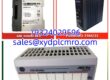
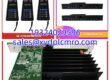
Turbine overspeed protection is not a place for guesswork. If your magnetic pickups are sending noisy, degraded signals to the SIS, you need a module that can filter out the garbage and still catch a catastrophic failure. The TRICONEX 3511 is exactly that. It is an 8-channel pulse input module built specifically for the Tricon TMR architecture, designed to read raw signals from unamplified magnetic sensors on turbines and compressors without needing external signal conditioners.Engineers stick with the TRICONEX 3511 because it actually measures pulse counts to a 1-microsecond resolution while handling up to 200V peak-to-peak noise. It doesn’t just pass signals; it validates them. The TMR voting logic means a single channel can fail, and the module keeps running without tripping the plant. Just a heads-up: this module is picky about sensor impedance. If your wiring is shot or the pickup is degraded, even this bulletproof card will flag a fault. It’s reliable, but it demands a healthy field device.
Quality SOP & Tech Pitfalls
We don’t just wipe the dust off these and ship them. Every TRICONEX 3511 goes through a strict QA protocol before it leaves our bench. We start with a visual and counterfeit check under magnification. Then, it goes on a live Tricon test rack for a 24-hour burn-in where we simulate pulse trains across all 8 channels. We check insulation resistance with a Fluke 115 and verify the firmware revision matches your ticket. Finally, it gets sealed in anti-static packaging.Here is the brutal reality of replacing this card: Do not ignore the DIP switches. I once watched a tech swap a TRICONEX 3511 at 2 AM, ignoring the jumper settings because the new card looked identical. The module booted, but the TMR voting logic was misconfigured for the specific sensor type. Result? A nuisance trip during startup that cost six hours of production. Always photograph the old card’s jumper settings before pulling it. Also, watch your ESD. These cards are sensitive, and a static shock from a dry winter day will fry the input stage instantly.
Installation & Configuration Guide
- Pre-Installation: ⚠️ CRITICAL: Notify the control room and place the system in maintenance/bypass mode if required by your safety matrix. Take high-resolution photos of the old module’s DIP switches and wiring. Verify 24V DC power is stable.
- Removal: Label every wire with tape before disconnecting. Release the DIN rail clips or captive screws carefully. Do not force the module; if it sticks, check for hidden locking tabs.
- Installation: COPY THE DIP SWITCH/JUMPER SETTINGS EXACTLY. This step prevents 90% of startup failures. Slide the new TRICONEX 3511 into the slot, ensuring the backplane connector seats fully. Secure the captive hardware.
- Power-On & Testing: Restore power and watch the LED boot sequence. Verify the “Pass” and “Run” indicators are solid. Use TriStation to clear any latched faults and confirm the module is communicating with the main processor. Download the logic if the firmware revision requires it.
Compatible Replacement Models
| Compatibility Tier | Model / Action | Notes |
|---|---|---|
| ✅ Drop-in Replacement | TRICONEX 3511 | Direct hardware match. Verify firmware revision matches your chassis requirements. |
| ⚠️ Software Compatible | TRICONEX 3511E | Enhanced revision. Requires TriStation configuration check and potential firmware sync. |
| ❌ Hardware Mod Required | TRICONEX 3511S | Specialized variant. Requires chassis backplane modification and rewiring. Not recommended for simple swaps. |
Frequently Asked Questions (FAQ)
Can I hot-swap the TRICONEX 3511 without shutting down the system?
Yes, the TRICONEX 3511 supports hot-swapping in most Tricon chassis configurations. The TMR logic isolates the slot during insertion. However, I always recommend putting the system in a maintenance state if possible. Hot-swapping under full load can sometimes cause transient spikes that confuse the diagnostics.Why is my module showing a channel fault after replacement?
Nine times out of ten, it’s the field wiring, not the card. The TRICONEX 3511 has sensitive diagnostics. If your magnetic pickup is failing or there is moisture in the junction box, the module will correctly flag it as a fault. Check your sensor resistance and cable insulation before blaming the spare part.Is the TRICONEX 3511 compatible with standard 4-20mA sensors?
No. This is strictly a pulse input module. It expects AC-coupled, balanced differential signals from magnetic pickups. If you try to wire a standard analog transmitter to this, you will likely damage the input stage. Use a 3701 or similar analog module for 4-20mA loops.How do I know if the firmware on the replacement matches my system?
Check the label on the old module. The TRICONEX 3511 has a specific firmware revision printed on it. If the replacement is a higher revision, it will usually work but may require a TriStation download to update the chassis configuration. If it’s a lower revision, it might not support newer features. Always verify with the OEM documentation.Does this module provide accumulated totalization?
No. The TRICONEX 3511 is optimized for rate measurement (RPM, frequency). It does not have built-in accumulator registers for long-term totalization. If you need to count total revolutions or flow over time, you need to look at the 3515 module or handle the math in the main processor logic.What is the warranty on these modules?
We provide a 1-year warranty against manufacturing defects and DOA (Dead on Arrival) conditions. This covers internal component failures, not field wiring errors or ESD damage. If it fails on the test rack, we replace it. If you fry it because you didn’t wear a wrist strap, that’s on you.