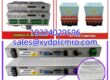
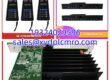
Key Technical Specifications
- Product Model: TU003-DOR08
- Manufacturer: SUPCON
- Output Type: Relay (Dry Contact)
- Channel Count: 8 Channels
- Coil Voltage: 24V DC
- Contact Rating: Typically 2A @ 250V AC / 30V DC
- Mounting Style: DIN Rail / Backplane
- Isolation: Channel-to-Channel / Channel-to-Backplane
- Indicator: LED Status per Channel
- Application: ECS-100 / ECS-700 Systems
Product Introduction
Field relays are usually the first thing to die in a DCS cabinet. Arcing, stuck contacts, and coil burnouts are daily headaches for us maintenance guys. The SUPCON TU003-DOR08 is the standard 8-channel relay output terminal board designed specifically for SUPCON ECS platforms to handle this dirty work. It isolates your expensive controller cards from the harsh reality of field wiring.Engineers stick with this specific board because it’s cheap, easy to swap, and keeps the main DCS card alive when a field short happens. You get 8 independent relay channels that click loudly when they switch—a good audible sign of life. Just make sure you don’t exceed the 2A contact rating; I’ve seen them welded shut by guys who tried to drive heavy solenoids directly without an interposing contactor.

Quality SOP & Tech Pitfalls
Before this TU003-DOR08 leaves our bench, we don’t just look at it. We plug it into a live ECS test rack and force all 8 relays on and off 20 times while watching the LEDs. We use a Fluke 115 to check contact resistance and verify isolation with a megger. Only then does it get sealed in an anti-static bag with a test log.Here is the brutal truth: swapping this board without pulling the fuse or isolating the 24V DC supply will blow the backplane fuse instantly. I once watched a tech pop a $2,000 DO card because he didn’t verify the external 24V supply was dead before sliding this board in. Also, check your coil voltage. Plugging a 24V board into a 110V circuit melts the coil in seconds.
Installation & Configuration Guide
- Pre-Installation: ⚠️ KILL THE POWER. Lock out the 24V DC supply to this rack. Take a clear photo of the old wiring and DIP switch positions before touching anything.
- Removal: Label every single wire. Release the DIN clip carefully so you don’t snap the plastic. Pull the board straight out to avoid bending the backplane pins.
- Installation: Copy the DIP switch settings exactly. This prevents 90% of “board won’t talk” issues. Slide the new TU003-DOR08 in until you hear a solid click.
- Power-On & Testing: Restore power. Watch the PWR LED. Force outputs via the DCS software and listen for the physical click. Verify voltage at the terminal block.
Compatible Replacement Models
| Compatibility | Model | Notes |
|---|---|---|
| ✅ Drop-in | TU003-DOR08 | Exact match. No config changes needed. |
| ✅ Drop-in | TU003-DOR08C | Minor revision. Pin-compatible. |
| ⚠️ Software | TU003-DOR16 | 16-channel version. Requires rack config update. |
| ❌ No Go | TB367-GPRU | Different form factor. Do not buy for this slot. |

Frequently Asked Questions (FAQ)
Can I hot-swap this relay board?
No. Never hot-swap relay output boards on SUPCON racks. You risk arcing the backplane contacts. Always power down the slot or rack.Why is my relay chattering?
Check your 24V DC supply ripple. If the power supply is failing or undersized, the coil won’t hold. I’ve also seen this when the common wire is loose.Is this the same as the TB367-GPRU?
Different animals. The TB367 is a general-purpose relay board, often used differently. The TU003-DOR08 is specifically keyed for the TU series terminal base. Don’t mix them up.How do I test a stuck relay?
Force the output in software. If the LED lights but no click, the coil is open. If it clicks but no voltage passes, the contacts are fried. Replace the board.Do I need to configure this in Control Strategy?
Usually no. It’s a passive terminal board. The logic lives in the DO card (like XP322). If the DO card is configured right, this board just works.What happens if I wire 110V AC to the coil?
Magic smoke. The coil burns out immediately, and you might damage the backplane driver. Double-check your voltage before applying power.