Product Introduction
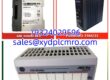
The ABB FI830F 3BDH000032R1 is an 8-channel analog input module designed for the S800 I/O system, acting as the critical link between field sensors and your central control system. It’s the component that digitizes real-world process variables like temperature, pressure, and flow, feeding accurate data to your controller for decision-making.What sets this module apart is its 16-bit resolution and native HART protocol support. This means you get highly precise measurements and can communicate directly with smart field devices for configuration and diagnostics without needing a separate communicator. In my experience, this level of integration is a lifesaver during commissioning and troubleshooting, saving hours of climbing ladders to access individual transmitters.
Key Technical Specifications
| Parameter | Value |
|---|---|
| Product Model | FI830F 3BDH000032R1 |
| Manufacturer | ABB |
| Product Type | Analog Input Module |
| Number of Channels | 8 |
| Signal Type | Current (e.g., 4-20 mA), Voltage |
| Resolution | 16 bits |
| Communication | HART Protocol (pass-through) |
| Electrical Isolation | Channel-to-bus isolation |
| Operating Temp. | -40°C to +70°C (-40°F to +158°F) |
| Power Consumption | 3.5 W typical |
| Mounting | DIN rail (S800 I/O station) |
Application Scenarios & Pain Points
The real test for an input module isn’t during smooth operation; it’s when a process variable starts to drift. Imagine a critical reactor temperature that begins to climb. A low-resolution module might report this change in slow, stepped increments, delaying the controller’s response. The FI830F, with its 16-bit resolution, detects that subtle ramp-up almost instantly, allowing the control logic to adjust cooling flow proactively and prevent a costly batch spoilage or, worse, a safety incident.
- Chemical Processing: Monitors the precise flow rates of various reactants into a mixing vessel. An inaccurate reading here could ruin an entire batch, costing tens of thousands of dollars in raw materials and downtime.
- Oil & Gas: Measures pipeline pressure at remote wellheads. The module’s ability to operate in temperatures down to -40°C is critical for arctic applications where equipment failure is not an option.
- Power Generation: Reads steam temperature and pressure in a boiler. The channel-to-bus isolation is a key feature here, protecting the main control system from voltage spikes that can occur in high-energy electrical environments.
- Pharmaceuticals: Ensures sterile conditions by monitoring pressure differentials between cleanrooms. The HART capability allows engineers to verify transmitter health and calibration without breaking the sterile seal.
- Water Treatment: A question for any plant manager: how quickly can you detect a chemical dosing pump failure? This module’s fast, accurate current input reading provides the answer, triggering an alarm before water quality falls out of specification.
Quality Control Process
We don’t just visually inspect a module and call it a day. Every FI830F is put through a rigorous verification process to ensure it performs to ABB’s original specifications.
- Inbound Inspection: We start by verifying the part number and serial number against OEM documentation to ensure authenticity. A thorough visual inspection follows, checking for any signs of physical damage, corrosion, or tampering.
- Live Functional Test: The module is installed in a live ABB S800 I/O station. We power it up and verify that it communicates correctly with the fieldbus coupler. Then, we perform a full I/O signal sweep, injecting precise 4-20 mA signals into all 8 channels and verifying the digital readings in the control software.
- Electrical Parameters: We use a megger to test the insulation resistance between the channels and the bus, ensuring it exceeds 10 MΩ. This step is critical for verifying the module’s isolation integrity and preventing ground loops.
- Firmware & HART Verification: We read the firmware version and confirm it’s compatible with common S800 system versions. We also perform a HART pass-through test, using a handheld communicator to “talk” to a simulated HART device through the module, ensuring diagnostic data can flow freely.
- Final QC & Packaging: After passing all tests, the module is cleared by a senior technician. It’s then sealed in an anti-static bag, packed securely with bubble wrap, and labeled with a QC Passed sticker and the date of testing.
Installation Pitfalls Guide
I’ve seen a new module blamed for a problem that was actually a simple wiring mistake. Save yourself the headache and the rework time by keeping these five points in mind.
- Firmware version mismatch: A new FI830F might ship with a newer firmware version than your S800 station’s fieldbus coupler. This can cause a communication fault, and the module won’t be recognized. Always check your system’s firmware compatibility list before installing.
- DIP switch / jumper misconfiguration: While less common on modern modules, some I/O modules have hardware settings for things like power-up behavior. Take a photo. Then take another one. of the old module’s settings before you remove it. It’s the simplest way to avoid a configuration error.
- Terminal / wiring incompatibility: Don’t assume the wiring is correct. Cross-check the wiring diagram for the FI830F against your specific field device. A 4-20mA transmitter wired to a voltage input terminal, for example, will give you a useless reading.
- Power supply undersizing: Adding a new I/O module increases the load on your station’s power supply. Calculate the total power draw of all modules in the station and ensure your power supply has at least a 20% headroom. An overloaded supply will cause erratic behavior across the entire station.