
 Tel:
 Email:
 WhatsApp:
Description
Key Technical Specifications
| Parameter | Specification |
|---|---|
| Manufacturer | GE / General Electric |
| Part Number | IS200VTCCH1CBB |
| Product Family | IS200VTCCH1C |
| System Platform | GE Mark VI Speedtronic |
| Board Type | Thermocouple input board |
| Input Channels | Up to 24 thermocouple inputs |
| Supported Thermocouple Types | E, J, K, S, T |
| Signal Range | -8 mV to +45 mV |
| Terminal Board Compatibility | DTTC or TBTC terminal boards |
| Application Group | Group 1 — gas turbine control applications |
| Indicators | RUN / FAULT / STATUS LEDs |
| Key Components | Xilinx Spartan XCS30 FPGA, dual-port SRAM, CMOS SRAM, DSP |
Product Introduction
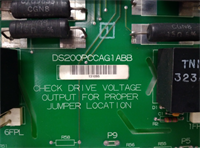
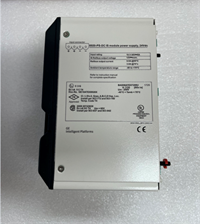
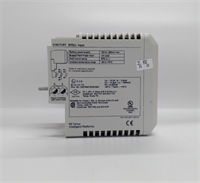
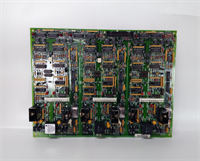
If your turbine cabinet is still running Mark VI, you already know the pain: thermocouple cards are quiet until they are not. The IS200VTCCH1CBB is the Mark VI thermocouple input board that sits between the field thermocouples and the controller logic, handling signal conditioning and fault detection for up to 24 channels. It is not a universal analog card. It is built specifically for the VTCC family inside GE Speedtronic Mark VI systems.Engineers keep this board in service because it gives you dense thermocouple coverage in a single slot. Twenty-four inputs on one board matters when exhaust temperature spread trips are involved. It supports E, J, K, S, and T types over a -8 mV to +45 mV range and works with DTTC or TBTC terminal boards. The CBB suffix is a revision/build code. I have seen boards that look identical fail to initialize simply because the suffix did not match the cabinet BOM. Treat the suffix as part of the part number, not decoration.
Quality SOP & Tech Pitfalls
The Lab Report (SOP)
- Visual and counterfeit check: compare label, revision, connector layout, and solder work.
- Physical inspection: look for corrosion, burned resistors, lifted traces, or reworked FPGA pins.
- Live test on a Mark VI-compatible test rack or verified I/O core.
- Channel verification: check thermocouple input response across the -8 mV to +45 mV range.
- LED diagnostics: confirm RUN/FAULT/STATUS behavior.
- Insulation and continuity checks with a Fluke 115 or equivalent.
- Firmware/revision logging and anti-static bag sealing.
The Engineer’s Warning (Pitfalls)Do not swap this board without photographing the terminal board wiring and the existing board labels. I once saw a crew replace a VTCC board during a forced outage, only to spend six hours chasing “bad channels” because the DTTC wiring had been moved during a previous modification. The new board was fine. The wiring was not.Also, do not assume IS200VTCCH1CBB is interchangeable with every IS200VTCCH1C variant. The base family is the same, but suffixes can affect revision, calibration data, firmware, or terminal-board pairing. Verify against the OEM manual and the physical nameplate.
Installation & Configuration Guide
- Pre-Installation
- Place the turbine control system in a safe maintenance state per plant procedure.
- Wait for capacitors to discharge.
- Photograph all wiring, terminal-board labels, jumpers, and the existing board nameplate. ⚠️
- Removal
- Label every thermocouple pair and terminal-block position.
- Disconnect field wiring at the terminal board, not by pulling wires from the back of the card.
- Release mounting hardware and remove the board without forcing connectors.
- Installation
- Copy all existing settings, labels, and wiring references before installing the replacement. This prevents most startup headaches.
- Seat the IS200VTCCH1CBB fully into the rack.
- Reconnect wiring exactly as documented.
- Verify the terminal board is the correct DTTC/TBTC type for this application group.
- Power-On & Testing
- Restore power and watch the LED sequence.
- Confirm no FAULT indication on the new board.
- Verify channel readings against known thermocouple references.
- Check exhaust temperature spread values and trip logic before returning to full load.

Compatible Replacement Models
- ✅ IS200VTCCH1CBB — Direct replacement if the removed board carries the same full suffix and the terminal-board wiring is unchanged.
- ⚠️ IS200VTCCH1C (other suffixes) — Same VTCC family, but may require firmware, calibration, or terminal-board verification. Allow extra commissioning time.
- ❌ Mark V TCQA / IS200HVTCCH1C family — Different architecture. Not a drop-in replacement for a Mark VI VTCC slot.
Frequently Asked Questions (FAQ)
Can I hot-swap the IS200VTCCH1CBB?
No. Mark VI I/O boards should not be treated as hot-swappable unless the OEM manual explicitly allows it. Pulling this card live can trip logic, corrupt diagnostics, or damage connectors.Is IS200VTCCH1CBB the same as IS200VTCCH1C?
The CBB board belongs to the IS200VTCCH1C family, but the suffix matters. Use the exact suffix shown on the removed board and in the turbine BOM.What terminal board does it use?
It connects to DTTC or TBTC terminal boards. TBTC variants differ between simplex and TMR applications, so confirm the terminal-board model before wiring.How many thermocouples can it handle?
Up to 24 thermocouple inputs, supporting E, J, K, S, and T types.Will this work in a Mark V cabinet?
No. This is a Mark VI board. Mark V analog I/O uses a different core architecture and connector scheme.Is new original stock still available?
Yes, but it is typically surplus or new-old-stock. Always verify condition, suffix, and return policy before committing.What is the most common failure mode?
Bad channels caused by terminal-board wiring errors, corrosion, or previous modifications. The board itself is usually fine until someone rewires half the cabinet and forgets to document it.