Product Introduction
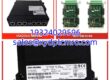
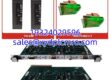
When a single I/O module failure can trigger a costly process trip, redundancy isn’t a luxury—it’s a requirement. The FOXBORO FBMXX RH931RQ is engineered for exactly this scenario, providing a fault-tolerant communication path for field devices within the I/A Series system. It acts as a critical bridge, ensuring that vital process data continues to flow to the controller even if one communication path is compromised.This module’s primary value is its ability to maintain system integrity without operator intervention. In my experience, deploying redundant modules like the FBMXX RH931RQ in critical loops—like reactor temperature or compressor surge control—dramatically reduces the risk of spurious trips. It’s a straightforward hardware solution to a potentially complex availability problem, and it integrates seamlessly into the existing I/A Series architecture without requiring a complete system overhaul.

Key Technical Specifications
| Parameter | Value |
|---|---|
| Product Model | FBMXX RH931RQ |
| Manufacturer | FOXBORO (Schneider Electric) |
| Product Series | I/A Series |
| Module Type | Redundant Fieldbus Module |
| Function | Provides redundant communication for FBM I/O |
| Communication | Fieldbus Protocol (I/A Series) |
| Redundancy | Yes, Dual-Channel |
| Mounting | DIN Rail or Rack Mount (I/A Series) |
| Operating Temperature | 0°C to +60°C (32°F to 140°F) |
| Storage Temperature | -40°C to +85°C (-40°F to +185°F) |
| Humidity | 5% to 95% non-condensing |
| Certification | CE, UL, CSA, ATEX (when installed in rated enclosure) |
Application Scenarios & Pain Points
A refinery in Louisiana was facing repeated, unexplained shutdowns of a critical distillation column. The root cause? A single point of failure in the I/O communication path. A loose cable on a non-redundant fieldbus module caused the controller to lose sight of key level transmitters, forcing a safe shutdown. This is the exact problem the FOXBORO FBMXX RH931RQ is designed to eliminate. By providing a parallel, redundant communication channel, it ensures that a single cable fault or port failure doesn’t translate into lost production.
- Critical Process Control: Essential for applications where process availability is paramount. If a single I/O module failure could cause a safety incident or a massive financial loss, this redundant module is the insurance policy you need.
- High-Availability Systems: Used in power plants and pharmaceutical manufacturing to meet strict uptime requirements. It allows for maintenance on one communication path while the other remains active, supporting online module replacement.
- Harsh Industrial Environments: Its robust design makes it suitable for offshore platforms or chemical plants where vibration and temperature fluctuations can compromise standard, non-redundant connections.
- System Upgrades and Retrofits: A key component for modernizing older I/A Series systems. Adding redundancy at the I/O level can significantly boost the reliability of a legacy DCS without a full, costly replacement.
Quality Control Process
We don’t just box it and ship it. A redundant I/O module is only as good as its ability to fail over, so our testing process is rigorous. Here is exactly how we verify the FBMXX RH931RQ before it leaves our warehouse:
- Inbound Inspection: We verify the source traceability and check the manufacturing date codes. We perform a detailed visual inspection of the fieldbus connectors and the DIN rail latch, looking for any signs of physical stress or corrosion.
- Live Functional Test: We install the module into a live I/A Series rack. We power it up and confirm that both the primary and secondary status LEDs illuminate correctly. We then connect to the system workstation and verify that the module is recognized and reporting a “Healthy” status for both channels.
- Electrical Parameters: We check the module’s power draw from the rack backplane to ensure it’s within the specified range. An abnormal current draw can indicate an internal fault that might not show up in a simple communication test.
- Firmware Verification: We read the firmware version from the module. For redundant systems, it’s critical that both modules in a pair are running the exact same firmware revision to ensure proper synchronization and failover behavior. We document this version for you.
- Final QC & Packaging: After passing a 4-hour burn-in test, the module is signed off by our lead technician. It’s sealed in an anti-static bag, packed with bubble wrap, and placed in a rigid cardboard box to prevent damage during transit.

Installation Pitfalls Guide
Redundancy adds complexity, and with it, new ways to make mistakes. I’ve seen more than one “redundant” system fail because of a simple configuration error. Keep these in mind and you’ll cut 90% of your rework time.
- ❗ Firmware Version Mismatch: This is the most common and dangerous pitfall. If you are replacing one module in a redundant pair, the new FBMXX RH931RQ must have the same firmware version as its partner. A mismatch can prevent the failover from working or cause intermittent communication errors that are a nightmare to diagnose. Check the version before you install.
- ❗ DIP Switch / Jumper Misconfiguration: Some redundant modules have hardware settings to define their role (e.g., primary vs. secondary, or rack address). The factory defaults rarely match your site’s specific configuration. Take a photo of the switch settings on the old module before you remove it. Then take another one.
- ❗ Terminal / Wiring Incompatibility: Redundancy means you have twice the cables. It’s crucial to label them meticulously. Swapping the primary and secondary fieldbus cables at the terminal block will defeat the purpose of the redundancy and could lead to a loss of signal if one path fails.
- ❗ Power Supply Undersizing: A redundant module might have a slightly different power profile, especially during the initial handshake and synchronization phase. If your rack’s power supply is already near its limit, adding a new module could cause a voltage dip that affects other cards. Always calculate your total rack load with at least a 20% headroom.
- ❗ ESD Damage: The electronics inside these modules are incredibly sensitive. A tiny static shock that you can’t even feel can damage the communication ASICs, leading to a latent failure that might not appear for weeks. Always use a grounded wrist strap when handling the module.