Product Introduction
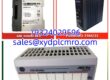
When a critical compressor trips offline because a single relay output card failed to energize, the entire production line grinds to a halt. The BENTLY 3500/33 149986-01 is the specific relay module designed to prevent this exact scenario within the 3500 Machinery Protection System. It acts as the final control element, taking logic decisions from the monitor modules and physically switching the circuits that shut down equipment or trigger alarms.This isn’t just a generic relay card; it’s a specialized component for the 3500 rack. It provides 16 channels of isolated relay outputs, which is crucial when you need to drive multiple solenoid valves or indicator lights from a single slot. In my experience, the biggest advantage here is the flexibility—you can configure each relay for alarm, danger, or OK states independently. It handles the heavy lifting of electrical isolation so your sensitive monitor modules don’t get fried by inductive spikes from the field devices.
Key Technical Specifications
- Channels: 16 independent relay outputs
- Contact Rating: 3 A @ 30 VDC (Resistive Load)
- Contact Type: Form A (SPST-NO) or Form C (SPDT) depending on configuration
- Isolation: Channel-to-bus and channel-to-channel isolation
- Power Consumption: 6.5 W typical
- Operating Temperature: -30°C to +65°C
- Physical Dimensions: 241.3 mm x 24.4 mm x 241.6 mm (H x W x D)
- Weight: Approx. 0.7 kg
- Compatibility: 3500/05, 3500/15, 3500/25 racks
- Certification: CE marked, CSA/NRTL recognized
Application Scenarios & Pain Points
A refinery in the Gulf Coast recently faced a nightmare scenario: their primary feed pump tripped on high vibration, but the backup pump failed to start because the interposing relay logic was faulty. The vibration monitor saw the spike, but the signal died at the output card. This is where the 3500/33 149986-01 earns its keep. It’s the muscle behind the brain. Without a functioning relay module, your expensive vibration monitoring system is just an expensive paperweight that lights up when things break, rather than preventing the break.
- Petrochemical Compressors: Used to trip steam turbines when axial displacement exceeds safe limits.
- Power Generation: Essential for generator protection schemes where you need to trip the breaker and close the steam valve simultaneously.
- Water Treatment: Drives alarms for pump cavitation detection systems.
- Why 16 Channels? You might ask why you need 16 channels. Honestly, on a large turbine train, you burn through relay points fast—high alarm, danger alarm, bypass, and machine OK status for multiple parameters. This card consolidates that wiring.
Case Study: The 2 a.m. Call
An on-call engineer at a steel mill got paged at 2 a.m. because the main cooling fan had tripped. The SCADA system showed a “System OK” status, but the fan was dead. The investigation revealed that the old relay module had welded contacts; it showed “closed” logically but wasn’t passing current physically. Swapping in a fresh BENTLY 3500/33 149986-01 restored the physical interlock. The fan restarted, and the mill avoided a 4-hour furnace cooldown. It’s a small card, but it holds the safety interlock for the whole plant.
Quality Control Process
We don’t just look at the box and ship it. Here is how we verify a 3500/33 before it leaves our shelf:
- Inbound Inspection: We check the Bently Nevada hologram on the label—counterfeits often have blurry holograms. We verify the serial number against the OEM packing list.
- Live Functional Test: We slide the card into a powered 3500/15 rack. We use a configuration software to force Relay 1 “On” and measure the continuity across the terminals with a Fluke 115 multimeter. We check all 16 channels.
- Electrical Parameters: We perform a 500V Megger test on the isolated channels to ensure there is no leakage to the backplane.
- Firmware Verification: We read the firmware revision. For the 3500/33, we ensure it matches the compatibility matrix for your existing rack (older racks sometimes struggle with very new firmware revisions).
- Final QC: We seal it in an anti-static bag with a desiccant pack.
Installation Pitfalls Guide
I’ve seen too many of these come back as “dead on arrival” because of simple installation errors. Don’t be that guy.
- Firmware Version Mismatch: The 3500 rack has a specific firmware “personality.” If your rack is running V1.0 and the new card is V3.0, it might not talk. Check your rack’s firmware version before you order.
- DIP Switch / Jumper Misconfiguration: This is the big one. The 3500/33 has internal jumpers for contact type (Form A vs. Form C). If you don’t set these to match your old card, the logic will be inverted, and your safety system will fail. Take a photo. Then take another one.
- Terminal Wiring Incompatibility: The 3500 system uses specific I/O modules. Ensure you are wiring to the correct terminal block (usually the 3500/33 has specific terminal block requirements). Don’t force a generic block into the slot.
- Power Supply Undersizing: Relay coils draw current when they switch. If you have a fully loaded rack and you switch 16 relays at once, you create a massive current spike. Ensure your power supply modules have enough headroom (20% minimum) to handle the inrush.
- ESD Damage: The logic chips on these cards are sensitive. If you touch the connector pins without a wrist strap, you might introduce a latent defect that kills the card three months later. Ground yourself.