 Tel:
Tel:  Email:
  WhatsApp:
 Description
Product Introduction
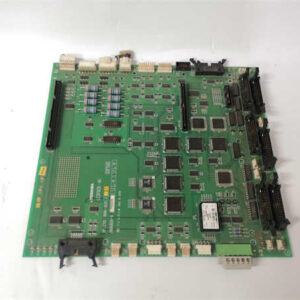
You can’t retrofit a packaging line just because a counter module died. The Toshiba DPHC06G001 is the specific I/O card needed to keep older EX-series PLCs running precise cut-to-length or filling operations without a full system overhaul.This isn’t a generic counter; it handles 6 independent channels with a max frequency of 500 kHz, which is plenty for most servo feedback loops in legacy systems. We stock these as New Original (New Surplus), meaning they are unused old stock—perfect for maintenance teams needing a reliable spare without the risk of a refurbishment. Honestly, finding these in sealed bags is getting harder as Toshiba shifts focus to newer controllers.
Key Technical Specifications
| Parameter | Value |
|---|---|
| Model Number | DPHC06G001 |
| Manufacturer | Toshiba |
| Module Type | High-Speed Counter |
| Number of Channels | 6 Channels (Independent) |
| Max Counting Frequency | 500 kHz (Single phase) |
| Input Signal Type | Line Driver / Open Collector |
| Input Voltage | 24V DC (+10% / -15%) |
| External Wiring | MIL connector (26-pin) |
| Counting Modes | Pulse + Direction, CW/CCW, Phase Difference |
| Internal Current Consumption | Approx. 250 mA (5V DC) |
| Operating Temperature | 0°C to +55°C |
| Storage Temperature | -20°C to +70°C |
Application Scenarios & Pain Points
The real headache starts when your filler machine drifts out of sync. Without a functioning high-speed counter like the DPHC06G001, the PLC misses pulses from the rotary encoder, leading to overfills or underfills. It’s not just about counting; it’s about timing.
- Packaging Machinery: Essential for cut-to-length applications where the knife must trigger at an exact encoder position. Missing a pulse means scrap material.
- Textile Manufacturing: Monitors yarn tension and length. If the counter card fails, the winder doesn’t stop at the right length, ruining the spool.
- Automated Assembly: Used for tracking parts on a conveyor. Can this module handle the noise in a welding cell? Generally yes, provided your shielding is intact.
- Pharmaceutical Lines: Ensures bottle counts match carton loads. A discrepancy here triggers a full line stoppage for reconciliation.
Field Note: We saw a plant in Ohio lose three days of production because they ordered a “compatible” counter card that didn’t support the specific 500kHz frequency of their old encoders. Stick to the genuine DPHC06G001 to avoid that mismatch.
Quality Control Process (SOP Transparency)
We don’t just look at the box. Here is how we verify the DPHC06G001 before it ships to you:
- Inbound Inspection: We verify the factory seal and check the date code. We look for “yellowing” on the connector plastic, which indicates heat exposure.
- Live Functional Test: We install the module into a Toshiba EX40-40 rack.
- Signal Gen: We pump a 100kHz square wave into Channel 1 using a signal generator.
- Verification: We monitor the register value in the programming software to ensure it increments exactly as expected.
- Load Test: We run the count continuously for 4 hours to check for thermal drift.
- Electrical Parameters: We use a multimeter to check the 24V DC input impedance. It should be approx. 4.7 kΩ.
- Visual Check: We inspect the MIL connector pins. Bent pins are the #1 failure point in shipping.
Installation Pitfalls Guide (“Lessons Learned” Voice)
I’ve seen too many of these come back as “dead on arrival” because of simple installation errors. Don’t be that guy.
- ❗ Wiring the MIL Connector Wrong: This is the most common issue. The pinout is not intuitive. Take a photo of the old wiring before you pull a single wire. If you cross the 24V common with the signal, you will fry the input circuit instantly.
- Firmware Mismatch: The EX series PLC CPU needs to recognize the module. If you swap this into an older rack, check your CPU firmware version. It might need an update to “see” the card properly.
- Noise Interference: This is a high-speed card. If you run the encoder cables next to VFD power lines, you will get false counts. Use shielded twisted pair and ground the shield at one end only.
- DIP Switch Settings: Check the mode switches (Pulse/Direction vs. CW/CCW). The factory default is rarely what your machine needs. Set them before you mount the card in the rack.
- ESD Damage: It sounds basic, but touch the rack chassis before handling the card. The logic chips on this module are sensitive.