 Tel:
 Email:
 WhatsApp:
Description
Key Technical Specifications
| Parameter | Specification |
|---|---|
| Part Numbers | 1381-644957-16, 1308-644957-12 |
| Operating Voltage | 220V AC |
| Output Frequency | 100kHz |
| Input/Output Types | Highly configurable for diverse semiconductor applications |
| Communication | Supports multiple industrial protocols for external device integration |
| Magnetic Properties | High resistivity, low power loss |
| Durability | High mechanical and thermal endurance |
| Response Time | High-speed electromagnetic response |
| Application | Power transmission and electromagnetic field creation |
Product Introduction
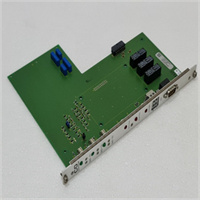
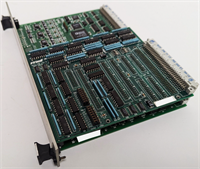
When you’re running a semiconductor fab, downtime isn’t just an inconvenience; it’s a massive financial hemorrhage. The TEL TVB3101-1ISC is one of those critical electromagnetic boards that keeps the process running smoothly inside Tokyo Electron equipment. I’ve seen these units push through harsh cleanroom environments for years, but they demand respect. If you’re swapping one out, you aren’t just plugging in a generic PLC card—you’re dealing with precision electromagnetic control.Engineers trust this board because of its high electromagnetic response and stability. It handles the heavy lifting for power transmission and field creation, which is non-negotiable in wafer processing. The low power loss and high resistivity mean it doesn’t cook itself during long production runs. But here’s the reality: this is a highly specialized OEM part. It’s built for a specific job in a specific machine. Don’t try to force it into a standard industrial rack; it belongs in the TEL ecosystem.
Quality SOP & Tech Pitfalls
The Lab Report (SOP)
I don’t ship these out without a thorough check. A visual inspection isn’t enough for semiconductor-grade hardware.
- Visual & Counterfeit Check: I inspect the PCB for micro-fractures, cold solder joints, or signs of overheating. I verify the silkscreen and part numbers (1381-644957-16 / 1308-644957-12) against known OEM standards.
- Bench Test: I power up the board on a dedicated test rig. I’m looking for stable 220V AC operation and a clean 100kHz output signal.
- Multimeter & Insulation Checks: I use a Fluke 115 to check continuity on critical lines and verify insulation resistance to ensure there are no shorts that could fry the host system.
- Anti-Static Sealing: Once it passes, it goes into a static-shielded bag with desiccant. ESD is the silent killer of these boards.
The Engineer’s Warning (Pitfalls)
- The “Generic Board” Trap: I once saw a maintenance tech try to substitute a similar-looking power board from a different manufacturer because it “fit the slot.” It didn’t. The electromagnetic response time was off, and it caused a cascade failure in the process chamber. Stick to the exact TEL part numbers.
- ESD Damage: These boards are highly sensitive. If you’re handling this without a grounded wrist strap in a dry environment, you’re playing Russian roulette with the internal components. I’ve seen boards fail immediately after installation simply because the tech touched the pins without proper grounding.
Installation & Configuration Guide
- Pre-Installation: ⚠️ Lockout/Tagout. Isolate the power to the host semiconductor equipment. Wait for all capacitors to discharge. Take high-resolution photos of the existing wiring harness and any jumper/DIP switch configurations.
- Removal: Carefully disconnect the high-voltage and signal cables. Release the mounting hardware. Slide the old TVB3101-1ISC out of the chassis, ensuring you don’t snag any delicate connectors.
- Installation: Verify the Part Numbers. Ensure the new board matches 1381-644957-16 or 1308-644957-12 exactly. Copy all jumper/DIP switch settings from the old board to the new one. Slide the board in and secure it firmly. Reconnect all cables, ensuring tight seating.
- Power-On & Testing: Restore power. Monitor the host system’s diagnostics. Look for any immediate fault codes related to the electromagnetic control loop. Verify the 100kHz output frequency and signal stability using an oscilloscope before returning the machine to full production.
Compatible Replacement Models
| Model / Part Number | Compatibility | Notes |
|---|---|---|
| TVB3101-1ISC | ✅ Drop-in Replacement | Exact match. Ensure part numbers 1381-644957-16 / 1308-644957-12 match. |
| TVB6002-1/IMC | ❌ Hardware Mod Required | Different series (1308-644857-12). Requires different chassis and wiring. |
| TVB-1202-1/ANET | ❌ Hardware Mod Required | Different application (1381-647980-12). Not a direct substitute. |
Frequently Asked Questions (FAQ)
Q: Can I hot-swap this board while the machine is running?
A: Absolutely not. This board handles 220V AC and high-frequency electromagnetic control. Hot-swapping it will likely arc the connectors, damage the backplane, and potentially injure you. Always lock out and tag out the machine before touching this board.Q: Do I need to calibrate the board after installation?
A: In most cases, no. The board is designed to drop into the host system and communicate via the existing protocols. However, you should run a full system diagnostic and verify the electromagnetic field parameters using the host machine’s software to ensure everything is reading within spec.Q: What happens if I mix up the part numbers 1381-644957-16 and 1308-644957-12?
A: These numbers are typically associated with the same functional assembly but might denote different revisions or kit configurations. While they are generally cross-referenced, I always recommend verifying the physical pinout and firmware revision with the OEM manual before swapping. Don’t guess.Q: Is this board compatible with standard industrial PLC racks?
A: No. This is a specialized semiconductor manufacturing module. It expects specific power inputs, cooling, and communication protocols native to TEL equipment. Trying to mount it in a standard Allen-Bradley or Siemens rack is a recipe for disaster.Q: How do I know if my current board is actually bad?
A: Look for visible signs of damage (burnt components, cracked solder), but also pay attention to the host machine’s error logs. If you’re getting intermittent faults related to electromagnetic field generation or power transmission, and you’ve ruled out cabling and sensors, the TVB3101-1ISC is a prime suspect. Test it with an oscilloscope if you can.