 Tel:
 Email:
 WhatsApp:
Description
Key Technical Specifications
| Parameter | Specification |
|---|---|
| Manufacturer | Honeywell |
| Model | CC-TDIL01 |
| Order Number | To be confirmed from label |
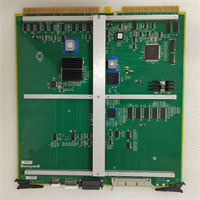
| Product Type | Non-redundant digital input IOTA terminal board |
| Host System | Honeywell Experion PKS C300 |
| Channel Count | 32 digital input channels |
| Signal Level | 24 V DC digital input |
| Paired Module | CC-PDIL01 32-channel 24 V DC DI module |
| Redundancy | Non-redundant |
| Channel Protection | Per-channel fuse protection |
| Installation | DIN-rail IOTA mounting |
| Operating Temperature | -40 °C to +70 °C, verify per OEM manual |
| Humidity | 5% to 95% non-condensing |
| Status | Legacy spare; confirm revision and pairing |
Product Introduction
In a C300 rack, the DI module gets the attention, but the terminal board is where field wiring actually lives. If the terminal board is mislabeled, fused wrong, or seated poorly, the whole DI point list becomes unreliable.The Honeywell CC-TDIL01 is a non-redundant 24 V DC digital input IOTA terminal board for the Experion PKS C300 system. It does not process logic by itself. It terminates field wiring from switches, relays, limit switches, and auxiliary contacts, then passes those signals through to the CC-PDIL01 DI module. Each channel has its own fuse, so a single shorted field wire does not necessarily knock out the entire module.This part is often confused with CC-PDIL01. They are not interchangeable. CC-PDIL01 is the DI module; CC-TDIL01 is its terminal board. If your fault is on the logic side, replacing the terminal board will not fix it. If your fault is on the wiring, fuse, or connector side, the terminal board is exactly where you start.
Quality SOP & Tech Pitfalls
The Lab Report (SOP)
- Visual check: verify CC-TDIL01 markings, IOTA form factor, terminal blocks, and fuse holders.
- Fuse inspection: confirm per-channel fuses are present, correctly rated, and not open.
- Connector check: inspect terminal screws, clamp contacts, and backplane interface for corrosion or damage.
- Continuity test: verify channel-to-module continuity with the paired CC-PDIL01 installed on a test rack.
- Channel verification: apply 24 V DC to selected inputs and confirm the paired module reads the correct channel state.
- Documentation: record order number, revision, fuse status, and test results before ESD packing.
The Engineer’s Warning (Pitfalls)
- Do not buy CC-TDIL01 thinking it is the DI module. It is the terminal board. The processor module is CC-PDIL01.
- Redundancy matters. CC-TDIL01 is non-redundant. If the application requires redundant DI wiring, CC-TDIL11 is the typical redundant counterpart.
- Wrong fuses create phantom faults. Replacing a blown fuse with an incorrect rating can mask wiring problems or cause unnecessary module trips.
- Field wiring errors look like module failures. Before swapping the board, check field voltage, wiring polarity, and fuse continuity.
Installation & Configuration Guide
1. Pre-Installation
️ Follow site safety and I/O isolation procedures. De-energize the I/O segment if required. Photograph the existing terminal board, wiring labels, fuse positions, and slot arrangement.2. Removal
Label every field wire. Loosen terminal screws. Release the IOTA board from the DIN rail. Remove it without pulling on adjacent modules.3. Installation
️ Confirm the replacement is CC-TDIL01 and that it is paired with CC-PDIL01. Mount the board on the correct DIN-rail position. Reconnect field wiring exactly as labeled. Verify fuses are installed and correctly rated.4. Power-On & Testing
Restore I/O power per site procedure. Check the paired CC-PDIL01 diagnostics. Force or monitor individual DI channels to confirm correct reading. Verify fuse status and field voltage before returning the loop to automatic service.
Compatible Replacement Models
| Model | Compatibility | Notes |
|---|---|---|
| CC-TDIL01 | Drop-in replacement | Must match C300 IOTA slot and CC-PDIL01 pairing |
| CC-TDIL01 other revisions | ️ Engineering validation required | Verify order number, fuse rating, and wiring layout |
| CC-TDIL11 | ️ Redundant alternative | Different redundancy architecture; not a direct non-redundant swap |
| Non-Honeywell terminal boards | Hardware mod required | Not compatible with C300 IOTA DI signal chain |
Frequently Asked Questions (FAQ)
Q: Is CC-TDIL01 the same as CC-PDIL01?
No. CC-TDIL01 is the terminal board. CC-PDIL01 is the 32-channel 24 V DC DI module.Q: Can I use CC-TDIL01 without CC-PDIL01?
No. The terminal board only routes signals. It requires the paired DI module to function.Q: Is this board redundant?
No. CC-TDIL01 is non-redundant. For redundant DI terminal boards, CC-TDIL11 is typically used.Q: Can I hot-swap this board?
Only if the site procedure and I/O architecture allow it. Many C300 installations require controlled isolation before removing IOTA terminal boards.Q: What if one channel does not read?
Check the field wiring, terminal screw, fuse, and 24 V DC source before replacing the board. A single blown fuse is more common than a full board failure.Q: Is the order number correct for my unit?
Confirm the physical label before installation. Order numbers can vary by revision and region.