 Tel:
Tel:  Email:
  WhatsApp:
 Description
Key Technical Specifications
| Parameter | Specification |
|---|---|
| Module Type | Analog Output (AO) |
| Channel Count | 8 Independent Channels |
| Output Signal | 4–20 mA (Current), 0–10 V (Voltage) |
| Resolution | 12-bit to 16-bit (D/A Conversion) |
| Safety Rating | SIL 3 (IEC 61508), TÜV Certified |
| Isolation | Channel-to-Channel and Channel-to-Bus |
| Load Capacity | Typically up to 600 Ohms (at 24V supply) |
| Update Rate | < 50ms for all channels |
| Power Input | 24V DC (Supplied via Backplane) |
| Operating Temp | -20°C to 60°C |
| Enclosure | IP54 (Ruggedized Cast Housing) |
| Dimensions | Approx. 120mm x 80mm (Module only) |
Product Introduction
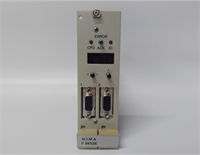
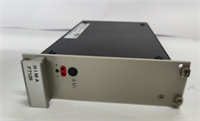
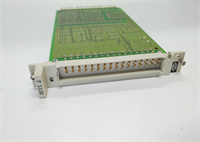
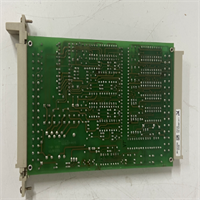
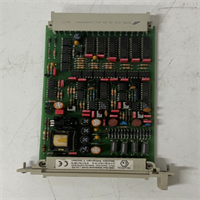
In a safety shutdown system, reading sensors is only half the battle; you eventually have to do something about it. The HIMA F6705 is an 8-channel analog output module designed to drive the final control elements—those critical valves that need to slam shut or open slowly when the logic solver decides it’s time. It takes the binary “decisions” of the CPU and translates them into smooth, continuous 4-20mA signals that actuators understand.This isn’t your average PLC output card. Because it lives in the HIMatrix safety family, it has self-diagnostics built into the hardware. It constantly monitors the loop integrity. If a wire breaks or a solenoid shorts, this card knows before the process even deviates. I’ve deployed these in gas compression stations where they sit idle for years, only to activate during an emergency. The fact that they don’t drift over time is why we use HIMA. However, be careful with your power budget—driving 8 channels of 20mA simultaneously draws significant current from the backplane.
Quality SOP & Tech Pitfalls (The Reality Check)
The Lab Report (SOP)
Analog output cards are prone to drift if the internal DACs (Digital-to-Analog Converters) degrade. Here is how we test them:
- Visual Inspection: We check the terminal block pins for signs of arcing or corrosion. We also inspect the PCB for “hot spots” near the power regulation circuitry.
- Source/Sink Verification: We connect a precision multimeter (Fluke 87V) to each channel. We force the output to 4mA, 12mA, and 20mA via software. The reading must be within ±0.1% tolerance.
- Loop Resistance Test: We simulate a high-resistance load (500 Ohms) to ensure the card can maintain the current signal under load.
- Diagnostic Trigger: We simulate a wire break (open loop). The module must immediately flag a “Wire Break” or “Under-range” diagnostic bit in the controller.
The Engineer’s Warning (Pitfalls)
- The “Floating Ground” Trap: Even though this card has isolation, I’ve seen technicians ground the negative terminal at the marshalling panel and at the field device. This creates a ground loop that introduces 60Hz hum into your control signal. Your valve will “buzz” and wear out prematurely. Keep your grounds single-point.
- Wrong Terminal Assembly (TA): The F6705 requires a specific mating Terminal Assembly. If you force it onto a generic TA or a different model (like a digital input TA), you might short the 24V supply to the output pin, frying the internal driver chip instantly.
- Field Disaster: A contractor replaced an F6705 but didn’t realize the old one had a specific “Fail-Safe” direction configured via jumper. When the new card rebooted, it went to 0mA instead of holding the last value. This caused a control valve to slam shut, spiking pressure in the upstream separator. Always check the “Last Value” vs. “Zero” configuration.
Installation & Configuration Guide
Swapping this card requires care to avoid disrupting the control loop.
- Pre-Installation Safety
- ⚠️ CRITICAL: Place the control loop in “Manual” mode or bypass the output logic. Swapping the card will interrupt the signal, which could cause a valve to move unexpectedly.
- Take a photo of the wiring on the Terminal Assembly (TA) and any jumpers on the old module.
- Removal
- Unplug the wiring harness from the Terminal Assembly (TA). Do not pull individual wires unless necessary.
- Release the locking lever/screw on the module faceplate.
- Slide the F6705 module off the back of the TA.
- Hardware Setup
- Inspect the gold pins on the back of the new module. Ensure none are bent.
- Align the new module with the TA guides. Push firmly until it seats flush against the backplane connector.
- Engage the locking lever. It must click into place.
- Power-Up & Commissioning
- Reconnect the wiring harness. Double-check polarity (+ and -).
- Remove the maintenance bypass.
- Watch the LED indicators. You should see a “Run” status (Green).
- Connect your engineering laptop. Force an output of 4mA and measure it at the terminal block with a multimeter. Verify the field valve matches the command.
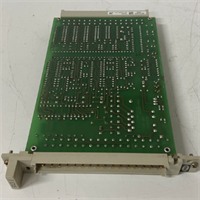
F6705 HIMA
Compatible Replacement Models
- ✅ Drop-in Replacement: F6705. This is the exact model. Suffix variations (like revision numbers) are generally compatible.
- ⚠️ Functional Equivalent: F6706. This is often a voltage output variant or a different density version. Physically similar, but electrically different. Do not swap unless you verify the datasheet.
- ❌ System Upgrade: HIMatrix F60 AO Module. Moving to the F60 series requires a completely new chassis and processor migration. Only do this if the whole rack is being replaced.
Frequently Asked Questions (FAQ)
Q: Can I use this card for both Voltage (0-10V) and Current (4-20mA)?
A: Yes, usually. The F6705 is typically configurable via software or jumpers to source either current or voltage. However, check the specific Terminal Assembly wiring, as some TAs are hard-wired for one or the other.Q: My output reads 0mA even though I’m forcing 12mA. What’s wrong?
A: Check the “Enable” bit in your logic. HIMA safety modules often require a software “permit” or “enable” signal to allow outputs to energize. Also, check for an open circuit (broken wire) in the field loop.Q: Does this module support HART protocol?
A: No. This is a standard analog output card. It generates the raw 4-20mA signal. It does not pass digital HART communication signals through to smart field devices.Q: How do I handle unused channels?
A: Leave them unconnected (floating). There is no need to terminate unused analog outputs, but ensure the wires don’t touch adjacent terminals.Q: Is the F6705 hot-swappable?
A: The HIMatrix system supports hot swapping, but for an analog output card controlling a live process, I strongly advise against it unless the loop is in Manual mode or bypassed. Removing the card breaks the circuit, and the valve will likely fail-safe.