 Tel:
Tel:  Email:
  WhatsApp:
 Description
Key Technical Specifications
- Form Factor: Single Slot (4 HP), 6U Eurocard format
- Physical Dimensions: 9.2″ H x 6.3″ D x 0.8″ T (233.25 x 160 x 20.3 mm)
- Interface: ATAPI / IDE (connects via VME P2 connector)
- Storage Support: 1 CD-ROM/CD-RW drive + 1 Hard Drive (or CompactFlash)
- Max HDD Capacity: Up to 80 GB
- CD-RW Transfer Rate: 8x Write / 8x Rewrite / 24x Read
- Random Access Time: 130 ms (typical)
- Supported CD Formats: Photo CD, CD-I, Video CD, CD-ROM-XA, CD-DA, CD-RW
- Operating Temperature: +5°C to +45°C
- Storage Temperature: -20°C to +60°C
Product Introduction
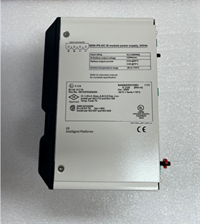
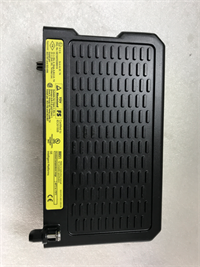
Let’s be real—most modern engineers have forgotten what it’s like to wrestle with VMEbus backplanes and IDE ribbons. But if you’re keeping a legacy GE Fanuc or older VME-based control system alive, the VMIVME-7459 is the workhorse you need for mass storage. It slots right into a standard 6U VME chassis and gives your Single Board Computer (SBC) exactly what it lacks: reliable local storage.This module is essentially a ruggedized bridge that connects a standard IDE hard drive and a CD-RW drive to your VME processor through the P2 connector. I’ve seen these hold up in industrial cabinets running at 40°C for years without breaking a sweat. It supports up to an 80GB hard drive, which is massive for the legacy OS environments (like older VxWorks or Windows CE builds) these systems usually run. Just a heads-up: the CD-RW drive is a classic 8x/24x unit. It’s not going to burn discs at lightning speed, but for archiving historical process data or booting up a recovery image, it is absolutely bulletproof.
Quality SOP & Tech Pitfalls (The Reality Check)
The Lab Report (SOP)
Before this board leaves the shelf, we run it through a strict protocol to ensure it won’t brick your backplane:
- Visual & Mechanical Inspection: We check the DIN 96-pin P2 connector for bent pins (a classic shipping casualty) and ensure the drive caddies are securely mounted.
- Live Bench Test: We mount it on a VME test rack, connect a known-good IDE drive, and verify the BIOS/firmware recognizes both the HDD and the CD-RW.
- Cable Integrity Check: Since this relies on internal IDE ribbons, we verify the continuity of the onboard cabling.
- Anti-Static Sealing: It gets bagged in proper ESD shielding. Do not open this until you are ready to install.
The Engineer’s Warning (Pitfalls)
Here is where people mess up: The Cabling. The VMIVME-7459 connects to your SBC via the VME P2 user-defined pins. If your SBC isn’t sitting in the slot right next to it, standard ribbon cables won’t reach. You need specific cable assemblies like the VMXC-2 (for adjacent slots) or the VMXC-H (a 14-inch cable for non-adjacent slots). I once watched a tech spend three days troubleshooting a “dead drive” only to realize he was using a generic PC IDE cable that didn’t map the pins correctly to the VME backplane. Don’t be that guy. Check your chassis layout first.
Installation & Configuration Guide
Here is how you swap this out without tripping every alarm in the rack.
- Pre-Installation:
- ⚠️ Power Down: Completely shut down the VME chassis. This is not a hot-swappable storage device.
- Discharge: Wait 30 seconds for capacitors to discharge.
- Photo Op: Take a picture of your current slot arrangement and cable routing.
- Removal:
- Unscrew the front panel securing screws.
- Gently pull the ejector levers (if equipped) or pull the card guides to slide the old module out.
- Disconnect Cables: Carefully unplug the IDE and power cables from the old unit. Label them if they aren’t clearly marked.
- Installation:
- Verify Jumpers: Check the IDE drive jumpers (Master/Slave/Cable Select) on the drives mounted to the VMIVME-7459. They must match what your SBC expects.
- Connect Cables: Plug the IDE ribbon and power cables into the VMIVME-7459. Ensure the pin-1 alignment is correct (red stripe usually indicates pin 1).
- Seat the Board: Align the card guides with the VME chassis rails and slide it in until the P2 connector seats firmly against the backplane.
- Power-On & Testing:
- Power up the chassis. Listen for the spin-up of the HDD and the initialization of the CD-RW.
- Check your SBC’s boot log. It should detect the IDE controller and list the drive capacity.
- If it doesn’t show up, double-check your P2 cable mapping immediately.
Compatible Replacement Models
| Compatibility Tier | Model Number | Notes |
|---|---|---|
| ✅ Drop-in Replacement | VMIVME-7459 | Direct hardware match. Ensure your cable assembly (VMXC series) matches your slot spacing. |
| ⚠️ Functional Alternative | VMIVME-745x Series | Other boards in the 745x series may offer similar IDE functions but check for drive type differences (e.g., Floppy vs. CD-RW). |
| ❌ Not Compatible | Standard PC IDE Cards | Do not attempt to use non-VME form factor IDE controllers. They will not fit or interface with the P2 connector. |
Frequently Asked Questions (FAQ)
Can I hot-swap this module while the system is running?
No. Absolutely not. This is an IDE storage device connected via a parallel bus. Pulling it out live will crash your operating system and could corrupt your file system instantly. Always power down the VME chassis first.What kind of hard drives can I put in this thing?
It takes standard 3.5-inch IDE (PATA) hard drives. However, keep in mind the BIOS limitations of legacy VME SBCs. While the board supports up to 80GB, your specific CPU board might have a 32GB or 128GB addressing limit. Stick to smaller, industrial-grade IDE drives or CompactFlash adapters if possible.My CD-RW drive won’t read modern discs. Is it broken?
Probably not. This is an older 24x read mechanism. It struggles with modern, high-speed burned media or DVD formats (it is strictly CD-ROM/CD-R/CD-RW). Use older, slower-speed CD-Rs for the best reliability when restoring data.Does this come with the cables to connect to my CPU?
Usually, no. The cables (like the VMXC-2 or VMXC-H) are often sold separately because they depend entirely on where you place the board in the rack. You need to verify if you need a 2-slot or 3-slot cable assembly based on your chassis layout.Is the 4HP size standard?
Yes, it is a standard single-width (4HP) 6U Eurocard. It will fit in any standard VME64 or VMEbus chassis slot. Just make sure you have enough depth (6.3 inches) behind the rack to accommodate the drives.