 Tel:
Tel:  Email:
  WhatsApp:
 Description
Key Technical Specifications
| Parameter | Value |
|---|---|
| Part Number | IS200EBKPG1C |
| Manufacturer | General Electric (GE) |
| Product Type | Exciter Backplane Control Board |
| System Series | Mark V / EX2100 |
| Input Voltage | 24 VDC (Typical for system logic) |
| Connectors | DIN, D-SUB, Circular DIN |
| Compatible Boards | EISB, EMIO, DSPX, EPCT, ECTB, EACF, EXT B |
| Signal Types | Analog I/O, LVDT, Thermocouple, Servo Valve |
| Mounting | DIN Rail / Chassis Mount |
| Environment | Industrial (Gas Turbine Control) |
Product Introduction
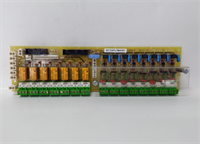
The GE IS200EBKPG1C is a specialized backplane board designed for the Mark V gas turbine control system, specifically within the EX2100 excitation series. It acts as the physical and electrical backbone, facilitating communication between the processor boards and the input/output terminal blocks. This board ensures that critical signals—such as voltage regulation and current feedback—are accurately routed to the main controller.Field experience indicates this board is essential for maintaining signal integrity in high-noise environments typical of power generation facilities. Unlike standard passive backplanes, the IS200EBKPG1C includes active conditioning circuitry to scale analog inputs like compressor stall detection and fuel flow pressure. Its modular design allows it to support multiple I/O configurations, making it a versatile replacement for maintaining redundancy in R1, R2, and R3 control cores.
Installation & Configuration Guide
Phase 1: Preparation (10 min)
- Safety First: Ensure the turbine control panel is de-energized. Lockout/Tagout (LOTO) all 24VDC and 125VDC power sources.
- ESD Protection: Put on a grounded wrist strap. The components on the IS200EBKPG1C are sensitive to static discharge.
- Documentation: Have the GE Mark V Hardware Manual and the specific wiring diagram for your turbine open.
Phase 2: Removal (5–10 min)
- Label Cables: Before disconnecting, label all cables connected to the J-series connectors (J314, J315, etc.).
- Disconnect: Unplug the DIN and D-SUB connectors carefully. Do not pull by the wires; pull by the connector housing.
- Unmount: Release the locking tabs or screws securing the board to the chassis or rail. Slide the board out gently.
Phase 3: Installation (10 min)
- Insert Board: Slide the new IS200EBKPG1C into the slot. Ensure it seats firmly against the backplane bus if applicable.
- Secure: Fasten the mounting screws or lock the rail clips. Vibration can loosen unsecured boards over time.
- Reconnect: Plug in the labeled cables. Verify that J315 goes to the EPCT board and J415 connects to the ECTB board as per the schematic.
Phase 4: Power-On & Test (10 min)
- Visual Check: Ensure no pins are bent and no tools are left inside the cabinet.
- Power Up: Restore power to the control system.
- LED Verification: Check the status LEDs on the connected daughterboards (like the TCQA or STCA). They should indicate normal operation (usually green).
- Software Check: Connect via the operator interface to verify the system recognizes the I/O channels without fault codes.
Troubleshooting Quick Reference
| Symptom | Probable Cause | Corrective Action |
|---|---|---|
| No Power / Dead Board | Blown fuse or loose power feed | Check the 24VDC input at the terminal block. Measure continuity across fuses if accessible. |
| Analog Signal Noise | Poor grounding or shield termination | Inspect the shield connections at the TBQC or TBQA terminal boards. Ensure single-point grounding. |
| Communication Fault | Loose DIN connector | Reseat the DIN connectors firmly. Check for bent pins inside the connector housing. |
| Specific Channel Error | Jumper setting mismatch | Verify hardware jumpers (J1, J2) match the required configuration (e.g., 4-20mA vs 0-10V). |
Dimensions, Mounting & Wiring Notes
- Form Factor: Standard industrial PCB size, designed to fit within the Mark V rack enclosure.
- Mounting: Typically mounts on a sub-panel or DIN rail within the main control cabinet.
- Wiring Note: Pay close attention to the “Section C” connectors. Only specific boards (EISB, EMIO, DSPX) are compatible with the J314/J315/J414/J415/J514/J515 interface cluster. Forcing an incompatible board can damage the traces.
FAQ
Q: Is the IS200EBKPG1C compatible with older Mark IV systems?
A: No. This board is specifically designed for the Mark V architecture and the EX2100 excitation system. Using it in a Mark IV panel will result in compatibility errors and potential hardware damage.Q: What does the “1C” suffix mean in the model number?
A: The suffix usually denotes the revision or version of the board. In the GE parts numbering system, “1C” indicates a specific hardware iteration that supersedes earlier versions (like 1A or 1B). Always check the manual to ensure firmware compatibility.Q: Can I swap this board while the turbine is running?
A: Absolutely not. This board handles critical excitation and safety signals. Removing it during operation will likely cause a turbine trip or loss of voltage control. Schedule this replacement during a planned outage.Q: My old board has jumpers set differently. Do I need to move them?
A: Yes. Before removing the old board, take a clear photo of the jumper settings (J1, J2, J5, J6, etc.). You must replicate these settings exactly on the replacement IS200EBKPG1C to match your specific application logic (e.g., current range selection).Q: How do I know if the board is actually bad or if it’s just a cable issue?
A: If you have power but no communication, try reseating the cables first. If the issue persists, use a multimeter to check the resistance on the DIN connector pins against the service manual values. If the pins are open or shorted, the board is likely defective.