 Tel:
Tel:  Email:
  WhatsApp:
 Description
Product Introduction
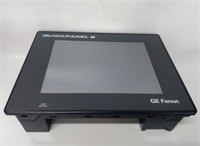
When a substation trips offline due to a ground fault, milliseconds count. The GE Multilin F650 is engineered to sit right on that edge, protecting medium voltage feeders from the worst a grid can throw at it. This specific unit, the F650-B-F-G-F-2-G-1-HI-E, is built for rugged environments where reliability isn’t just a spec sheet number—it’s the only thing keeping the line powered.It’s not just about tripping breakers; it’s about knowing why. With IEC 61850 GOOSE messaging standard on this unit, you get sub-millisecond peer-to-peer communication between devices. Honestly, in an arc-flash event, that speed is the difference between a nuisance trip and a catastrophic failure. It supports up to 32 programmable logic equations, so your protection scheme can be as simple or as complex as the system demands.
Key Technical Specifications
- Ordering Code: F650-B-F-G-F-2-G-1-HI-E
- Product Type: Feeder Protection Relay
- Auxiliary Voltage: 120 V DC/AC (Range: 80–250 V)
- Current Input: 5 A (Standard)
- Communication Protocols: IEC 61850 (GOOSE & MMS), Modbus TCP/RTU, DNP 3.0 LAN/WAN
- Operating Temperature: -40 °C to +85 °C (IEC 60255-6)
- Isolation Voltage: 2.5 kV (Power circuits), 1 kV (I/O circuits)
- Display: 240 x 128 Pixel Graphics LCD with backlight
- Inputs/Outputs: 8 programmable binary inputs, 8 Form C outputs
- Certifications: UL 508, CSA C22.2, IEC 60255, IEEE C37.90
Application Scenarios & Pain Points
Substations are unforgiving. In a recent deployment at a petrochemical plant in Texas, the old electromechanical relays were missing high-impedance faults. The maintenance team was tired of chasing ghosts after every storm. Switching to the GE F650 didn’t just solve the detection issue; it cut their Mean Time To Repair (MTTR) by 60% because the event reports were actually readable.
- In Mining Operations: Can this relay handle the vibration? Absolutely. Its solid-state design laughs off the mechanical shock that turns old-school dials into scrap metal. It keeps protecting even when the ground is shaking.
- For Utility Substations: When a tree hits a line, the F650’s autoreclose logic kicks in. It tries to restore power automatically, saving the crew a 2 a.m. dispatch to the middle of nowhere.
- In Industrial Manufacturing: Voltage sags kill production lines. The Sequence of Events (SOE) recorder in this unit timestamps disturbances down to the millisecond, letting engineers pinpoint the exact cause of a trip.
Case Study: The “Unfindable” Fault
An electrical engineer at a Midwest steel mill was getting paged weekly due to nuisance trips on a critical cooling pump. The old relay showed “Overcurrent,” but the electricians found nothing. After installing the F650, the waveform capture showed a recurring transient spike from a nearby arc furnace. It wasn’t a bolted fault; it was a harmonic distortion. By visualizing the data, they added a filter, stopped the trips, and saved $50,000 in downtime per incident.
Quality Control Process
1. Inbound Inspection
Every F650 that comes through our dock gets a white-glove treatment. We demand the original GE packing list or customs documentation to prove the chain of custody. We check the holographic anti-counterfeit label on the side; if it’s been tampered with, it gets rejected. Visually, we inspect for any corrosion on the terminals or yellowing on the display bezel—this unit is sealed tight.2. Live Functional Test
We don’t just power it on; we simulate a real grid. We slot this relay into a test bay with a primary injection tester. We verify the LCD backlight fires up instantly on boot. We simulate a 3-phase fault using secondary injection and watch the trip LED flash red. We also verify the Ethernet port establishes a Modbus TCP connection with our master station.3. Electrical Parameters
Safety first. We use a Megger insulation tester at 500 V DC to check the isolation between the current inputs and the chassis. It must read >10 MΩ. We also check the continuity of the grounding strap to ensure ESD protection is intact.4. Firmware Verification
We plug in a USB cable and read the firmware version directly from the menu. We photograph the exact version number (e.g., v4.24) and the DIP switch settings. This unit ships exactly as it was tested.5. Final QC & Packaging
Once it passes, a QC tech signs the log. We wrap it in anti-static foam, box it up, and slap a “QC Passed” label with today’s date. We can share test videos on request—because seeing is believing.

Installation Pitfalls Guide
1. Firmware Version Mismatch
Don’t assume the firmware is current. We once saw a project where the new F650 wouldn’t talk to the SCADA system because the firmware was two revisions newer and used a different object dictionary. Always check the firmware version before you buy.2. DIP Switch / Jumper Misconfiguration
The DIP switches on the side control the comms baud rate. If you leave it on factory default (usually 9600 baud) but your network runs at 19200, you’ll have a comms timeout. Take a photo of the old relay’s switches before you pull it out.3. Terminal / Wiring Incompatibility
The screw terminals on the F650 are robust, but they’re not infinitely deep. If you’re reusing old, frayed wires, the strands might not grip properly. Trim and ferrule your wires. Also, don’t mix up the CT (Current Transformer) polarity; reverse one phase, and your differential protection goes crazy.4. Power Supply Undersizing
The F650 draws more power when the backlight is on and the Ethernet is chattering. If you’re daisy-chaining power from a weak supply, the voltage might sag below 80V during a trip event. Calculate your load with a 20% buffer.5. ESD Damage
This is a microprocessor-based device. Do not slide it across a nylon carpet and then plug it in. Wear a wrist strap. One zap and that expensive LCD might never light up again.