
 Tel:
 Email:
 WhatsApp:
Description
Key Technical Specifications
| Parameter | Specification |
|---|---|
| Manufacturer | GE Boards & Turbine Control |
| Product Series | Mark V DS200 |
| Relay Count | Plug-in relays (ID prefix K) |
| Connectors | Multi-pin I/O connectors (JLY, JLX, JLZ, JN, JM) |
| Control Voltage | DC |
| Input Voltage Range | Standard AC input via power module |
| Operating Temp | Industrial wide-range tolerance |
| Power Consumption | Low standby draw |
| Weight | Compact rack-mount form factor |
| Mounting | Metal strap retention, DIN/rack compatible |
| Protection Standard | IEC compliant |
Product Introduction
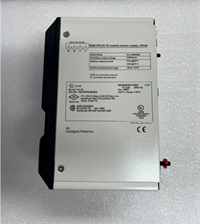
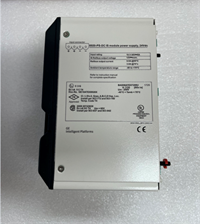
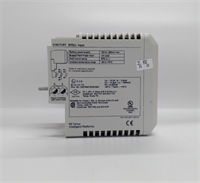
I’ve pulled more of these out of Mark V cabinets than I care to count. The DS200TCTGG1AFF isn’t some fancy communication bridge or a clever I/O scaler—it’s a brute-force protection relay board, plain and simple. When your gas turbine starts overspeeding or losing lube oil pressure, this board is what physically drops the trip contacts. It sits in the I/O core and handles the dirty work of cutting power before something expensive explodes.What I actually like about this revision is the relay architecture. The relays are individually socketed and held down by a metal retention strap. If one coil burns out, you don’t scrap the whole board—you pull the strap, swap the relay, and you’re back online. That’s real field maintainability, not some sealed black box you have to ship back to the OEM. The board runs on DC control voltage and tolerates the temperature swings you find in a hot turbine hall. It’s not elegant. It works.
Quality SOP & Tech Pitfalls
The Lab Report (SOP):
Before anything ships, it goes through my bench. First, visual inspection under magnification—I’m looking for cold solder joints on the relay sockets, corrosion on the connector pins, and any sign of previous rework. Then it goes on the test rack. I verify DC input with a Fluke multimeter, cycle each relay, and check continuity on the contact closure. I log the firmware revision if applicable and confirm the relay coil resistance matches spec. Finally, it gets sealed in anti-static packaging with desiccant.The Engineer’s Warning:
Here’s where people screw up. This board has retention straps over the relays. I’ve seen techs yank relays out without removing the strap first, bending the socket pins beyond repair. Don’t do that. Also, the jumper and connector layout matters. The JD connector carries trip signals from the core to the TCTG board—if you miswire that during a swap, your turbine won’t trip when it should. Photograph everything before you pull the old board. I once watched a crew spend hours tracing wires because nobody labeled the multi-pin connectors. Don’t be that guy.
Installation & Configuration Guide
Phase 1: Pre-Installation
- ️ Lock out and tag out all power to the Mark V I/O core. Verify zero voltage at the terminal block with a multimeter. Wait for capacitors to discharge.
- ️ Photograph the existing board from multiple angles. Capture every wire color, connector position, and any jumper settings. Do this even if you think you’ll remember. You won’t.
- Gather your replacement board, a Phillips screwdriver, and a small flathead for the relay retention straps.
Phase 2: Removal
- Label each connector (JLY, JLX, JLZ, JN, JM) with masking tape before unplugging.
- Gently release the connector latches. Do not pull on the cables.
- Remove the mounting screws or DIN clip securing the board. Slide the board straight out of the slot.
Phase 3: Installation
- Verify relay positions. If you’re reusing relays from the old board, make sure each one goes back into the exact same socket. Mix them up and your trip logic changes.
- Seat the new DS200TCTGG1AFF firmly into the slot. Engage the DIN clip or tighten the mounting screws.
- Reconnect all cables to their labeled positions. Double-check that the multi-pin connectors are fully seated and latched.
Phase 4: Power-On & Testing
- Restore DC power. Check the board’s status LED—it should show a steady green or the normal run indication per your Mark V configuration.
- Verify no fault LEDs are lit. If you see a fault, power down immediately and recheck your wiring.
- From the Mark V operator interface, confirm the board is recognized and communicating. Perform a simulated trip test if your plant procedures allow.
Compatible Replacement Models
- Drop-in Replacement: DS200TCTGG1AFG. Same board, same pinout, same relay architecture. The “G” suffix typically denotes a minor revision or manufacturing batch change. Direct swap, no logic changes needed.
- ️ Software Compatible: DS200TCTGG1A (base model). Older revision. Hardware is physically identical, but you may need to verify firmware compatibility with your specific Mark V processor version. Budget time for verification and potential database updates.
- Hardware Mod Required: IS200TCTGH1 (Mark VIe equivalent). This is a different platform entirely. Different connectors, different mounting, different communication protocol. Unless you’re doing a full Mark V to Mark VIe migration, do not attempt this swap.
Frequently Asked Questions (FAQ)
Can I hot-swap this board while the turbine is running?
No. Absolutely not. This is a simplex trip board. Pulling it while the system is live will cause an immediate, unannounced trip. Shut down the unit, lock out power, and swap it during a planned maintenance window.How do I know if a relay on this board has failed?
You’ll typically see a trip without a corresponding process variable excursion, or the Mark V diagnostic will flag a specific relay channel. I keep a spare set of the relays on the shelf. If a relay is suspect, pull it, bench-test the coil resistance, and replace if it’s out of spec.What’s the difference between the “FF” and “FG” suffix?
In my experience, it’s usually a manufacturing revision or a change in the relay supplier. Electrically and functionally, they’re the same board. I’ve swapped FF for FG and vice versa without issues, but always verify against your specific GEI documentation before ordering.Is this board still available new, or am I looking at refurbished only?
GE has moved most Mark V production to obsolete status. You’ll find new surplus (old stock, never installed) and refurbished units. I only sell tested, verified boards. If a vendor offers you a “new” board at a suspiciously low price, ask for their test records. If they can’t provide them, walk away.What happens if I install the board with the relays in the wrong sockets?
Your trip logic changes. A relay meant to trip on high exhaust temperature might end up wired to the lube oil pressure circuit. The turbine won’t protect itself correctly. This is a safety issue, not just an inconvenience. Take your time during installation.Does this board communicate over the Genius bus?
Not directly. The TCTG board handles hardwired relay outputs. Communication with the Mark V processors happens through the I/O core backplane and the STCA/TCQA boards. If you’re looking for Genius bus communication, you want a different module in the DS200 family.What’s the typical lead time on these?
New surplus stock varies. I keep a few on the shelf because I know how hard they are to find when a plant goes down. If I don’t have one in stock, expect several weeks. Plan accordingly and keep a spare on your own shelf if you run Mark V systems.