 Tel:
Tel:  Email:
  WhatsApp:
 Description
⚙️ Key Technical Specifications
| Parameter | Specification |
|---|---|
| Manufacturer | GE Industrial Solutions |
| Base Model | CR115 Series (C6M Line) |
| Poles | 3-Pole (Triple Pole Single Throw – Normally Open) |
| Current Rating | 9 Amps (AC-1 / Resistive Load) |
| Voltage Rating | 600 VAC Maximum (Industrial Standard) |
| Coil Voltage | Typically 120V AC @ 60Hz (Suffix dependent) |
| Horsepower | Approx. 2 HP @ 230V / 5 HP @ 460V |
| Mounting | DIN Rail or Screw Mount (Footprint varies) |
| Auxiliary Contacts | Modular expansion capable (Side/Top mount) |
| Standards | UL 508, CSA Certified, IEC 60947 compliant |
📝 Product Introduction
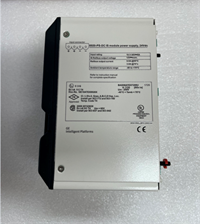
The GE C6M-9UH-00K is a magnetic contactor designed for switching industrial loads, including fractional horsepower motors, heating elements, and resistive circuits. Part of the legacy C6M line (often cross-referenced to the CR115 series), it provides reliable electromechanical isolation for 3-phase power systems up to 600V AC.This unit is engineered for high-cycle applications where durability is critical. The “9” in the model number typically indicates a 9-ampere current rating, making it suitable for small machine tools or conveyor systems. Its modular design allows for the addition of auxiliary contact blocks, enabling complex logic interlocks without requiring a larger footprint in the control panel.
🔧 Installation & Configuration Guide
Phase 1: Preparation (10 min)
- Safety First: Lockout/Tagout (LOTO) the main power supply. Verify zero energy using a multimeter.
- Inspect: Check the coil terminals for corrosion and ensure the armature moves freely without obstruction.
- Review Schematic: Confirm the coil voltage matches your control circuit (e.g., 120V vs 24V).
Phase 2: Removal (If replacing)
- Label Wires: Mark L1/L2/L3 (Line) and T1/T2/T3 (Load) phases. Mislabeling causes phase reversal.
- Disconnect: Loosen terminal screws. Note that older wires may be brittle; strip and re-crimp if necessary.
- Unmount: Remove DIN rail clip or mounting screws.
Phase 3: Installation
- Mounting: Snap onto the DIN rail or screw into place. Ensure at least 10mm clearance from adjacent components for heat dissipation.
- Wiring: Connect power lines to L1, L2, L3. Connect load to T1, T2, T3. Tighten to manufacturer torque specs (usually 1.2 Nm for this size).
- Control Circuit: Wire the A1/A2 coil terminals to the control logic (PLC output or push button).
Phase 4: Power-On & Test
- Visual Check: Ensure no loose strands are touching the chassis.
- Energize: Apply control voltage. You should hear a distinct mechanical “clack.”
- Measure: Check continuity across T1-T3 when energized. Measure coil resistance (expect ~300-400 Ohms for 120V coils).
🛠️ Troubleshooting Quick Reference
| Symptom | Probable Cause | Corrective Action |
|---|---|---|
| Humming/Buzzing Noise | Shading coil damaged or low voltage | Check input voltage drop. If <85% rated voltage, replace coil. |
| Contactor Won’t Pull In | Open Coil / Broken Wire | Measure resistance across A1/A2. Infinite resistance = burnt coil. |
| Contacts Welded Shut | Overcurrent / Short Circuit | Replace contacts or entire unit. Check downstream for shorts. |
| Overheating | Loose Connections | Retorque terminals. Oxidation increases resistance and heat. |
| Chattering | Dirty Armature Face | Clean mating surfaces with electrical cleaner; check for rust. |
📏 Dimensions, Mounting & Wiring Notes
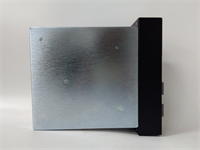
- Form Factor: Compact block design, typical of NEMA Size 00 or IEC BMS ratings.
- Terminals: Cage clamp or screw-type pressure plate.
- Note: The “UH” in the part number often refers to specific enclosure types or coil configurations (e.g., Universal Voltage or specific hazard ratings). Always verify the physical coil code stamped on the removable coil block.
❓ FAQ
Q: What is the difference between C6M and CR115?
They are essentially the same product family. “C6M” is the marketing line name, while “CR115” is the specific catalog designation used in parts lists. They share the same accessories and mounting dimensions.Q: Can I use a 24V DC coil with this base?
No. The base and coil are matched. If you have a C6M-9UH-00K with a 120V AC coil, you cannot simply wire 24V DC to it. You must purchase a specific DC coil version or a solid-state relay alternative.Q: Is this unit rated for DC loads?
Standard AC contactors like this can switch DC, but the voltage rating drops significantly (often by a factor of 10). For example, a 600V AC contactor might only handle 60V DC safely due to arc extinguishing physics.Q: My coil burned out in a week. Why?
Common causes are undervoltage (causing the armature to chatter and overheat the coil) or a stuck mechanism preventing full closure. Always check the control transformer tap settings.Q: Does it come with auxiliary contacts?
Usually sold as the main power block only. Auxiliary contacts (NO/NC) are typically add-on modules that snap onto the side or top of the C6M housing.Q: Where can I find the wiring diagram?
Look for the sticker on the side of the device casing. It usually prints the schematic for the coil and power poles directly on the unit.