 Tel:
Tel:  Email:
  WhatsApp:
 Description
⚙️ Key Technical Specifications
| Parameter | Specification |
|---|---|
| Part Number | P0927AJ |
| Input Type | 4-20 mA Analog + HART Digital (FSK) |
| Channels | 8 (Individually Isolated) |
| Resolution | 15-bit Sigma-Delta conversion |
| Accuracy | ±0.075% of Full Scale |
| Isolation Voltage | 600 VAC (Channel-to-Channel/Logic) |
| Update Rate | ~100ms per channel (Analog); ~2 msgs/sec (HART) |
| Input Impedance | ~302Ω (Internal Power); ~282Ω (External Power) |
| Power Supply | 24V DC (Nominal), supports internal/external loop power |
| Operating Temp | -20°C to +70°C (-4°F to +158°F) |
📝 Product Introduction
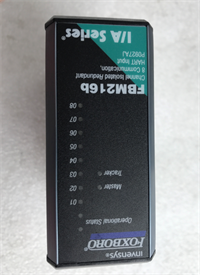
In modern plants, a “dumb” 4-20mA signal isn’t enough anymore. You need to know if the transmitter is saturated, if the sensor is drifting, or if the device needs calibration. The Foxboro FBM216B P0927AJ bridges that gap. It acts as a high-fidelity analog input card but has a built-in HART modem on every single channel.I’ve installed these in refineries where we needed to monitor valve positioners remotely. Instead of walking out to the field with a handheld communicator, this card lets the DCS talk directly to the device. The real selling point here is the isolation. It offers 600VAC isolation between channels. In facilities with dirty power or heavy motor interference, this prevents a ground fault on one transmitter from taking down your entire input rack. It’s precise (15-bit resolution), handles the harsh electrical environment well, and the redundancy features mean you can swap a failed unit without tripping the process.
🛡️ Quality SOP & Tech Pitfalls (The Reality Check)
The Lab Report (SOP)
We don’t just ship boxes; we verify functionality. Here is our pre-shipment protocol:
- Visual Inspection: We inspect the terminal block area for signs of arcing or overheating. We check the PCB for capacitor leakage, common in older stock.
- Loop Calibration: We inject a precise 4mA, 12mA, and 20mA signal into all 8 channels using a Fluke calibrator. We verify the digital readout matches within the ±0.075% tolerance.
- HART Handshake Test: We connect a reference HART transmitter (e.g., Rosemount 3051) to each channel. We verify the module can read the Tag, Manufacturer ID, and Device Status digitally.
- Isolation Verification: We perform a hipot test (low energy) to ensure the 600V isolation barrier is intact between Channel 1 and Channel 2.
The Engineer’s Warning (Pitfalls)
⚠️ Field Disaster Story:
A client called me because their new FBM216B kept dropping communication. The LEDs were flashing red/green rapidly. I arrived to find they had wired two different transmitters to the same channel, thinking it was a multi-drop setup like RS-485.The Fix: You cannot daisy-chain HART devices on an FBM216B unless you configure it specifically for multi-drop (which reduces update speeds significantly) and use a specific external resistor network. For standard use, one transmitter per channel. Also, watch your polarity. HART is sensitive to reverse polarity if you aren’t using a protected power supply.
🔧 Installation & Configuration Guide
Time estimate: 40 minutes.
- Pre-Installation Safety
- ⚠️ CRITICAL: Isolate the 24V DC field power supply before touching terminals.
- Verify the Terminal Assembly (TA) type. The FBM216B mates with specific TAs (like the NCM or similar 200-series TAs). Ensure the locking levers on the TA are released.
- Removal
- Label the field wiring. Even if it looks organized, label it.
- Disconnect wires from the removable terminal block (if equipped) or unscrew the field terminals.
- Release the module retention screws/clips and slide the FBM216B out of the carrier.
- Installation
- Check Jumpers: Some revisions have jumpers for “Internal vs. External Power.” Verify this setting matches your loop design. If you are powering the transmitter from the cabinet, set to Internal.
- Slide the new module into the slot. Apply firm pressure until the backplane connector seats.
- Tighten the retention mechanism. Re-connect field wiring. Ensure wires are tight—vibration loosens connections over time.
- Power-On & Testing
- Restore power. Watch the LED sequence.
- Solid Green: Running/Online.
- Flashing Green: Active HART communication.
- Log into the engineering station. Verify the “Device Health” status appears for the connected transmitters. If you see “Analog Good” but no HART data, check your loop resistance (needs ~250Ω minimum for HART comms).
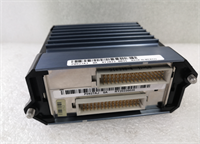
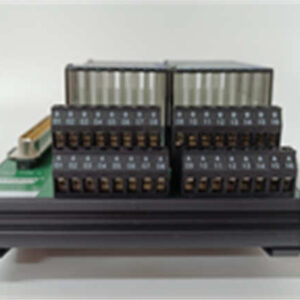
FBM216B FOXBORO
🔄 Compatible Replacement Models
| Model | Compatibility Tier | Notes |
|---|---|---|
| FBM216B P0927AJ | ✅ Drop-in Replacement | Exact match. Standard replacement part. |
| FBM216 P0916CW | ❌ Hardware Mod Required | Older generation (100 Series). Different form factor and bus interface. |
| FBM218 P0914YH | ⚠️ Software Compatible | Similar function (HART Input) but different channel density (16 ch). Requires chassis reconfiguration. |
❓ Frequently Asked Questions (FAQ)
What does “Redundant” mean for this specific module?
The FBM216B supports “Module Redundancy.” This means you install two identical cards in adjacent slots (Master and Tracker). They share the same field wiring via the terminal assembly. If the Master fails, the Tracker takes over instantly. It’s critical for safety loops (ESD) or custody transfer metering.Can I mix standard analog transmitters and HART transmitters on the same card?
Yes. The module automatically detects the signal. You can have a “dumb” 4-20mA pressure gauge on Channel 1 and a smart HART temperature transmitter on Channel 2. They operate independently.Why is my HART communication failing even though I have 4-20mA?
HART requires a specific load resistance (usually 230Ω to 1100Ω) to superimpose the digital signal. If your input impedance is too low (or if you have a short somewhere), the analog current will flow, but the digital “chirps” will be shorted out. Check your wiring resistance.Does this module provide power to the transmitters?
Yes, the FBM216B can provide internal loop power (24V DC) to the field devices. However, if you are using an external safety barrier or intrinsic safety isolator, you must disable the internal power (often via a jumper or TA configuration) to avoid back-feeding voltage.What is the difference between FBM216 and FBM216B?
The “B” revision generally indicates updated electronics, better noise immunity, and support for newer firmware features within the I/A Series system. Always try to match the revision of your existing system hardware to avoid compatibility headaches during download.