

 Tel:
Tel:  Email:
  WhatsApp:
 Description
⚙️ Key Technical Specifications
| Parameter | Specification | Notes |
|---|---|---|
| Input Channels | 16 Discrete Inputs | Fully isolated per channel |
| Input Type | Voltage / Contact Sensor | 2-wire input configuration |
| Input Voltage | Nominal 24V DC | Operates up to 60V DC |
| Isolation | Channel-to-Channel | Prevents ground loops & noise |
| Logic Levels | Configurable via Software | Adjustable trip points |
| Power Supply | 24 V DC (+5%, -10%) | Redundant capable |
| Power Dissipation | ~4 W (Typical) | Low heat generation |
| Operating Temp | -20°C to +60°C | Derate above 50°C |
| Humidity | 5% to 95% (Non-condensing) | G3 Rated for harsh air |
| Certifications | UL, CSA, ATEX | Class I Div 2 compatible |
| Mounting | DIN Rail / Rack | Standard I/A Series carrier |
👷 Product Introduction
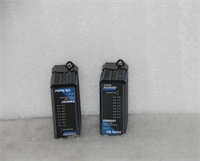
In my twenty years of crawling through cable trays and staring at blinking lights, I’ve learned that “simple” is usually synonymous with “reliable.” The Foxboro FBM207 (P0914TD) fits that bill perfectly. It doesn’t try to do everything; it does one thing very well: it reads 16 channels of DC voltage or switch status and isolates them from the rest of your sensitive control network.Why do we still use these? Because they are bulletproof. Whether you are monitoring a high-voltage breaker status or just checking if a limit switch is tripped, the FBM207 handles it without choking on electrical noise. The channel isolation is the killer feature here—if one channel spikes or shorts, it doesn’t take down the whole card. It’s designed for the “G3” environment, meaning it can handle the sulfur and humidity that would kill a standard office-grade PLC card in a week. Just don’t expect it to output analog signals; this is strictly for on/off logic.
🔍 Quality SOP & Tech Pitfalls (The Reality Check)
The Lab Report (SOP)
We don’t just wipe the box and ship it. Here is how we verify these before they leave our bench:
- Visual Inspection: We look for cold solder joints or signs of previous overheating on the connector pins.
- Backplane Comms Test: We plug it into a live rack. If the
COMlight doesn’t blink within 30 seconds, the internal comms chip is fried. - Input Injection: We use a variable DC power supply to inject 0V, 12V, and 24V into random channels. We watch the register bits flip in the software. If there’s lag, the opto-couplers are degrading.
- Isolation Check: Using a Fluke megohmmeter, we verify resistance between channels. It needs to be >10 MΩ. Anything lower means internal arcing risk.
The Engineer’s Warning (Pitfalls)
Watch your Terminal Assembly (TA) voltage ratings.
The FBM207 module is just the brain; the Terminal Assembly is the muscle. I’ve seen guys wire 120V AC into a TA rated for 24V DC because they didn’t check the part number on the side of the block. You will blow the input conditioning resistors instantly. Also, double-check your “Source vs. Sink” wiring. Getting this backward results in a module that looks dead but is actually just blind.
Field Disaster Story: A plant in Louisiana had an FBM207 that kept dropping offline randomly. They replaced the module twice. I went out there and found the shielding on the field cable wasn’t grounded at the cabinet end. The module was picking up enough RF interference from a nearby radio tower to flip the error bit. Ground your shields, folks.
🛠️ Installation & Configuration Guide
Don’t rush this. A loose connection here causes intermittent faults that will haunt you for months.
- Pre-Installation (Safety First)
- ⚠️ LOCK OUT / TAG OUT: Even though this is low voltage, a short across the backplane can fry the processor. Kill the slot power if possible.
- Photo Op: Take a picture of the existing wiring diagram or the old module’s jumpers.
- Removal
- Unplug the field wiring connector (the removable terminal block).
- Depress the locking tab at the bottom of the module.
- Slide the unit out. If it sticks, wiggle it gently—don’t pry it with a screwdriver against the circuit board.
- Installation
- Verify Jumpers: Ensure any hardware jumpers on the new P0914TD match the old one (though most config is software-based now).
- Slide the module onto the DIN rail/backplane until it clicks.
- Re-insert the wiring connector. Torque check: Give the screws a snug turn. Vibration loosens them over time.
- Power-On & Testing
- Power up the rack.
- Check LEDs:
PWR(Green),COM(Blinking Green),STATUS(Green). - Force a test input high (24V DC) and verify the logic state changes in your engineering workstation.
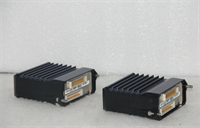
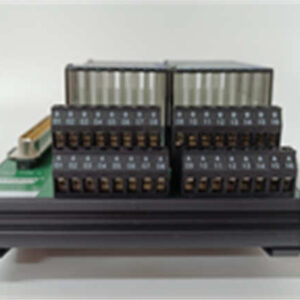
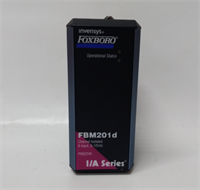
FBM207 P0914TD FOXBORO
🔄 Compatible Replacement Models
| Model | Compatibility | Notes |
|---|---|---|
| FBM207 (P0914TD) | ✅ Drop-in Replacement | Standard 16-ch voltage monitor. |
| FBM207b (P0914WH) | ⚠️ Wiring Check Required | Supports higher voltage inputs. Verify TA compatibility. |
| FBM207c (P0917GY) | ⚠️ Firmware Match | Newer revision, often requires firmware update on the carrier. |
| FBM201 | ❌ Hardware Mod Required | Different channel count and pinout. Not a direct swap. |
💬 Frequently Asked Questions (FAQ)
Q: Can I use this to read a dry contact (switch)?
A: Yes. That is exactly what it’s designed for. You provide the wetting voltage (usually 24V DC) through the input circuit, and the module detects when the contact closes.Q: My module shows “Bad Input” on channel 4, but I have 24V there. Why?
A: Check your common ground. Since these are isolated inputs, if your return path (common) is floating or disconnected, the module sees an open circuit even if voltage is present. Also, check the filter setting in the software—if it’s set too fast, noise might be confusing it.Q: Is the P0914TD obsolete?
A: It’s considered “mature” stock. You won’t find it at the local hardware store, but it’s widely available as new surplus or refurbished. It’s not going away soon because so many plants rely on it.Q: Does this support redundant installation?
A: Yes. You can install two FBM207s in a redundant pair configuration. If the primary fails, the system switches to the secondary. Just make sure your logic solver supports redundancy handling.Q: What is the difference between FBM207 and FBM201?
A: Density and isolation. The FBM207 offers channel-to-channel isolation (safer, quieter), while the FBM201 groups channels together. FBM207 is better for noisy environments.