 Tel:
 Email:
 WhatsApp:
Description
Key Technical Specifications
| Parameter | Specification |
|---|---|
| Part Number | KJ3002X1-BF1 12P1732X042 |
| Manufacturer | Emerson |
| System Compatibility | DeltaV DCS |
| Signal Types | RTD (Pt100, Pt1000, Ni100), Ohms |
| Power Draw | 12VDC @ 160mA |
| Mounting | DeltaV I/O Chassis / Subrack |
| Redundancy | Supported (System-level I/O) |
| Hot Swap | Yes |
| Operating Temp | -40°C to +85°C (Industrial ambient) |
| Form Factor | High-density modular assembly |
Product Introduction
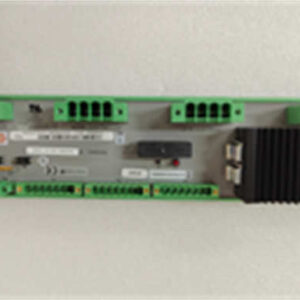
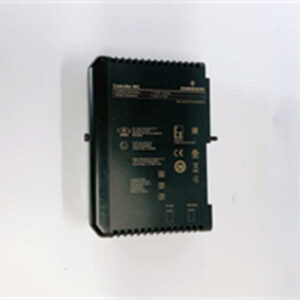
I’ve spent more years than I care to admit chasing phantom temperature readings and open RTD circuits in DeltaV racks. When an analog input card goes bad, it doesn’t just drop one tag; it blinds you to an entire bank of critical process measurements. The Emerson KJ3002X1-BF1 12P1732X042 is the heavy lifter for these systems. It packs RTD and ohms signal conditioning into a single slot, handling the harsh realities of industrial temperature monitoring without breaking a sweat.Engineers rely on this specific module because of its robust design and seamless integration within the DeltaV architecture. It shrugs off the electrical noise that plagues heavy industrial environments. I’ve seen these things run for years in dusty plants and scorching summer conditions without a hiccup. Just make sure your chassis cooling is adequate; these modules dissipate heat, and cooking them will shorten their lifespan.
Quality SOP & Tech Pitfalls
The Lab Report (SOP):
Before anything ships out of our facility, it goes through a strict gauntlet.
- Visual & Counterfeit Check: We inspect the PCB traces for micro-fractures and verify the silkscreen against known OEM standards.
- Bench Test: We power it up on a dedicated test rack, hooking up a Fluke process calibrator to inject precise RTD and ohm signals, verifying the accuracy across a simulated load.
- Insulation Resistance: Megger testing between the input channels and chassis ground to ensure no leakage.
- Firmware/EEPROM Logging: We verify the internal configuration memory matches DeltaV specifications.
- Anti-static Sealing: Bagged with desiccant and ESD warnings.
The Engineer’s Warning (Pitfalls):
️ The Configuration Trap: Yes, the DeltaV system supports hot-swapping. But I’ve seen guys swap a KJ3002X1-BF1 without checking the channel configuration tags in the DeltaV Explorer. If you drop a module configured for a 3-wire RTD into a slot expecting a 2-wire setup, you’ll trigger immediate fault alarms and garbage readings. If you absolutely must hot-swap during a critical run, ensure your hands are properly grounded and you have a clear path to pull the card straight out without bumping adjacent modules.Another classic mistake? Ignoring the status LEDs. If the module is blinking a fault code, don’t just reset the controller. Read the DeltaV manual. The board is trying to tell you exactly which channel is open or shorted.
Installation & Configuration Guide
Phase 1: Pre-Installation
️ Safety First: Put the DeltaV controller in bypass or drop power to the specific subrack. Wait for capacitors to discharge. Take a high-res photo of the old board’s wiring, terminal block, and jumper/DIP switch positions.Phase 2: Removal
Label every single wire if they aren’t already ferruled correctly. Release the chassis retainers carefully. Pull the module straight out. Don’t pry against adjacent cards.Phase 3: Installation
Copy the Jumper Settings: This is critical. If the old board had specific jumpers set for RTD wiring (2-wire vs 3-wire) or signal types, the new KJ3002X1-BF1 12P1732X042 must match them exactly. Failure to do this causes immediate fault alarms upon power-up. Seat the new module firmly until the retainers click.Phase 4: Power-On & Testing
Restore power. Watch the status LEDs. You’re looking for a solid green “OK” or “PWR” light. Use your process calibrator at the terminal block to inject a known resistance (e.g., 100 ohms for a Pt100) and verify the temperature reading on the DeltaV workstation. Check the workstation to ensure the module is recognized and no new fault tags are generated.

Compatible Replacement Models
- Drop-in Replacement: KJ3002X1-BF1 (Same revision). Direct swap, zero configuration changes required.
- ️ Software Compatible: KJ3002X1-BF1 (Higher hardware revisions). Often functionally identical, but check the DeltaV release notes. You might need a minor database update or firmware flash in the controller to recognize the new hardware revision. Expect a short engineering window for validation.
- Hardware Mod Required: KJ3002X1-BA1 (Analog Input, 8 Channel, 4-20mA, HART). This is a completely different signal type. Swapping it in requires different wiring, terminal blocks, and extensive DeltaV configuration changes. Do not attempt this unless you are doing a full I/O redesign.
Frequently Asked Questions (FAQ)
Q1: Can I hot-swap this safely?
Technically, yes. The DeltaV architecture supports it. Practically? I advise against it if you can avoid it. Yanking power from live I/O cards can cause data glitches or arc damage. Only do it if dropping the subrack means shutting down a running process.Q2: What does it mean if the red fault LED is flashing?
Usually, it means a channel is open, shorted, or out of range. The module is protecting itself. Disconnect the field wires one by one to find the shorted device. If it flashes with no load connected, the board’s internal regulator is toast. Replace it.Q3: Is this module redundant?
The KJ3002X1-BF1 itself doesn’t have internal redundancy, but the DeltaV system allows you to provision redundant I/O buses and controllers. If you have a redundant setup, ensure both modules are of the exact same revision. Mixing revisions in a redundant pair is a recipe for nuisance trips.Q4: Do I need to download any software to the new board?
No. The KJ3002X1-BF1 is a hardware acquisition module. It doesn’t hold control logic. However, if you are replacing it due to a fault, you might need to clear latched fault tags in the DeltaV controller database once the new board is installed.Q5: Can I use a third-party 24VDC power supply instead?
You can, but I strongly advise against it. The DeltaV I/O boards are designed to communicate their health status back to the system via specific hardware lines. A generic off-the-shelf power supply won’t give you those diagnostics, leaving you blind if a power fault occurs. Stick to OEM.