
 Tel:
 Email:
 WhatsApp:
Description
Key Technical Specifications
| Item | Specification |
|---|---|
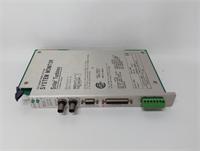
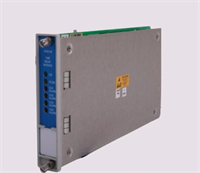
| Part Number | 3500/44M |
| PWA / Order Number | 176449-03 |
| Manufacturer | Bently Nevada (Baker Hughes) |
| Product Type | 4-channel vibration monitor |
| Application | Aeroderivative gas turbine (Aero GT) machinery protection |
| Input Type | Velocity sensors / accelerometers via Prox/Velom I/O; 86517 & 86497 GT I/O interfaces |
| Keyphasor Inputs | Two independent Keyphasor signals, allowing different tracking filters per channel pair |
| Filter Options | Signal integration, 1X vibration tracking, bandpass vibration |
| Alarm Sets | Up to 8 configurable multimode alarm parameter groups |
| Power Consumption | ~7.7 W (typical) |
| Operating Temperature | −30°C to +65°C |
| Storage Temperature | −40°C to +85°C |
| Humidity | 95% non-condensing |
| Mounting | 3500/05 frame (19″ EIA, 14 slots) or mini frame (7 slots) |
| Standards | API 670 compliant |
Product Introduction
Aeroderivative gas turbines spin fast and fail fast. You get maybe a hundred milliseconds of warning before a bearing lets go, and the protection relay that’s supposed to catch it is a card Bently stopped advertising years ago. I’ve replaced more of these under time pressure than I’d like to count.The 3500/44M (PWA 176449-03) is that card. It’s a four-channel monitor built specifically for aeroderivative GT applications — GE LM1600/LM2500/LM5000/LM6000, Rolls-Royce RB211 and Avon, and United Technologies/Pratt & Whitney GG3, G44, FT4, and FT8 machines. It takes velocity and accelerometer inputs through Prox/Velom I/O, accepts two independent Keyphasor signals so each channel pair can run a different tracking filter, and drives alarm and danger relays when the configured setpoints are crossed.Engineers don’t spec this card for fun. They buy it because it’s the only thing that drops into an existing Aero GT frame without a recompile. What actually matters in the field: it supports up to eight multimode alarm sets, so you can switch protection thresholds when the machine changes operating mode — a real feature on GTs that idle at part load for hours. One subjective note: this card is picky about Keyphasor wiring. A marginal Keyphasor channel won’t show up on the front panel LED; it’ll just silently degrade your 1X tracking. Test it before you trust it.
Quality SOP & Tech Pitfalls
The Lab ReportEvery board runs the same sequence before shipping:
- Visual and counterfeit check — PWA number, silkscreen, solder joints, electrolytic capacitor inspection, connector pin condition. Refurbished boards sold as new get rejected.
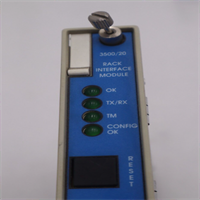
- Live test on the test rack — mounted in a 3500/05 frame with a matched TDI/RIM; OK LED, TX/RX communication, and POST sequence verified.
- Electrical checks — Fluke 115 on backplane rail voltage, insulation resistance, and continuity on the I/O connector.
- Firmware/PWA revision logging — the actual suffix written on the packing slip, not inferred from the listing.
- Anti-static sealing — wrist strap throughout, anti-static bag, foam cradle, rigid box.
The Engineer’s WarningTwo mistakes dominate the failure reports on this card.First, trusting the PWA number over the nameplate. Distributor listings for “3500/44M” circulate with different PWA numbers — 176449-03, 140734-03, and others get used interchangeably. They may not be interchangeable. Order from a screenshot and you may get a board whose firmware won’t accept your existing frame configuration download.Second, not backing up the frame configuration. Channel assignments, filter selections, alarm setpoints, and multimode logic live in the frame database, not on the card. Swap without a backup and you’re rebuilding protection settings from memory — on a GT, that’s a safety issue, not just an inconvenience.Real field disaster: a plant swapped a failed 3500/44M with a “matching” board bought online. The PWA suffix was different. The card booted, OK LED lit, but the Keyphasor inputs were wired for a different channel pairing. The 1X tracking filter never locked. The turbine ran for three weeks with vibration protection effectively blind, and the bearing failure was found only on the next outage.
Installation & Configuration Guide
Phase 1 — Pre-Installation (⚠️)
- Put the turbine in a safe state. If protection is redundant (TMR), force a controlled switchover first. Don’t pull a live protection card.
- Lock out and tag out. Verify 0 V at the frame’s power input before touching anything.
- Wait 60 seconds for backplane discharge.
- Photograph everything: PWA nameplate, frame slot position, I/O module wiring, Keyphasor connections, and the frame configuration screen.
- Back up the 3500 frame configuration with the 3500/01 configuration software before touching hardware.
- Wear an anti-static wrist strap.
Phase 2 — Removal
- Label every cable before disconnecting. Don’t rely on connector color or memory.
- Release the module retention clips slowly. Don’t pry across the PCB.
- Pull the card straight out of the slot. Angled extraction bends backplane pins.
Phase 3 — Installation
- Verify the new board’s PWA number and nameplate against your photograph before seating it. This single check prevents most startup failures.
- Restore the recorded channel and I/O configuration — Keyphasor pairing, filter selection, alarm setpoints — before energizing.
- Seat the card fully until the retention clip engages. No partial insertion.
- Torque I/O terminals to spec. No more.
Phase 4 — Power-On & Testing
- Confirm the frame power supply (3500/15) is healthy — 85–250 Vac 50/60 Hz or 20–140 Vdc input.
- Watch the OK LED and TX/RX LEDs. A steady OK with no TX/RX activity means a backplane communication fault.
- Download or restore the frame configuration, then verify each channel’s live reading against a known reference.
- Inject a test signal or use the built-in simulation to prove the alarm and danger relays actually fire. A protection card that hasn’t been end-to-end tested isn’t protection.
Compatible Replacement Models
| Model | Tier | Notes |
|---|---|---|
| Bently 3500/44M (alternate PWA, e.g. 140734-03) | ⚠️ Software Compatible | Same card family, different PWA revision. Expect 2–8 hours of configuration verification and possible firmware reflash. Confirm with the OEM. |
| Bently 3500/42M (176449-02) | ❌ Hardware Mod Required | Different input types — accepts velocity, acceleration, and dual-probe inputs, but not the Aero GT Keyphasor pairing. Requires rewiring and a full reconfiguration. |
| Bently 3500/40M (176449-01) | ❌ Hardware Mod Required | Proximitor/displacement only — eddy current input. Wrong sensor type entirely for Aero GT velocity applications. |
Frequently Asked Questions (FAQ)
Can I hot-swap this card safely?
Technically yes — 3500 modules support hot insertion. Practically, no. During the swap, those four channels of protection are dead. If your frame has TMR redundancy, do a controlled switchover instead. If it doesn’t, schedule the swap during a planned outage.Is PWA 176449-03 the same as 140734-03?
Dealers list both under “3500/44M,” and they may be different revisions of the same card. I wouldn’t bet on it. Order by the PWA number on your physical nameplate, not by the model name in a listing.What condition does it ship in?
New surplus or verified used. We log the actual PWA suffix and test results on the packing slip so you can compare against the old board before installation.Why won’t my new card accept the frame configuration?
Ninety percent of the time it’s a PWA/firmware mismatch. The other ten percent is a slot position or I/O module mismatch. Check the PWA number first — that’s free.Do you have the Bently Nevada technical manual for this?
No. A 3500/44M-specific manual isn’t publicly available. If our guidance and any OEM document you hold disagree, follow the OEM document.What should I send before ordering?
A photo of the full PWA nameplate, the frame slot number, the I/O module type installed, and your 3500 frame configuration file. With those four items, we can ship the right board.