
 Tel:
 Email:
 WhatsApp:
Description
Key Technical Specifications
| Parameter | Specification |
|---|---|
| Product Model | PFSA140 3BSE006503R1 |
| Manufacturer | ABB |
| Product Type | Roll Supply Unit |
| Input Voltage | 85–265 VAC |
| Input Frequency | 47–63 Hz |
| Output Voltage | 24 VDC |
| Output Current | 5 A (max) |
| Efficiency | ≥85% |
| Analog Input | 4–20 mA / 0–10 V (8 channels) |
| Digital Output | Relay / Transistor (4 channels) |
| Communication | RS485 (Modbus RTU) |
| Electrical Isolation | 2500 VAC |
| Protection | Overvoltage, overcurrent, short-circuit |
| Operating Temp. | -40°C to +70°C |
| Protection Rating | IP65 |
| Dimensions | 100 mm × 80 mm × 60 mm |
| Weight | Approx. 0.3 kg |
| Mounting | DIN Rail |
Product Introduction
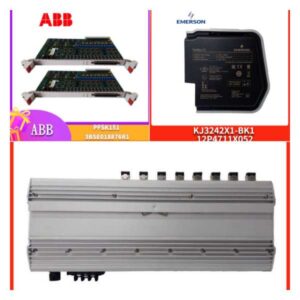
I’ve pulled enough mystery modules out of control cabinets to know: the part number on the purchase order rarely matches the sticker on the device. “PFS 140 RULLM 9K 3BSE00653R1” looks like a garbled transcription of PFSA140 3BSE006503R1, an ABB roll supply unit that shows up in channel inventories. If your cabinet has a PFSA140 sitting on the DIN rail, this is almost certainly the part you’re chasing.What makes it useful in the field is the combination of a universal AC input (85–265 VAC) with a clean 24 VDC / 5 A output. That covers most control-cabinet power needs without dragging in a separate supply. The 8-channel analog input and RS485 Modbus RTU interface mean it can also handle signal conditioning and low-speed communication in one box. The -40°C to +70°C operating range and IP65 rating are the kind of specs that actually matter when the cabinet is mounted next to a hot rolling line.One caveat: this is a mature, possibly discontinued product. Finding brand-new, factory-sealed units through official ABB channels may be difficult. Most availability is through surplus and channel distributors. That’s fine for a spare — just insist on pre-shipment testing.
Quality SOP & Tech Pitfalls
The Lab Report (SOP)
Every unit ships after:
- Visual and counterfeit check — housing, labels, terminal condition.
- Live test on bench supply — apply 85–265 VAC, verify 24 VDC output with a Fluke 115 or equivalent.
- Insulation resistance check on the 2500 VAC isolation barrier.
- Analog channel sanity check — inject 4–20 mA, confirm reading.
- RS485 communication test — Modbus RTU poll/response.
- Firmware/version logging and anti-static bag sealing.
The Engineer’s Warning (Pitfalls)
Two things kill these in the field. First, wrong part number. Ordering against “3BSE00653R1” instead of “3BSE006503R1” gets you a different module — or nothing. Photograph the nameplate. Second, RS485 address conflicts. If you swap this into a live Modbus network without copying the old node address and baud rate, the rest of the line will stop talking. I once watched a paper mill lose three hours because a tech replaced a PFSA140 and left the address at the factory default. Don’t be that tech.
Installation & Configuration Guide
- Pre-Installation ⚠️
- Perform proper LOTO on the control cabinet. Wait for DC bus discharge.
- Photograph existing wiring, DIP switch positions, and RS485 address settings.
- Removal
- Label every wire before disconnecting.
- Release the DIN rail clip; slide the module out gently.
- Installation
- Copy all DIP switch and jumper settings from the old unit. This prevents roughly 90% of startup failures on these modules.
- Seat the new PFSA140 firmly on the DIN rail. Reconnect wiring per labels.
- Power-On & Testing
- Verify 24 VDC output with a multimeter before reconnecting downstream loads.
- Check LED status indicators for normal boot.
- Poll the RS485 interface and confirm Modbus RTU responses match the old configuration.
- Run the process through a short test cycle before releasing the line.
Compatible Replacement Models
| Replacement | Compatibility | Notes |
|---|---|---|
| PFSA140 3BSE006503R1 (same model) | ✅ Drop-in | Exact match. Preferred for spare replacement. |
| ABB PFSA-series successor | ⚠️ Software compatible | May require firmware update or Modbus address reconfiguration. Estimate 1–2 hours labor. |
| Third-party 24 VDC / 5 A DIN supply | ❌ Hardware mod required | Provides power but loses analog I/O and RS485 integration. Not recommended unless redesigning the rack. |
Frequently Asked Questions (FAQ)
Q: Is “PFS 140 RULLM 9K 3BSE00653R1” a real ABB part number?
A: I can’t verify that exact string in any catalog. The confirmed match is PFSA140 3BSE006503R1 (Roll Supply Unit). Send me a nameplate photo and I’ll confirm before you spend money.Q: Can I hot-swap this module?
A: The channel listings mention hot-swappable capability, but I wouldn’t risk it on a live process line unless your system documentation explicitly allows it. Power down, swap, power up. It’s slower but cheaper than a forced outage.Q: Is this still available new from ABB?
A: Likely not through standard channels. This is a mature product. Surplus and new-old-stock units circulate in the secondary market. Condition and warranty terms vary by supplier — confirm before ordering.Q: What warranty do you offer?
A: 12 months covering defects, spec mismatch, and testing oversights. Damage from wrong input voltage, overload, or improper installation is not covered.Q: Will a generic 24 VDC power supply work as a replacement?
A: For power alone, yes. But you’ll lose the 8-channel analog input, 4-channel digital output, and RS485 Modbus RTU interface. If those functions are used in your application, a generic supply is not a true replacement.Q: How do I verify the part before installing it?
A: Check three things: the order code on the label (3BSE006503R1), the 24 VDC output under load, and the RS485 address setting. If all three match, you’re good to go.