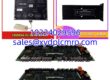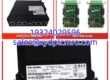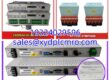
Key Technical Specifications
| Parameter | Specification |
|---|---|
| Module Type | 8-channel RTD analog input FBM |
| Common Part Number | P0914SV (FBM203) |
| Input Channels | 8 isolated RTD inputs |
| Supported Sensors | Pt100, Pt1000, nickel RTD, copper RTD (software-configurable) |
| Wiring Support | 2-wire and 3-wire RTD on FBM203; 4-wire on FBM203d |
| Resistance Range | 0–320 Ω on FBM203; other variants cover wider or lower ranges |
| Conversion Method | Sigma-Delta ADC with digital filtering |
| Channel Isolation | Channel-to-channel and channel-to-ground isolation |
| Diagnostics | RTD open-circuit detection, over-range, module self-test, bus fault reporting |
| Communication | Redundant Foxboro I/A fieldbus via FBM base |
| Terminal Assembly | DIN-rail TA or base-mounted TA |
| Environment | Industrial DCS cabinet; G3-class harsh environment design |
| Hot Swap | Supported; module replacement without removing field wiring |
Product Introduction
In a Foxboro I/A Series or Evo rack, the FBM203 is the card you pull when temperature points start drifting, showing open-sensor faults, or failing continuity checks. It is an eight-channel RTD input module that sits on the FBM base and converts platinum, nickel, or copper RTD resistance into stable digital process values for the controller.What keeps this module in service is its channel isolation and Sigma-Delta conversion. Each input is isolated from the others and from ground, which helps prevent ground loops and noise from large motors, VFDs, or long cable runs. The module also supports configurable conversion timing and rate-of-change limiting, so it can be tuned for stable temperature loops rather than raw speed. For legacy plants running I/A Series System Software or Foxboro Control Configuration, replacing a failed FBM203 with the correct suffix is usually far less disruptive than migrating I/O architecture.The real risk is not the module alone; it is mismatching the variant. FBM203, FBM203b, FBM203c, and FBM203d do not all accept the same RTD wiring or resistance range. Installing the wrong version can produce measurement errors that look like sensor faults. Always confirm the exact suffix, P-number, terminal assembly type, and existing channel configuration before deployment.
Quality SOP & Tech Pitfalls
The Lab Report (SOP)
- Visual inspection: verify label, P-number, suffix, connector condition, and corrosion.
- Mechanical check: confirm base seating, TA compatibility, and retention hardware.
- Insulation test: verify channel isolation integrity with appropriate low-voltage checks.
- Live base test: install into a known-good FBM base; confirm module recognition and LED status.
- Channel validation: connect calibrated RTD simulators and verify resistance-to-temperature conversion.
- Diagnostics check: confirm open-circuit detection, over-range flags, and bus communication.
- Final packing: ESD bag, sealed label photos, and recorded configuration data.
The Engineer’s Warning (Pitfalls)
Do not treat all FBM203 variants as interchangeable. FBM203 typically supports 2-wire and 3-wire RTD inputs up to 320 Ω, while FBM203d is oriented to 4-wire RTD wiring. If the terminal assembly was wired for 3-wire RTD and the replacement expects 4-wire, the measurement will be invalid even if the module powers up. Also, confirm the correct P-number before installation; P0914SV is the common FBM203 identifier, but other suffixes carry different electrical ranges.
Installation & Configuration Guide
1. Pre-Installation ⚠️
- Verify the failed module suffix, P-number, and terminal assembly type.
- Record channel assignments, RTD types, wiring style, and alarm limits from the existing configuration.
- Back up the DCS configuration before replacing the module.
2. Removal
- Identify the affected channels in the HMS/HMI.
- Label field wiring at the terminal assembly.
- Remove the module from the base without disturbing field terminals.
3. Installation
- Confirm the replacement FBM203 variant matches the original application.
- Seat the module firmly into the correct base position.
- Reconnect field wiring according to the recorded 2-wire, 3-wire, or 4-wire scheme.
4. Commissioning
- Power up and verify module recognition on the fieldbus.
- Check channel status for open, short, or over-range faults.
- Validate temperature readings against a known reference.
- Restore alarms, rate limits, and control loop associations before returning to normal operation.
Compatible Replacement Models
- ✅ FBM203 P0914SV: Direct replacement when the original is a standard 2-wire/3-wire RTD module with 0–320 Ω range.
- ⚠️ FBM203b P0922UA / FBM203c P0922UD: Functionally similar RTD FBMs but with different resistance ranges. Require configuration review and wiring verification.
- ⚠️ FBM203d: Designed for 4-wire RTD inputs. Do not substitute for a 2-wire/3-wire FBM203 application without revalidating wiring and configuration.
- ❌ FBM202 / FBM213: Not direct substitutes. FBM202 is a thermocouple/mV input module; FBM213 is another RTD variant with different channel and wiring characteristics.
Frequently Asked Questions (FAQ)
What does FBM203 measure?
It measures RTD temperature sensors, typically platinum, nickel, or copper elements, by converting resistance into digital temperature values for the DCS.Is FBM203 the same as FBM203b or FBM203d?
No. They are all RTD input modules, but they differ in supported wiring and resistance range. FBM203 typically supports 2-wire and 3-wire RTD up to 320 Ω, while FBM203d supports 4-wire RTD.Can I hot-swap the FBM203?
Yes. The module is designed for hot replacement on the FBM base, so field wiring does not need to be removed. Always follow plant change-control procedures.Why are my temperature readings unstable after replacement?
The most common causes are wrong RTD wiring, mismatched sensor type, incorrect resistance range, or a variant mismatch such as installing FBM203d where FBM203 was specified.What terminal assembly does it use?
It uses a DIN-rail mounted TA or a base-mounted TA, depending on the installation and variant.Is this module still manufactured?
The base FBM203 is generally available only as surplus, refurbished, or new-old-stock. Always verify the exact suffix and test records before purchase.