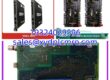
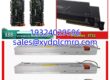
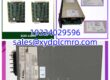
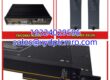
Key Technical Specifications
| Specification Category | Parameter Details |
|---|---|
| Product Model | YPC104B YT204001-BT |
| Manufacturer | ABB (Sweden/Switzerland) |
| Product Type | Industrial Modem Board / Communication Card |
| Operating Voltage | 24V DC |
| Communication Protocol | FSK (Frequency-Shift Keying) Modem |
| Dimensions | ~11 cm × 11.5 cm × 2.2 cm |
| Weight | ~0.1 kg |
| Origin | Sweden / Switzerland (verify per unit label) |
| Mounting | PCB card (slot-mounted in ABB chassis/rack) |
| Warranty | 12 months (supplier standard) |
Product Introduction
I’ve pulled more communication cards out of dusty control cabinets than I can count, and the YPC104B is one of those “old reliable” pieces that just sits there and does its job. It’s an FSK modem board from ABB, designed to handle serial data transfer over standard industrial communication lines. You’ll find these in older ABB DCS and PLC systems where remote communication or legacy serial links are still in play.The 24V DC power requirement means it plays nice with standard industrial control voltage, and the FSK modulation is inherently noise-resistant—critical when you’re running cables through a factory floor full of VFDs and motor starters. At roughly 11 cm square and 100 grams, it’s compact enough to not hog valuable rack space. One thing to keep in mind: documentation on this specific part number is thin on the ground. If you’re replacing a failed unit, photograph the DIP switch settings and any jumpers on the old board before you pull it. I’ve seen technicians swap these blind and spend hours chasing a communication fault that was just a switch position.
Quality SOP & Tech Pitfalls
The Lab Report (SOP):
Every YPC104B YT204001-BT ships after a 4-step verification:
- Visual/Counterfeit Check: Inspect the PCB for burn marks, cold solder joints, or rework. Verify the YT204001-BT label matches the board silkscreen. Check for corrosion on the edge connector pins.
- Power-Up Test: Apply 24V DC to the board via a bench supply and verify it draws current within expected range (no short-circuit condition). Confirm any onboard LEDs illuminate correctly.
- Communication Loop Test: Connect the board to a known-good FSK modem partner or test rig and verify data transmission/reception. Check for framing errors or dropped characters.
- Anti-Static Sealing: Place in ESD-safe bag with desiccant and seal for shipping.
The Engineer’s Warning (Pitfalls):
Two mistakes that will cost you downtime:
- DIP Switch/Jumper Settings: This board almost certainly has configuration switches or jumpers for baud rate, parity, and communication mode. If you don’t photograph the old board’s settings before removal, you’ll be guessing. I once watched a mill lose 8 hours of production because a tech swapped a YPC104B and didn’t match the switch positions. The new board was fine—the configuration was wrong.
- Voltage Polarity: The 24V DC input is polarity-sensitive. Reversing the leads will fry the onboard regulators. Always double-check your wiring with a multimeter before applying power. There’s no reverse-polarity protection on these older boards.
Installation & Configuration Guide
30-Minute Swap Procedure:
- Pre-Installation (⚠️ CRITICAL):
- ⚠️ Take a photo of the existing board’s DIP switches, jumpers, and wiring connections. This is your single most important step.
- Verify the replacement model matches exactly: YPC104B YT204001-BT.
- Shut down power to the chassis/rack if possible. If hot-swapping is supported by your system, proceed with extreme caution.
- Removal:
- Disconnect all communication cables and power leads from the board. Label each cable with tape.
- Release any retaining clips or screws holding the board in the slot.
- Gently pull the board straight out of the slot. Do not rock it side-to-side—you can bend the edge connector pins.
- Installation:
- ⚠️ Match the DIP switch/jumper settings from your photo to the new board. This prevents 90% of communication faults.
- Align the board with the slot guides and slide it in firmly until the edge connector seats fully.
- Re-engage any retaining clips or screws.
- Reconnect all cables to their original positions.
- Power-On & Testing:
- Apply 24V DC power. Verify the board powers up (check for onboard LEDs).
- Test communication by sending a known data packet or polling the device.
- If communication fails, re-verify the DIP switch settings and cable connections before escalating.
Compatible Replacement Models
- ✅ Drop-in Replacement: YPC104B YT204001-BT — Identical part number. No configuration changes needed if DIP switches/jumpers are matched.
- ⚠️ Software Compatible: YPC104A / YPC111A — Same family, but may have different switch configurations or firmware. Verify pinout and protocol compatibility before substituting. Budget 30-60 minutes for testing.
- ❌ Hardware Mod Required: Non-ABB Modem Boards — Different manufacturers’ boards will not fit ABB chassis slots and will have incompatible pinouts and protocols. Do not attempt to force-fit these.
Frequently Asked Questions (FAQ)
Can I hot-swap this board safely?
It depends on your specific ABB system. Some older ABB racks support hot-swapping of communication cards, but many do not. If you’re unsure, shut down the rack. Pulling a live board can cause a communication dropout that trips your process. When in doubt, coordinate with operations and schedule a brief outage.What does FSK mean and why does it matter?
FSK stands for Frequency-Shift Keying. It’s a modulation method where digital data is transmitted by shifting between two distinct frequencies. The advantage? It’s highly resistant to electrical noise, which makes it ideal for industrial environments where motors, drives, and relays generate tons of EMI. If your communication runs through a noisy plant, FSK is your friend.My new YPC104B isn’t communicating. What’s wrong?
Start with the DIP switches. I’d bet money the switch positions don’t match your old board. After that, check your 24V DC supply voltage with a multimeter—it should be within ±5% of 24V. Then verify your communication cable pinout. If all three check out, the board itself may be DOA, and you should contact your supplier.Is this board still made by ABB?
The YPC104B is a legacy product. ABB has likely moved on to newer communication modules with Ethernet or fieldbus support. However, spare units are still available through surplus suppliers. If you’re doing a full system upgrade, consider migrating to a modern communication platform—but for a like-for-like replacement, the YPC104B is still a solid choice.Where can I find the technical manual for this board?
Good luck. Documentation for this specific part number is scarce. Your best bet is to contact ABB support directly with the serial number from your old board, or reach out to a surplus supplier who may have archived manuals. If you’re replacing an existing unit, your old board’s configuration is your best reference.